Last updated: April 2026 | By Argi Avetisyan, Co-founder & CEO at GatherADU
California's ADU rules changed more between 2024 and 2026 than in any two-year period since ADU legislation began. If you built an ADU three years ago, at least six of the rules you followed have been rewritten. If you're just starting to research, you're walking into the most homeowner-friendly regulatory environment the state has ever created.
We've permitted and built over 127 ADUs across Los Angeles. We don't just read these bills — we live them every day at job sites, in city planning offices, and on calls with homeowners trying to figure out what's actually possible on their lot. This guide covers every law that matters in 2026, what each one changed in practice, and exactly what it means for your project.
Quick Reference: Every ADU Law at a Glance
Before we break down each bill, here's the full picture. Bookmark this table — it's the fastest way to check which law applies to your situation.
| Bill | What It Does | Effective Date | Impact Level |
|---|---|---|---|
| SB 543 | 15-day completeness clock; size measured by interior space only; fee reductions for small ADUs | Jan 1, 2026 | High — speeds permits |
| AB 462 | ADU can get Certificate of Occupancy before primary home is rebuilt (fire zones) | Oct 15, 2025 | Critical — fire rebuild |
| AB 1154 | JADU owner-occupancy not required if unit has its own bathroom | Jan 1, 2026 | Medium — investor flexibility |
| SB 9 (2025) | HCD can now refer non-compliant cities to the Attorney General | Jan 1, 2026 | High — enforcement teeth |
| AB 976 | Permanently removes owner-occupancy requirement for standard ADUs | Jan 1, 2024 | Critical — now permanent |
| AB 1332 | Cities must offer pre-approved ADU plans; 30-day review for pre-approved, 60-day max for all | Jan 1, 2025 | Critical — cuts permit time in half |
| AB 2533 | Creates legalization pathway for unpermitted ADUs built before 2020 | Late 2025 | High — legalizes existing units |
| SB 1211 | Up to 8 detached ADUs on qualifying multifamily lots | Jan 1, 2025 | High — multifamily investors |
| AB 1033 | Local agencies can allow ADUs to be sold separately as condos | Oct 11, 2023 | Medium — changing the game slowly |
| AB 818 | 10-day permit clock for HCD-approved modular units in fire zones | 2025 | High — fire zone fast-track |
Now let's get into what each one actually means when you're pulling permits, signing contracts, and making financial decisions.
The 2026 Bills: What Changed on January 1st
Four new ADU bills signed by Governor Newsom in late 2025 took effect at the start of this year. Here's each one — the legal details and the real-world impact we're seeing on our projects.
SB 543: The 15-Day Completeness Clock
This is the bill that fixed the most frustrating part of the ADU process: the waiting game before your project even starts.
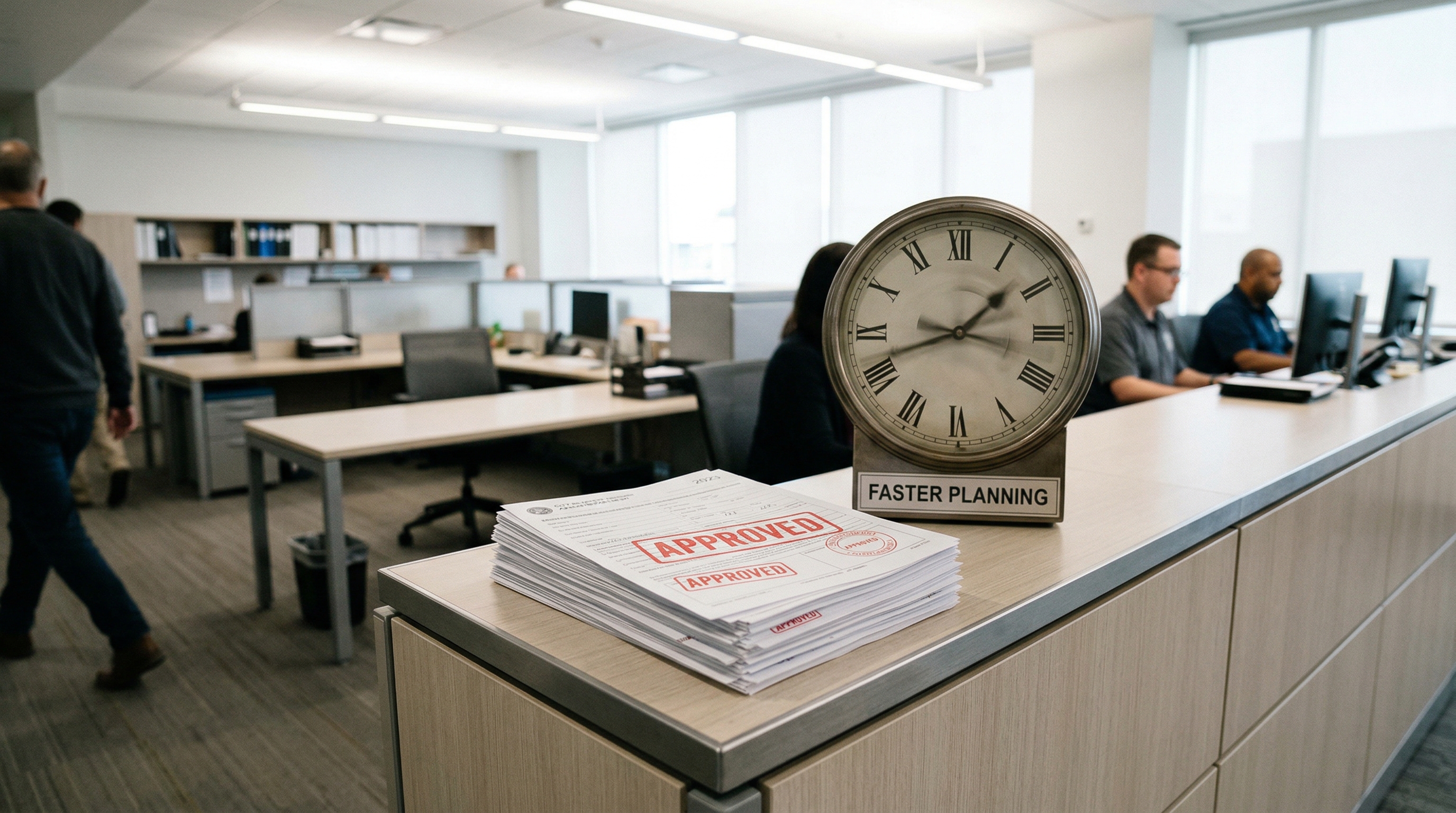
What the law says: Local agencies now have exactly 15 days to determine whether your ADU application is complete. If they miss that deadline, your application is automatically deemed complete — no questions asked. When they do flag missing items, they have to give you a specific written checklist. And here's the part that matters: on resubmittal, they can only review the items they originally flagged. No new objections allowed after the fact.
SB 543 also gives applicants a formal right to appeal an incompleteness determination to the local planning commission. That right did not exist as a statutory matter before this year.
Other changes in SB 543 that directly affect your budget:
- The 800 sq ft state-exempt ADU size limit now refers to interior livable space only. Exterior walls and stairs are excluded from the calculation. For a typical project, that means 30-50 more usable square feet without triggering additional requirements.
- ADUs and JADUs under 500 sq ft are exempt from school impact fees. Depending on your school district, that's $3,000 to $5,000 you no longer have to pay.
- ADUs 750 sq ft or smaller are exempt from all impact fees. This is a major cost reduction — impact fees in Los Angeles have historically added $8,000 to $15,000 to a project.
- For ADUs larger than 750 sq ft, impact fees must now be proportional to the ADU's size relative to the primary dwelling. No more flat fees that hit a 900 sq ft ADU the same as a 3,000 sq ft primary home.
- Local agencies can no longer delay your ADU permit approval until the primary dwelling on the lot is completed.
- Every jurisdiction in California must now follow the ministerial approval process for ADUs, even cities that haven't adopted their own local ADU ordinance.
What we're seeing on the ground: Before SB 543, we regularly watched cities sit on applications for three, four, even six weeks before telling homeowners a single thing was missing. That one delay could push a project back 2-3 months before construction even started. The 15-day clock has changed the dynamic. In our recent submittals to LADBS, we're getting completeness confirmations within 10-12 business days. For homeowners building under 750 sq ft, the fee savings alone can cover the cost of architectural plans.
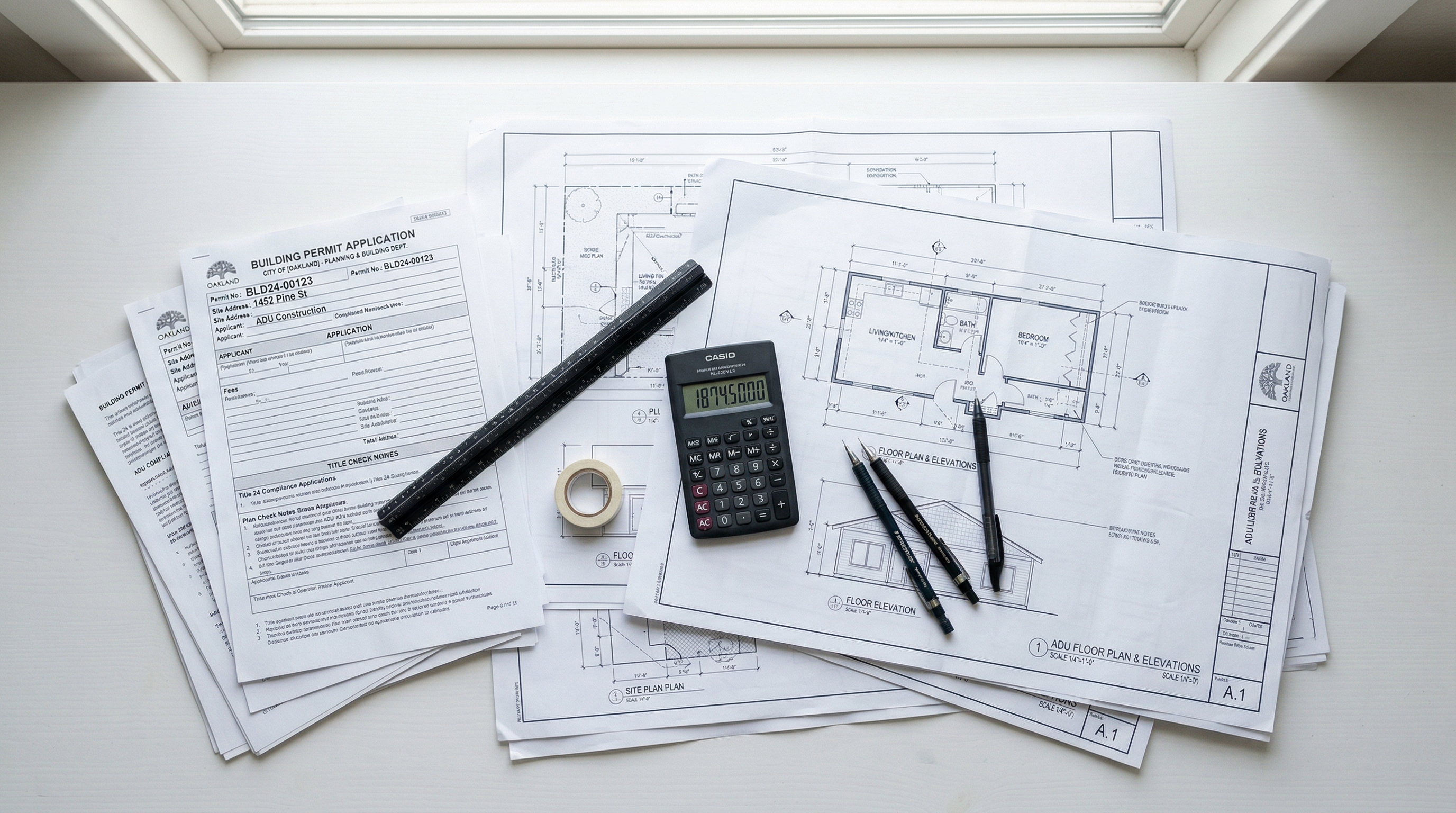
Not sure how these fee changes affect your specific project? Schedule a free feasibility call — we'll run the numbers for your lot and tell you exactly what you'd pay in permits and fees.
AB 462: Your ADU Can Be Occupied Before Your Main Home Is Rebuilt
This bill matters most to fire-affected homeowners in Southern California, and it's already changing lives.
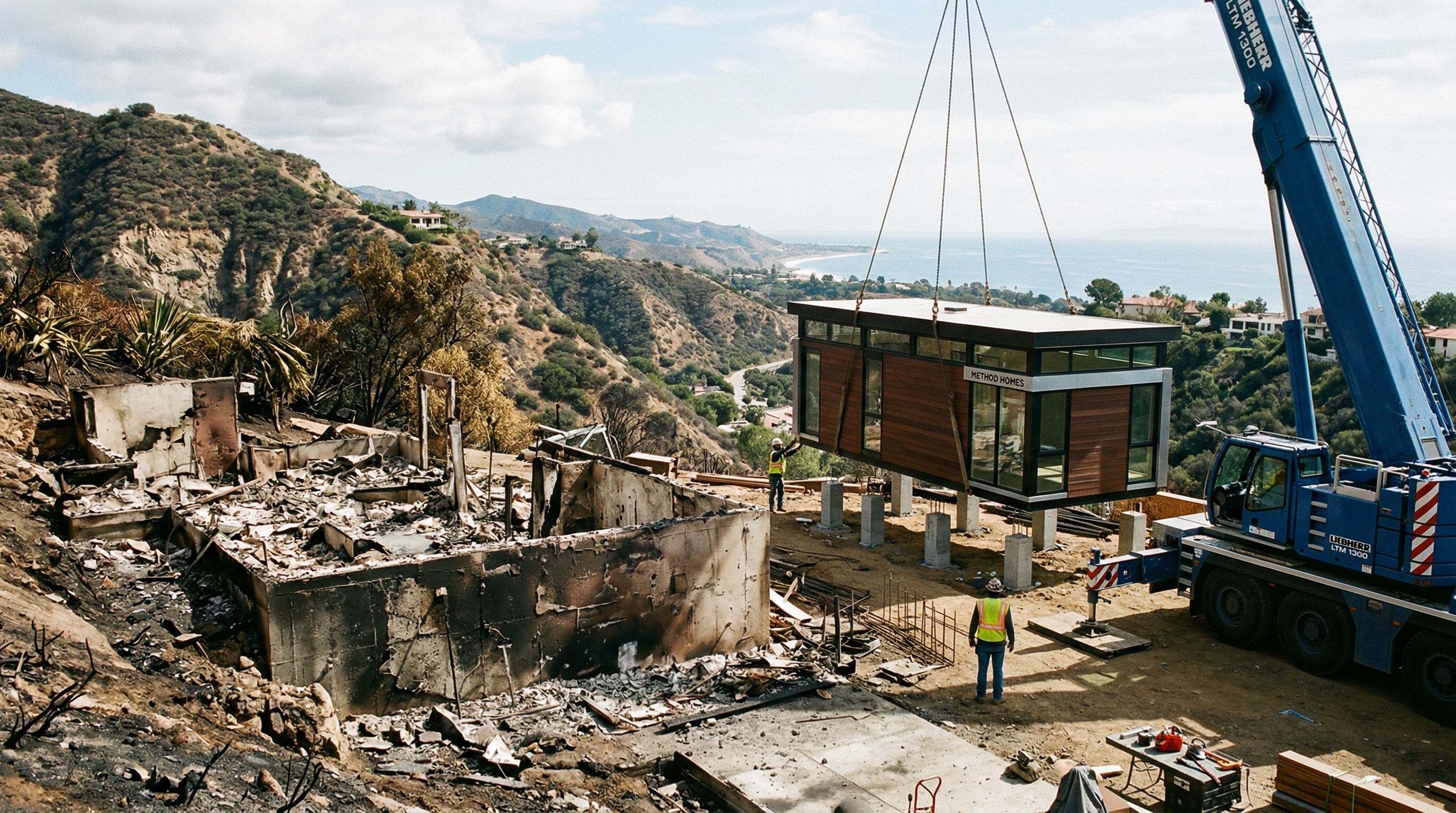
What the law says: In any county under a state emergency proclamation issued on or after February 1, 2025, a detached ADU can receive its own Certificate of Occupancy before the primary dwelling is rebuilt. The requirements are straightforward: the ADU must have its building permits, and it must pass final inspection. That's it.
This directly applies to Los Angeles County and Ventura County after the devastating 2025 Palisades and Eaton fires.
AB 462 also addresses Coastal Zone ADUs: local agencies with a certified Local Coastal Program must now approve or deny Coastal Development Permits for ADUs within 60 days of receiving a complete application.
What this means in practice: Before AB 462, the law created an absurd catch-22. If your main home burned down, you could build a new ADU on the same lot — but you couldn't legally live in it until your primary home was also rebuilt. Since primary home reconstruction in fire zones often takes 18 to 36 months, homeowners were paying mortgages on destroyed homes while renting apartments elsewhere.
AB 462 eliminates that problem. We're actively working with fire-affected families in Pacific Palisades and Altadena who are using this pathway. The timeline: permit in 3-4 weeks (using pre-approved plans under AB 1332), construction in 3-5 months, and occupancy while the main home is rebuilt around them.
Lost your home in the 2025 fires? We specialize in ADU-first rebuild strategies. Book a free consultation or call (323) 591-3717 — we'll walk you through the AB 462 pathway step by step.
AB 1154: JADU Owner-Occupancy Gets More Flexible
Junior Accessory Dwelling Units just became a lot more interesting for investors.
What the law says: Previously, every JADU in California required the property owner to live on-site — in either the main home or the JADU. AB 1154 introduces a bathroom-based distinction:
- If your JADU has its own separate bathroom: owner-occupancy is no longer required. You can rent out both the main home and the JADU while living elsewhere.
- If your JADU shares a bathroom with the main home: owner-occupancy is still required.
- JADUs remain capped at 500 sq ft of interior livable space.
- JADUs cannot be used as short-term rentals — minimum rental term is 30 days.
Why this matters more than it sounds: JADUs are the lowest-cost ADU option because they're built within the existing footprint of your home — typically a garage conversion, spare bedroom, or basement. Total cost is often $50,000-$120,000 compared to $200,000-$360,000 for a detached ADU. Until now, the owner-occupancy requirement made them impractical for investors. AB 1154 changes that math for any JADU with its own bathroom.
SB 9 (2025 Version): The State Now Has Real Enforcement Power
This one doesn't change what you can build. It changes what happens to cities that try to stop you.
What the law says: The 2025 version of SB 9 significantly strengthens the California Department of Housing and Community Development's (HCD) enforcement authority:
- HCD can now refer non-compliant local agencies to the Attorney General for legal action.
- Local ADU ordinances that conflict with state law can be declared null and void.
- Cities face stricter oversight if they've been slow-walking ADU approvals or adding requirements that go beyond what state law allows.
What we've seen change: Certain cities — particularly smaller ones in LA County — used to find creative ways to delay permits. Excessive plan check "corrections," requests for studies that state law doesn't require, or simply letting applications sit without action. Since SB 9 (2025) took effect, we've noticed a meaningful improvement in compliance. The threat of an Attorney General referral turns out to be a strong motivator.
If your city is still dragging its feet, you now have a formal path: file a complaint with HCD at hcd.ca.gov.
The 2024-2025 Laws Still Shaping Every ADU Project
The 2026 bills build on top of major legislation from the past two years. If you're starting a project today, these laws are just as important.
AB 976: Owner-Occupancy Is Permanently Gone
Effective January 1, 2024 — and this is the law that turned ADUs into real investment properties.
Before AB 976, many California cities required homeowners to live in either the main house or the ADU. That single requirement killed ADUs as pure rental investments. You couldn't buy a property, build an ADU, and rent both units while living elsewhere.
AB 976 permanently eliminated owner-occupancy requirements for standard ADUs. The word "permanently" matters — a previous law (AB 881) had removed the requirement temporarily until 2025, creating uncertainty for anyone making long-term financial plans. AB 976 made the change permanent.
The only exception: JADUs that share a bathroom with the main home still require owner-occupancy (per AB 1154).
The financial impact is enormous. Combined with California's 30-year rent control exemption for new construction, a new detached ADU in Los Angeles can generate $2,000 to $4,200 per month in rental income with zero owner-occupancy strings attached. In neighborhoods like Silver Lake, Echo Park, and West LA, a well-built 1-bedroom ADU pays for itself in 6-8 years through rental income alone.
AB 1332: Pre-Approved Plans and the 60-Day Permit Clock
Effective January 1, 2025 — this is the bill that cut ADU permit timelines in half.
AB 1332 requires every California city to:
- Establish a pre-approved ADU plan program — accepting plan submissions, posting approved plans on their website, and maintaining a library of pre-vetted designs that anyone can use.
- Approve or deny applications using pre-approved plans within 30 days.
- Approve or deny all other complete ADU applications within 60 days.
What we're seeing in April 2026: In Los Angeles, homeowners using LADBS pre-approved standard plans are getting permits issued in 21-30 days. That's a dramatic improvement from the 4-6 month timelines that were standard just two years ago. LADBS currently has over 20 approved designs, ranging from compact studios to full 2-bedroom units.
Custom designs still fall under the 60-day clock, but there's an important nuance: "corrections" issued during plan check pause the timer. Pre-approved plans generate almost zero corrections because they've already been vetted. That's why the practical difference between pre-approved (3-4 weeks) and custom (2-4 months) is much larger than the legal deadline suggests.
Pro tip from 127+ projects: If speed matters to you — and for most homeowners it does — start with a pre-approved plan and customize only the finishes and fixtures. You get a permit in weeks instead of months, and the construction quality is identical.
AB 2533: A Real Path to Legalize Unpermitted ADUs
Effective late 2025 — and this one could be worth more to you than any of the new-construction bills.
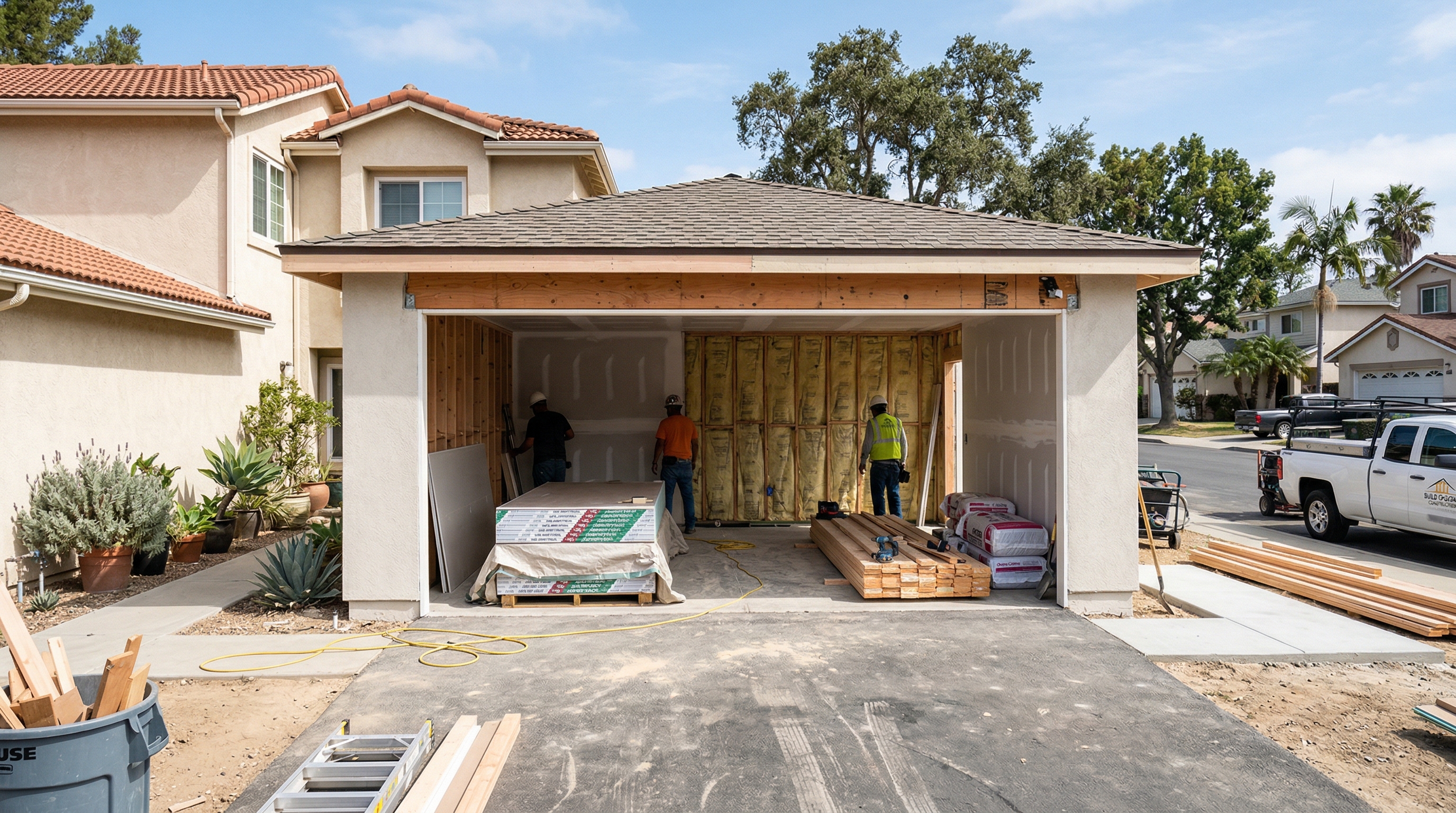
Here's the reality: California has an estimated 500,000+ unpermitted ADUs. Backyard units, garage conversions, basement apartments — built without permits over the past several decades. Before AB 2533, homeowners with these units faced a terrible choice: disclose the unit and risk demolition orders, or keep it hidden and face escalating penalties if discovered.
AB 2533 creates a legalization pathway for ADUs built before 2020:
- Cities cannot deny your legalization permit unless there is a severe, immediate safety hazard — not a code technicality, an actual danger.
- The law establishes reasonable minimum safety standards that protect occupants without requiring a complete tear-down and rebuild.
- Typical legalization costs range from $15,000 to $50,000, depending on the electrical, plumbing, and structural work needed.
- Average permit processing time: 60-90 days.
Why act now: If you're considering selling your home and it has an unpermitted ADU, legalizing it before listing can add $100,000 or more to your sale price. Buyers and their lenders are increasingly unwilling to close on properties with unpermitted structures. AB 2533 gives you a clear, predictable path to compliance.
Have an unpermitted unit? Get a free legalization assessment — we'll evaluate what work is needed and give you a realistic cost estimate.
SB 1211: Up to 8 ADUs on Multifamily Properties
Effective January 1, 2025 — this one is for apartment building owners and multifamily investors.
SB 1211 expanded ADU capacity on multifamily lots to up to 8 detached ADUs on qualifying properties. If you own an apartment building with unused yard space, this law opens up significant development potential that didn't exist before. The units go through the same streamlined ministerial approval process as single-family ADUs.
AB 1033: Sell Your ADU Separately as a Condo
Effective October 11, 2023 — still early, but the long-term implications are significant.
AB 1033 allows local agencies to adopt ordinances permitting the separate sale of ADUs as condominiums. Cities currently participating include Los Angeles, San Diego, San Jose, Berkeley, and Sacramento — and the list is growing.
The process involves condominium plan recordation, safety inspections, HOA creation under the Davis-Stirling Act, and independent utility metering. It's not simple, and very few homeowners have completed it yet. But the concept is powerful: instead of spending $250,000 to build an ADU and renting it for $2,500/month, you could potentially build it and sell it as a separate unit for $400,000+.
We expect AB 1033 transactions to accelerate significantly in 2026-2027 as the process matures and more lenders become comfortable financing them.
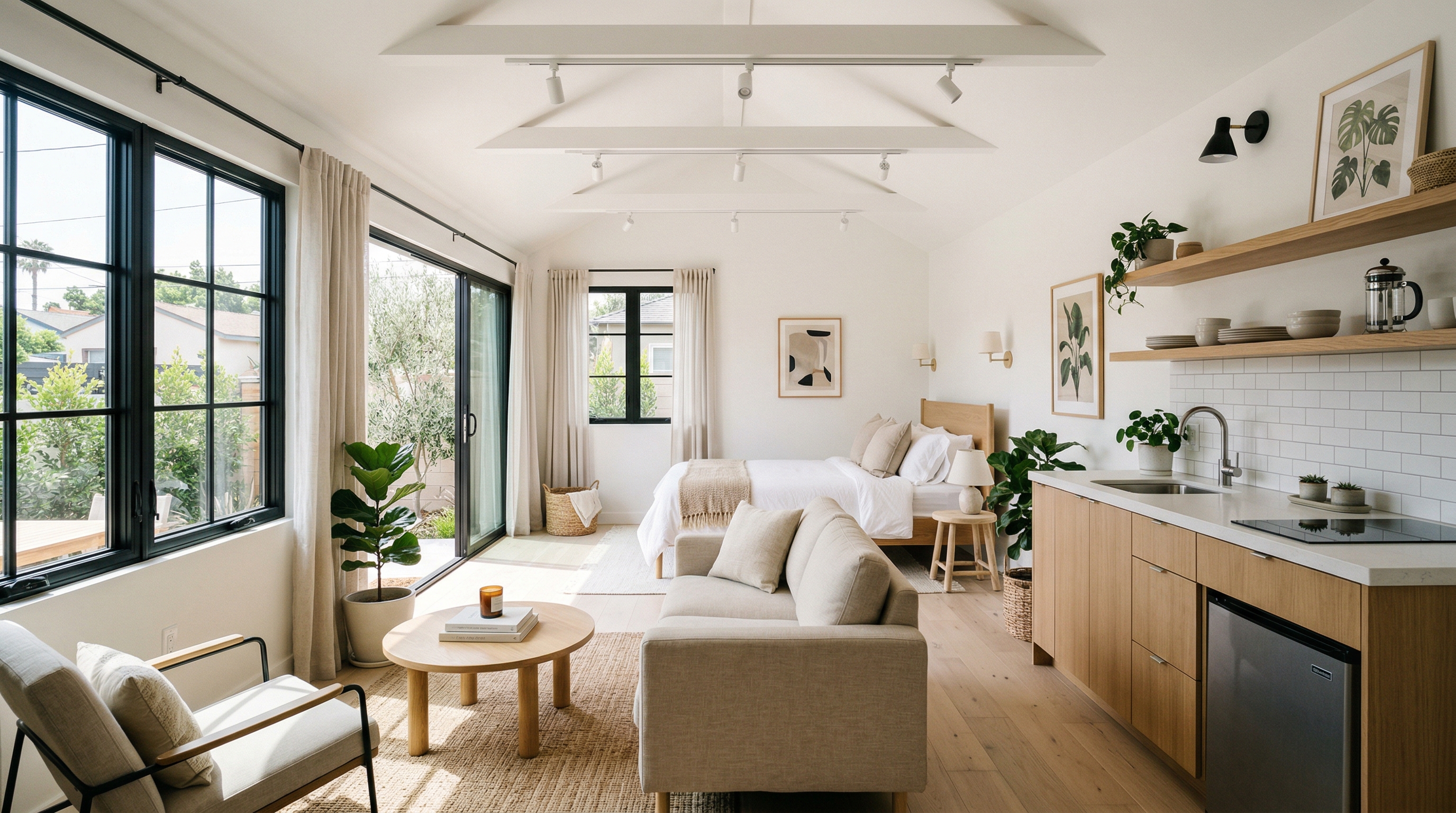
The Complete Timeline: How California ADU Law Evolved (2017-2026)
If you want context on how we got here, this is the decade-long progression:
| Year | Key Legislation | What Changed |
|---|---|---|
| 2017 | SB 229, AB 494 | Reduced parking requirements, streamlined permitting |
| 2019 | AB 68, SB 13, AB 881 | Eliminated impact fees for small ADUs, temporarily removed owner-occupancy |
| 2020 | AB 3182 | Limited HOA restrictions on ADUs |
| 2021 | SB 9 (original) | Lot splitting for duplexes on single-family lots |
| 2023 | AB 1033, AB 976 | ADU separate sale as condo; permanent owner-occupancy removal |
| 2024 | AB 1332, SB 1211, AB 2533 | Pre-approved plans + 60-day permits; 8 ADUs on multifamily; unpermitted ADU legalization |
| 2026 | SB 543, AB 462, AB 1154, SB 9 (2025) | 15-day completeness clock; fire zone ADU occupancy; JADU flexibility; enforcement teeth |
The trend is unmistakable: every legislative cycle makes ADUs easier, faster, and cheaper to build. California is all-in on ADUs as a housing solution, and the regulatory momentum isn't slowing down.
What This All Means for Your ADU Project in 2026
Here's the bottom line. If you're a California homeowner thinking about an ADU, the regulatory environment has never been more favorable. In concrete terms:
- Permits are faster than ever. Pre-approved plans: 21-30 days. Custom plans: 60-day maximum. The 15-day completeness clock prevents cities from stalling at the front end.
- You don't have to live on the property. AB 976 made this permanent. Build the ADU, rent both units, live wherever you want.
- Small ADUs are significantly cheaper to permit. Under 750 sq ft? No impact fees. Under 500 sq ft? No school fees either. That's $5,000-$15,000 in savings compared to two years ago.
- Fire-affected homeowners have a real path back. AB 462 lets you live in your ADU while your main home is reconstructed. AB 818 offers 10-day permits for modular units in fire zones.
- Unpermitted units can finally be legalized. AB 2533 created a practical pathway that protects homeowners from demolition orders while ensuring basic safety standards.
- Cities can't block you the way they used to. SB 9 (2025) gives HCD the power to refer non-compliant cities to the Attorney General. SB 543 prevents open-ended application delays.
- You may be able to sell your ADU separately. AB 1033 is live in LA, San Diego, San Jose, Berkeley, Sacramento, and expanding.
At GatherADU, we handle the entire lifecycle — feasibility analysis, architectural design, permitting, and construction management. We've navigated every iteration of California ADU law since we started, and these 2026 changes are the most impactful yet.
Ready to find out what you can build? Schedule a free consultation or call us at (323) 591-3717. We'll assess your property, run the numbers, and give you a clear roadmap — no obligation, no pressure.
Frequently Asked Questions About California ADU Laws in 2026
How long does it take to get an ADU permit in California in 2026?
For pre-approved plans, cities must approve or deny within 30 days — and in practice, LADBS is issuing permits in 21-30 days. For custom designs, the state-mandated maximum is 60 days, though corrections can pause the clock. Under SB 543, cities must also determine application completeness within 15 days. If they miss that deadline, your application is automatically deemed complete.
Do I have to live on my property if I build an ADU?
No. AB 976 permanently eliminated owner-occupancy requirements for standard ADUs as of January 1, 2024. You can rent out both the main home and the ADU without living on the property. The only exception is JADUs that share a bathroom with the main home — those still require owner-occupancy under AB 1154.
Can I rent my ADU on Airbnb or as a short-term rental?
Standard ADUs follow your city's short-term rental rules, which vary significantly. In Los Angeles, you must register as a home-sharing host, and STR rules apply to ADUs just like any other dwelling. JADUs are explicitly prohibited from short-term rentals under state law and must be rented for terms longer than 30 days.
How much does it cost to build an ADU in Los Angeles in 2026?
Costs range from $150 to $450 per square foot depending on ADU type, neighborhood, and finish level. Garage conversions: $80,000-$200,000. Detached ADUs: $200,000-$360,000. Permits, engineering, and soft costs add $15,000-$40,000 on top of construction. SB 543's fee reductions help — ADUs under 750 sq ft now save thousands in impact fees.
What is the maximum ADU size allowed in California?
Detached ADUs: up to 1,200 sq ft. Attached ADUs: up to 1,000 sq ft or 50% of the primary dwelling floor area, whichever is larger. JADUs: 500 sq ft maximum. Under SB 543, all size measurements now refer to interior livable space — exterior walls and stairs are excluded from the calculation.
Can I build an ADU if my house burned down in the 2025 LA fires?
Yes. AB 462 allows you to obtain a Certificate of Occupancy for a detached ADU before your primary home is rebuilt, as long as you're in a county under a state emergency proclamation issued on or after February 1, 2025. Los Angeles County and Ventura County both qualify. This means you can legally live in your ADU while your main home is under reconstruction.
Can I sell my ADU separately from my main house?
In participating cities, yes. AB 1033 allows local agencies to permit the separate sale of ADUs as condominiums. Los Angeles, San Diego, San Jose, Berkeley, and Sacramento are currently active. The process requires condominium plan recordation under the Davis-Stirling Act, safety inspections, and independent utility metering.
How do I legalize an unpermitted ADU in California?
AB 2533 created a legalization pathway for ADUs constructed before 2020. Cities cannot deny your permit unless there is a severe, immediate safety hazard. Typical legalization costs: $15,000-$50,000. Processing time: 60-90 days. The first step is a professional assessment to determine what work is needed to bring the unit into compliance.
Are there any fees I don't have to pay for a small ADU?
Yes, and SB 543 expanded these exemptions significantly. ADUs and JADUs under 500 sq ft are exempt from school impact fees. ADUs 750 sq ft or smaller are exempt from all impact fees. For larger ADUs, fees must be proportional to the ADU's size relative to the primary dwelling — eliminating the flat-fee structures that previously penalized small and mid-size units.
What if my city is delaying or blocking my ADU permit?
You have more recourse than ever. SB 9 (2025) gives the California Department of Housing and Community Development (HCD) authority to refer non-compliant local agencies to the Attorney General. Local ADU ordinances that conflict with state law can be declared null and void. File a complaint at hcd.ca.gov — or call us and we'll help you navigate the process.
This article reflects California ADU laws as of April 2026. Regulations can vary by city — always verify local requirements for your specific property. GatherADU provides free feasibility assessments to help you understand exactly what applies to your project.
Written by Argi Avetisyan, Co-founder & CEO at GatherADU. 127+ ADUs completed across Los Angeles County.