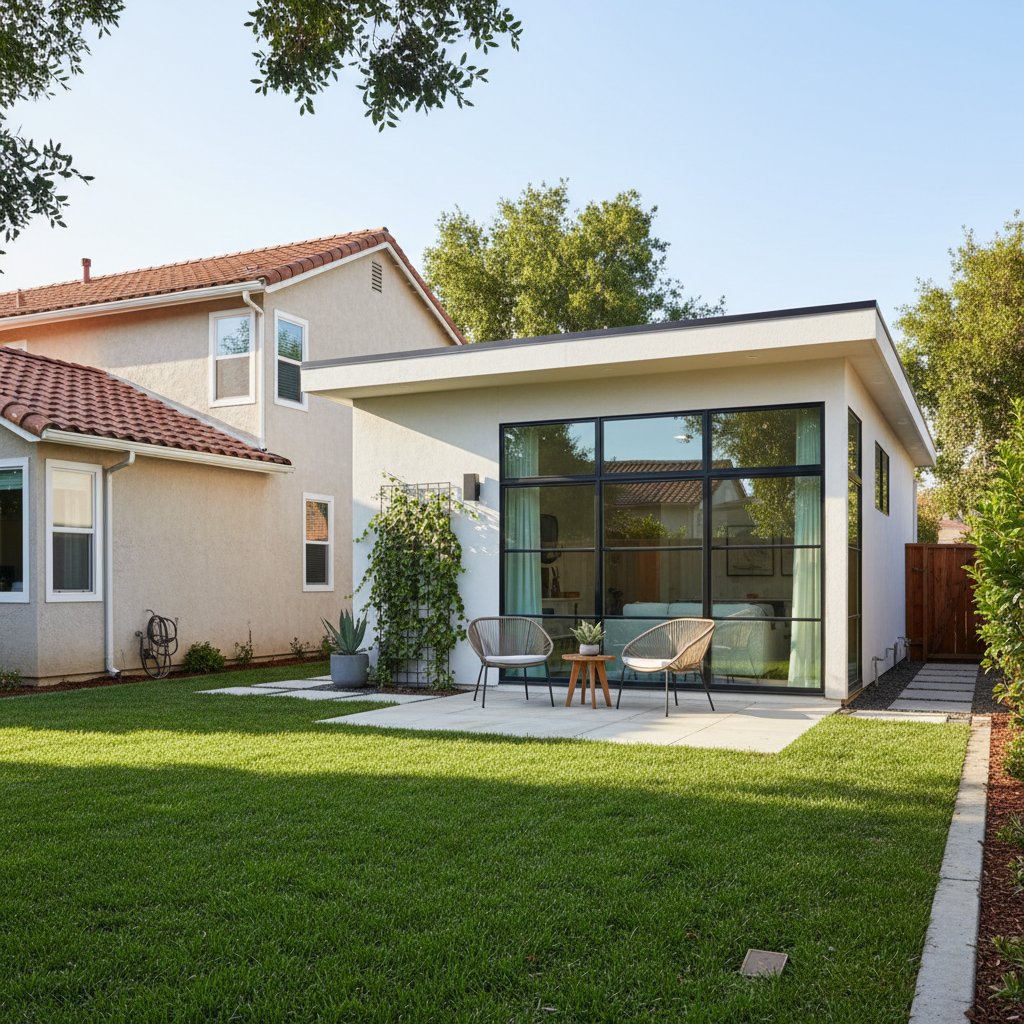

Garage conversions in Los Angeles are becoming a popular way for homeowners to add additional living space to their properties. However, amidst this trend lies the critical need to remain within the boundaries of the law. Legality and safety are paramount; obtaining the necessary permits before making such alterations to your home isn't just a suggestion—it's a requirement.
Introduction
In the sprawling cityscape of Los Angeles, more and more homeowners are looking at their garages not just as storage spaces for cars and forgotten hobbies but as potential living areas, rentable units, or home offices. This shift in perspective has given rise to an increasing number of garage conversions, but not all these transformations are happening within the legal framework—leading to what’s known as illegal or unpermitted garage conversions.
The repercussions of going the unpermitted route are serious, both legally and financially, and can create unnecessary stress. But don't fret; we'll guide you through the steps to correct an illegal conversion. Remember, involving professional help, like an experienced architect, is a crucial part of the process to ensure that plans are drawn up correctly and everything is brought up to code.
Understanding Illegal Garage Conversions
An illegal garage conversion occurs when a homeowner repurposes their garage into a livable space without the proper permits or adherence to the city's zoning and building codes. While these makeshift renovations may offer a quick fix to space issues, they often do not meet the safety standards set by the local authorities.
The Risks and Consequences
Engaging in an illegal garage conversion can pose various risks, including:
- Penalties and fines from the city.
- Increased costs to bring the conversion up to code.
- Complications with insurance claims.
- Safety hazards due to substandard construction or electrical setups.
- Difficulties when selling the property as unpermitted work can deter potential buyers.
Steps to Identifying an Illegal Garage Conversion
Identifying an illegal garage conversion involves inspection for signs that the work was not performed to code. These can include:
- Lack of proper ventilation systems.
- No evidence of permits on public records.
- Substandard building materials or craftsmanship.
- Electrical work that does not match the rest of the home.
The Fix: Legalizing Your Garage Conversion
To rectify an unpermitted garage conversion, a series of steps must be followed, including:
- Consulting a professional architect or firm that is well-versed in local zoning laws. Schedule a consultation with our ADU experts
- Having detailed as-built plans drawn up for the current state of the converted space.
- Applying for the necessary permits with the local authorities.
- Working with contractors to bring every aspect of the conversion up to code.
This process can save homeowners from future headaches and ensure that their converted space is safe, functional, and adds value to their property.
Cost Considerations
The cost of legalizing an unpermitted garage conversion varies widely depending on the extent of the work required to meet compliance. Homeowners should budget for:
- Architectural and engineering services.
- City permit fees.
- Construction costs to rectify any issues.
Financial planning for such a project is essential, and homeowners may consider financing options or loans to cover the expenses.
Benefits of Legalizing Your Garage Conversion

While the process may seem daunting, there are clear benefits to legalizing a garage conversion:
- Enhances the property value and broadens the market appeal for potential buyers.
- Reduces the risk of legal action and fines.
- Ensures a safe living environment that complies with building codes.
Schedule a consultation
Legalizing a pre-2020 unpermitted garage ADU under California law (AB 2533)
An older garage conversion needs a property-specific review, not an assumption that every difference from today's rules requires rebuilding. The provisions below address qualifying unpermitted accessory dwelling units and junior accessory dwelling units. They do not automatically legalize every converted garage or establish that an occupied space is safe.
What Government Code 66332 (now 66311.7) changed in 2025
AB 2533, Chapter 834 of the Statutes of 2024, amended Government Code 66332 effective January 1, 2025. SB 543 (Chapter 520 of the Statutes of 2025) renumbered that section as Government Code 66311.7 effective January 1, 2026. For an unpermitted ADU or JADU constructed before January 1, 2020, subdivision (a) prohibits permit denial because the unit violates building standards or does not comply with the applicable state ADU provisions or local ADU ordinance, subject to the statute's exceptions.
Under subdivision (b), the agency may deny on the covered grounds if it finds that correcting the violation is necessary to comply with Health and Safety Code 17920.3. Subdivision (c) separately states that the section does not apply to a building deemed substandard under that provision. Read these limits together: this is not unconditional approval or permission to disregard dangerous conditions. The published section 66332 text reproduces the amendment; use the official bill text to check its wording.
What counts as substandard under Health and Safety Code 17920.3
Health and Safety Code 17920.3 lists conditions that, to the specified extent, endanger life, limb, health, property, safety, or welfare of occupants, nearby residents, or the public. Examples include missing or improper toilets, washbasins, kitchen sinks, baths or showers; missing hot and cold running water; inadequate heating; deficient required ventilation or natural light; undersized rooms; damp habitable rooms; infestation; general dilapidation; and missing required sewage connections.
The statute also addresses structural hazards, wiring, plumbing, mechanical equipment, weather protection, and other conditions. Visible mold and infestation provisions include designated-officer determinations; minor mold on surfaces that accumulate moisture during their intended use is expressly excepted from the visible-mold provision. Room-dimension issues also have qualifications. This is a summary, not a complete diagnostic checklist: read the statute and ask the appropriate professional or agency how it applies. Do not open walls, test electrical systems, or diagnose structural safety yourself.
Optional confidential inspection before you apply
Section 66311.7(d), formerly 66332(d), requires agencies to inform the public through resources including permit checklists and their websites. That information must include a checklist of the conditions specified in section 17920.3 and explain that homeowners may obtain a confidential third-party code inspection from a licensed contractor before applying. Its stated purpose is to understand existing conditions or the potential scope of improvements.
This inspection is optional under that provision, not a replacement for the agency's permit decision. Ask the contractor what the review covers, what remains inaccessible, and how findings will be documented. Keep observations separate from proposed repairs and unresolved questions. For related background, see the AB 2533 legalization overview, while checking statutory details against the primary sources here.
Fees and inspections during legalization
Section 66311.7(e), formerly 66332(e), says a homeowner applying to permit a qualifying pre-2020 unpermitted ADU or JADU is not required to pay impact fees or connection or capacity charges, except when utility infrastructure is needed to comply with section 17920.3 and the fee is authorized by subdivision (e) of section 66311.5 (formerly 66324(e)). This is a specific protection, not a statement that every application, professional service, or corrective construction activity is free.
Subject to the substandard-building exception, subdivision (f) permits a local inspector to inspect and recommend necessary health and safety corrections. If noncompliance is found, it says the agency shall not penalize the applicant for having the unpermitted unit and shall approve necessary permits to correct that noncompliance. Ask for written findings and the applicable correction-permit process rather than treating the protection as a waiver of needed safety work.
Delay of enforcement for units built before 2020
Government Code 66331 provides an enforcement-delay route subject to Health and Safety Code 17980.12. An owner receiving a qualifying notice may apply, in the agency's prescribed manner, for a five-year delay. The agency must determine that correcting the violation is not necessary to protect health and safety. A request alone is not an approved delay.
The current cross-referenced statute bars approval of these delay applications on or after January 1, 2030, while preserving the full term of an earlier approved delay. Keep the notice, request, and determination together. This process does not itself issue a legalization permit or excuse an urgent safety concern.
A practical checklist for Los Angeles homeowners
- Gather dated photographs, available property and utility records, and permits for related work as possible evidence of construction timing. Ask the agency what establishes the date; do not assume any single document is conclusive.
- Obtain the agency's section 17920.3 checklist, organize known conditions and unanswered questions, and consider the optional licensed-contractor inspection before applying.
- For property within the City of Los Angeles, contact LADBS, the Los Angeles Department of Building and Safety, about the application and records needed. Other cities and unincorporated areas have different responsible agencies.
- Units built on or after January 1, 2020 do not qualify for this section 66311.7 legalization protection; ask about the ordinary applicable ADU permit path. The separate enforcement-delay statute has a limited later-built category, so do not confuse the two processes.
The garage-conversion legalization guide offers related planning context. This added section is general information, not legal advice or a parcel-specific eligibility determination. Sources checked November 7, 2026; consult the responsible agency and qualified counsel about current law and your circumstances.
Conclusion
The takeaway is clear: the importance of following the correct procedures for home improvements cannot be overstated. Not only does it protect homeowners from legal complications, but it also ensures that any addition to the home is safe and adds real value. Whether it's a cozy new dwelling space or a sleek office, make sure you get the right advice from professionals before starting your garage conversion project.
Unpermitted activity doesn't have to become a permanent mark on your property. With the right knowledge and support, you can remedy an unpermitted garage conversion in Los Angeles, turning a problem into a lucrative and lawful home improvement.
For professional assistance and further guidance, don't hesitate to reach out to Schedule a consultation.