If your property uses a septic system instead of municipal sewer, you might wonder whether you can still build an ADU. The short answer is yes, but septic considerations add complexity to your project that properties on sewer don't face.
Understanding septic capacity, upgrade requirements, and regulatory approval processes will help you plan a realistic timeline and budget for your ADU project.
Septic Systems 101
Before diving into ADU-specific issues, let's cover how septic systems work.
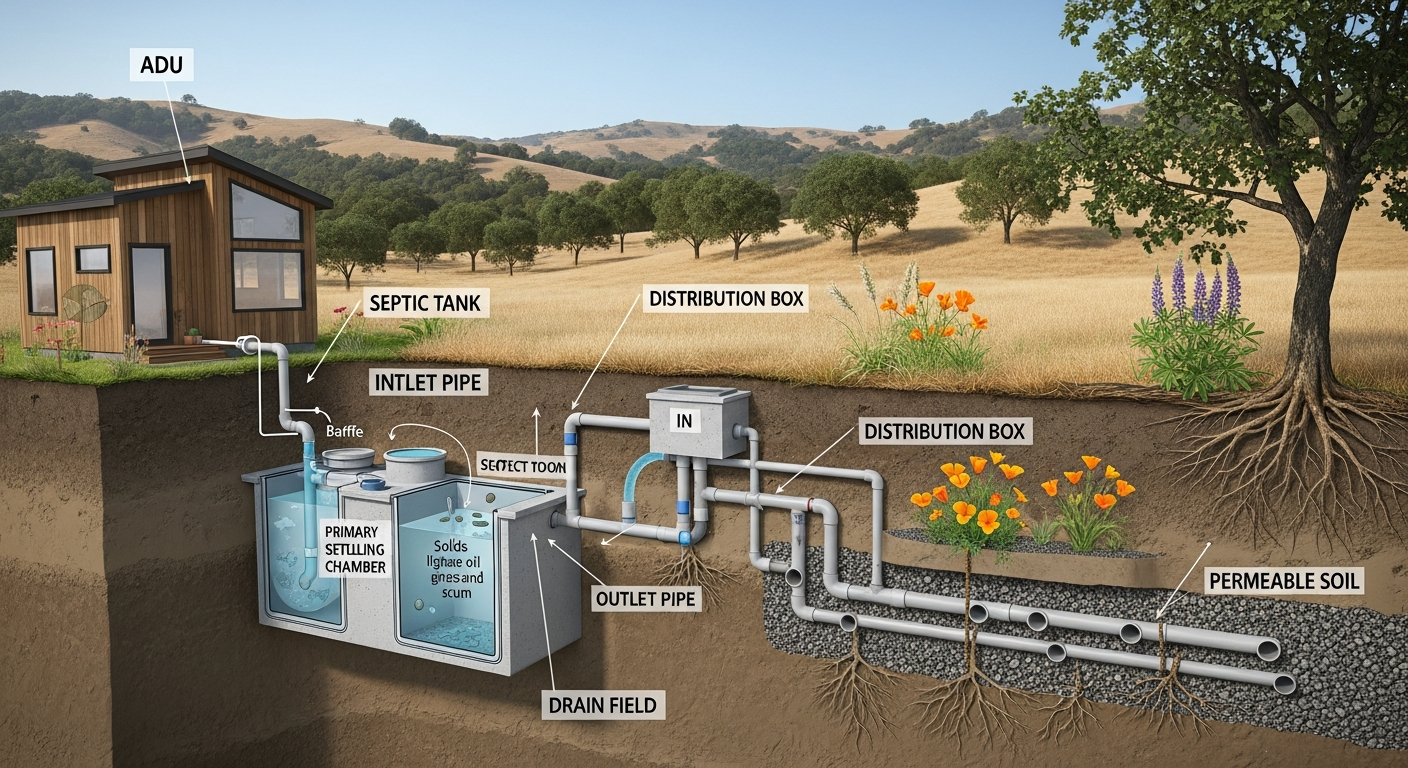
A conventional septic system has two main components: the tank and the leach field (also called drain field or absorption field).
The septic tank receives wastewater from your home. Solids settle to the bottom, grease floats to the top, and the liquid effluent flows out to the leach field. Bacteria in the tank break down solids over time.
The leach field consists of perforated pipes buried in gravel trenches. Effluent from the tank disperses through these pipes, percolates into the soil, and is naturally filtered and treated before reaching groundwater.
The system's capacity depends on the tank size and, critically, on the leach field size and soil percolation rate. Sandy soil drains quickly and can handle more volume. Clay soil drains slowly and requires larger leach fields.

Can Your Septic Handle an ADU?
The fundamental question is whether your existing septic system has capacity for additional wastewater from an ADU. Several factors determine this:
Design Capacity
When your septic system was installed, it was sized for a specific number of bedrooms. A 3-bedroom house typically has a system designed for 3 bedrooms worth of occupants. Adding an ADU adds bedrooms and occupants, potentially exceeding the design capacity.
Current Condition
Even if your system was sized generously, age and condition matter. An older system with a partially failed leach field or a tank that hasn't been pumped regularly may not handle additional load.
Soil Conditions
The leach field's ability to handle effluent depends on soil. If your soil drains well and you have available space, expanding the leach field might be straightforward. If soil is clay-heavy or saturated, expansion may be expensive or impossible.
Available Space
Leach field expansion requires unused, suitable land. If your property is small or the ADU placement uses space needed for septic expansion, you may have a problem.
Getting Your Septic System Evaluated
Before designing an ADU, hire a licensed septic professional to evaluate your system. This typically involves:
Tank inspection: Locating the tank, pumping it out, and inspecting interior condition.
Leach field assessment: Checking for signs of saturation, ponding, or failure in the drain field area.
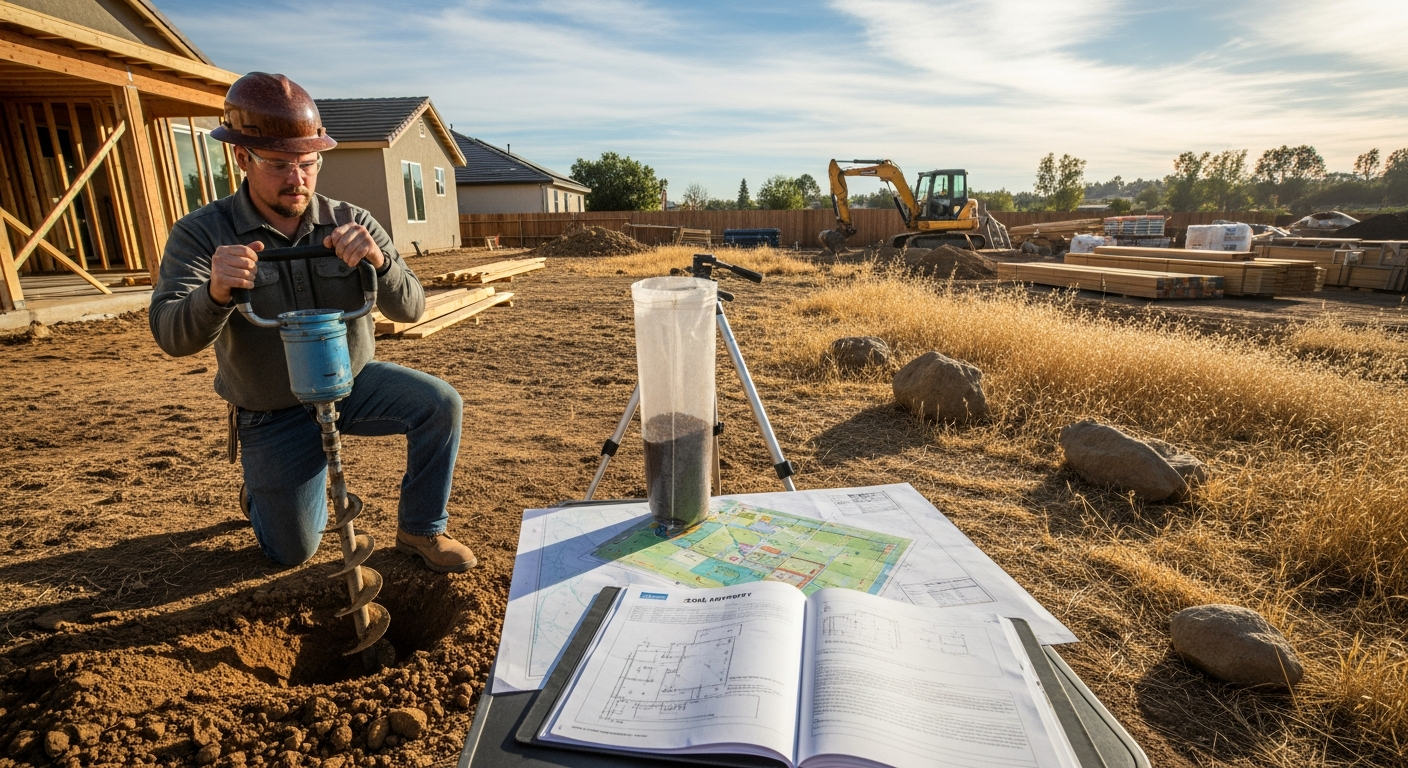
Percolation testing: If expansion is needed, perc tests determine how quickly soil absorbs water, which drives leach field sizing.
Capacity calculation: Comparing current system capacity to total projected demand including the ADU.
The evaluation report tells you whether your system can handle an ADU as-is, needs upgrading, or presents challenges that may complicate the project.
Septic Options for ADUs
Depending on your evaluation results, several paths forward exist:
Existing System Has Capacity
Best case scenario. Your current tank and leach field can handle the additional load. You'll still need to document this for the building department, but no septic work is required beyond connecting the ADU to the existing system.
Tank Upgrade Only
If your leach field has capacity but the tank is undersized or failing, replacing or adding a tank may be sufficient. Tank replacement typically costs $3,000 to $10,000 depending on size and site conditions.
Leach Field Expansion
If the leach field needs to grow, you'll install additional trenches or beds. Costs vary widely based on soil conditions, required size, and site access. Budget $5,000 to $30,000 or more for significant expansions.
Complete System Replacement
In some cases, especially with older failing systems, complete replacement makes more sense than upgrading. A new conventional septic system typically costs $10,000 to $30,000. Advanced treatment systems can cost $15,000 to $50,000 or more.
Alternative Treatment Systems
Where conventional septic isn't feasible due to soil conditions, space constraints, or environmental sensitivity, alternative systems exist:
- Mound systems: Build up the leach field above grade in imported sand
- Aerobic treatment units: Active treatment produces cleaner effluent
- Drip dispersal systems: Distribute effluent through small-diameter tubing
These alternatives cost more and require ongoing maintenance, but they can make ADUs possible on challenging sites.
Regulatory Approval
Adding an ADU on a septic system requires approval from your local environmental health department or equivalent agency, in addition to regular building permits.
The approval process typically involves:
- Submitting site plans showing septic system, proposed ADU, and any modifications
- Demonstrating adequate capacity or proposing upgrades
- Perc test results if expanding or installing new leach field
- Review by environmental health staff
- Permit issuance and inspection during construction
This process can add weeks or months to your ADU timeline. Start early to avoid delays.
| Scenario | Typical Cost | Timeline Impact |
|---|---|---|
| Existing system adequate | $500-$2,000 (evaluation only) | Minimal |
| Tank upgrade needed | $5,000-$12,000 | 2-4 weeks |
| Leach field expansion | $8,000-$30,000 | 4-8 weeks |
| Complete replacement | $15,000-$40,000 | 6-12 weeks |
Design Considerations for Septic-Connected ADUs
When building an ADU on a property with septic, a few design strategies can help:
Water-efficient fixtures: Low-flow toilets, faucets, and showerheads reduce wastewater volume, easing demand on the septic system.
Limit garbage disposal use: Food waste adds solids load to the tank. Consider omitting garbage disposals or educating tenants about limited use.
Separate gray water: In some cases, routing washing machine or shower water to a separate gray water system can reduce septic load.
ADU placement: Position the ADU to minimize trenching distance to the existing septic system while avoiding the leach field area.
Building an ADU on Septic?
We have experience navigating septic requirements and can help coordinate with environmental health agencies to keep your project on track.
Call us at (323) 591-3717 or schedule a free consultation to discuss your property.
The Bottom Line
Having a septic system doesn't prevent you from building an ADU, but it adds a layer of planning that sewer-connected properties don't face. The key is early evaluation:
- Get your septic system professionally assessed before investing heavily in ADU design
- Understand whether upgrades are needed and budget accordingly
- Factor environmental health approval into your timeline
- Design the ADU with septic efficiency in mind
With proper planning, septic properties can successfully add ADUs. The extra due diligence upfront prevents expensive surprises during construction.
Sources cited:
- California State Water Resources Control Board. (2022). "Onsite Wastewater Treatment Systems Policy."
- EPA. (2023). "Septic Systems Overview."