When planning an ADU, you'll likely encounter the requirement for a soil report, also called a geotechnical report or soils engineering study. This document provides essential information about the ground where you'll build, influencing foundation design, drainage planning, and overall construction approach.
Some homeowners see soil reports as bureaucratic red tape. In reality, they protect your investment by ensuring your ADU's foundation is designed for the actual conditions on your property, not generic assumptions that might not apply.
What Is a Soil Report?
A soil report is a professional assessment of subsurface conditions on your property. It's prepared by a licensed geotechnical engineer based on field investigation and laboratory testing.
The report typically includes:
Site investigation findings: Information gathered from drilling or digging test holes on your property, describing soil layers, groundwater levels, and any unusual conditions encountered.
Laboratory test results: Data from soil samples tested for properties like bearing capacity, expansion potential, permeability, and composition.
Engineering analysis: Professional interpretation of what the findings mean for construction.
Foundation recommendations: Specific guidance on foundation type, depth, reinforcement, and any special measures needed for your site.
Grading and drainage guidance: Recommendations for site preparation and water management.

When Is a Soil Report Required?
Requirements vary by jurisdiction. Generally, you'll need a soil report for a detached ADU if:
Your property is in a known problem area: Hillsides, areas with expansive soils, fill areas, or locations with high water tables often require geotechnical investigation regardless of project size.
The building department requires it: Many jurisdictions require soil reports for any new construction, including ADUs. Check with your local building department early in the planning process.
Your structural engineer needs the information: Even if not technically required, your engineer may need soil data to properly design the foundation. Without a report, they might have to make conservative assumptions that result in more expensive construction.
Garage conversions and attached ADUs often don't require new soil reports since the main house foundation already exists. But detached new construction almost always triggers the requirement in Southern California.
The Soil Investigation Process
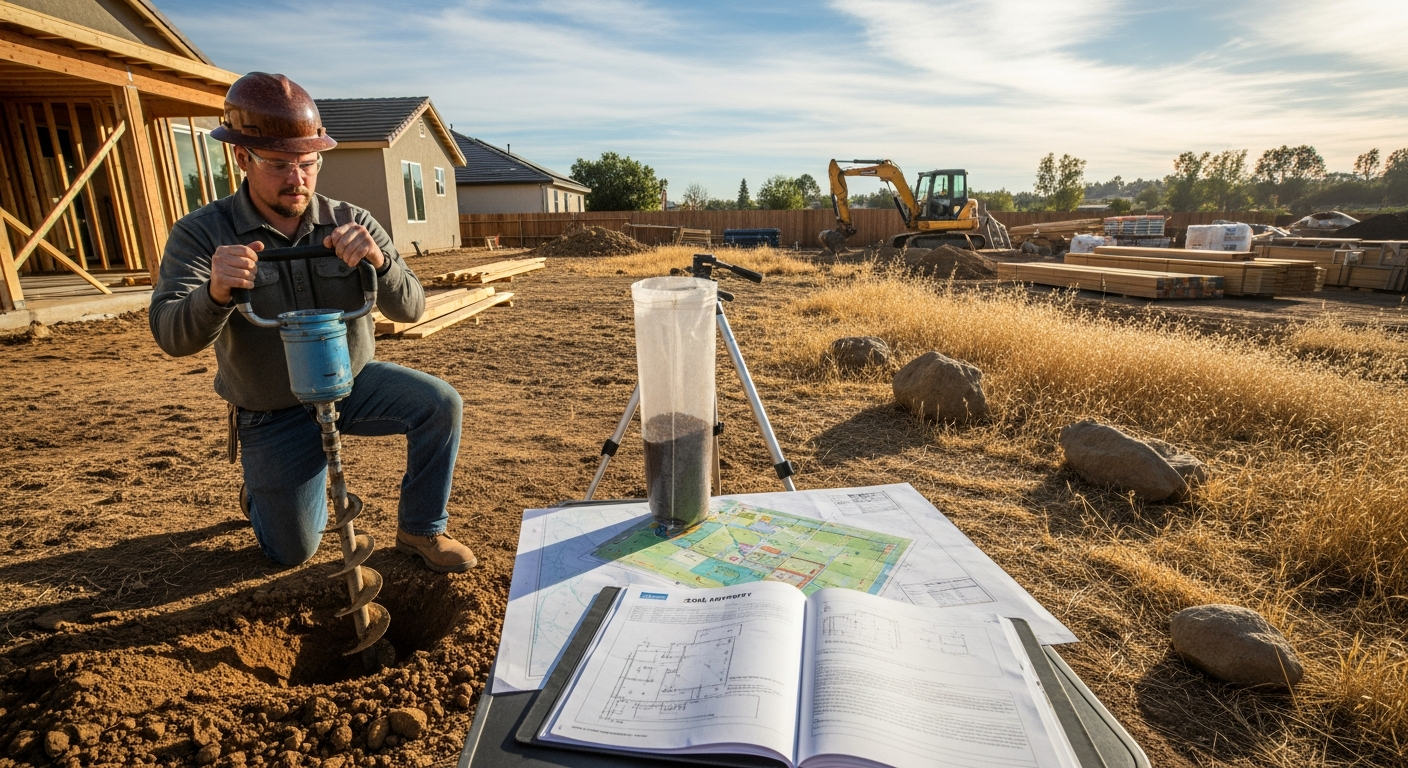
Site Visit and Drilling
The geotechnical firm visits your property with drilling equipment. They drill one or more test borings to depths appropriate for the project, typically 10 to 20 feet for residential construction.
During drilling, technicians collect samples at regular intervals and log observations about soil type, moisture, density, and any changes with depth.
Laboratory Testing
Samples go to a soils lab for analysis. Common tests include:
- Classification tests: Identifying soil type (clay, sand, silt, gravel, mixtures)
- Expansion testing: Measuring how much soil swells when wet
- Bearing capacity tests: Determining how much weight soil can support
- Corrosivity tests: Checking if soil chemistry will damage concrete or steel
Report Preparation
The geotechnical engineer reviews field and lab data and prepares a written report with findings and recommendations. This typically takes 1 to 3 weeks after field work is complete.
What Soil Reports Reveal
Soil reports can identify several conditions that affect ADU construction:
Expansive Soils
Certain clay soils expand significantly when wet and shrink when dry. This movement can crack foundations and damage structures. Expansive soils are common throughout Southern California and require special foundation design: deeper footings, post-tensioned slabs, or other measures to resist movement.
Poor Bearing Capacity
Soft or loose soils may not support standard foundations. The report might recommend deeper footings to reach firmer soil, or soil improvement techniques like compaction or replacement with engineered fill.
High Groundwater
If groundwater is near the surface, drainage becomes critical. The report will recommend measures to keep water away from the foundation and prevent moisture problems.
Fill Conditions
If your building site includes uncontrolled fill (soil brought in previously without engineering oversight), special measures may be needed. The report might recommend removal and recompaction, or deep foundations that bypass the fill.
Slope Stability
For hillside properties, the report assesses whether the slope is stable and what measures are needed to ensure it stays that way after construction.
| Soil Condition | Potential Impact | Typical Solution |
|---|---|---|
| Expansive clay | Foundation cracking | Deeper footings, special slabs |
| Low bearing capacity | Foundation settling | Deeper footings, compaction |
| High water table | Moisture problems | Drainage systems, waterproofing |
| Uncontrolled fill | Uneven settling | Removal, recompaction |
| Slope instability | Landslide risk | Retaining walls, setbacks |
Soil Report Costs
For a typical ADU project in Southern California, expect to pay $1,500 to $4,000 for a soil report. The cost depends on:
Number of borings: More test holes means more field work and lab testing.
Depth required: Deeper drilling costs more.
Site access: Difficult access for equipment can increase costs.
Complexity: Sites with known problem conditions may require more extensive investigation.
This is a modest cost relative to total project budget, and it can save significant money by right-sizing the foundation design. A report that identifies good soil conditions can result in a simpler, less expensive foundation. A report that identifies problems prevents costly failures later.
How Soil Reports Affect Your Project
The soil report feeds directly into foundation design. Your structural engineer uses the geotechnical recommendations to specify:
- Foundation type (slab on grade, raised foundation, piers)
- Footing depth and width
- Reinforcing steel requirements
- Special measures for expansive soils or other conditions
- Drainage and grading requirements
A site with excellent soil conditions might use a simple slab foundation with standard reinforcement. A challenging site might require a post-tensioned slab, deeper footings, or other measures that add to construction cost.
Understanding these requirements early helps you budget accurately and avoid surprises during construction.
Working with Geotechnical Engineers
Your general contractor or architect can usually recommend geotechnical firms they've worked with successfully. Alternatively, search for licensed geotechnical engineers in your area with experience in residential construction.
When getting quotes, provide:
- Property address and approximate ADU location
- Proposed ADU size (square footage)
- Construction type (one story, two story)
- Any known site conditions (slope, previous construction, water issues)
The firm can then propose an appropriate scope of work and provide a meaningful cost estimate.
Planning Your ADU Foundation?
We work with trusted geotechnical engineers and can coordinate soil investigations as part of your ADU project.
Call us at (323) 591-3717 or schedule a free consultation to discuss your project.
Timeline Considerations
Soil reports take time to complete. Plan for:
- 1-2 weeks to schedule the field investigation
- 1 day for the actual drilling work
- 1-3 weeks for laboratory testing and report preparation
Total timeline is typically 3 to 6 weeks from initial contact to receiving the final report. Start this process early so the report is ready when your structural engineer needs it.
The Bottom Line
A soil report is an investment in getting your foundation right. The few thousand dollars spent on investigation pales compared to the cost of foundation repairs or structural problems down the road.
Don't view it as an obstacle to your ADU project. View it as essential information that ensures your investment is built on solid ground, literally.
Sources cited:
- California Geological Survey. (2022). "Guidelines for Preparing Engineering Geologic Reports."
- American Society of Civil Engineers. (2023). "Standard Guidelines for Minimum Design Loads."