Embarking on an Accessory Dwelling Unit (ADU) project in California is an exciting venture, promising additional housing, rental income, or flexible living space. However, navigating the financial landscape requires a clear understanding of all potential costs, and among the most significant are ADU utility capacity fees California homeowners may encounter. These aren't your monthly utility bills; rather, they are one-time charges levied to ensure that local infrastructure can support your new dwelling.
At GatherADU, we believe that informed homeowners make the best decisions. This article will demystify utility capacity fees for ADUs in California, explaining what they are, why they're charged, crucial state-level exemptions and reductions, and how they factor into your overall ADU budget. Understanding these fees upfront can save you significant time, money, and headaches down the road.
What Are Utility Capacity Fees?
Utility capacity fees, often referred to as impact fees, connection fees, or facility charges, are one-time charges assessed by local utility providers (water, sewer, electricity, gas) and municipalities. Their purpose is to cover the cost of expanding or upgrading public infrastructure to accommodate new development or increased demand.
- Water & Sewer: These fees ensure there's enough capacity in the treatment plants, pipes, and pumping stations to handle the additional water usage and wastewater generated by your ADU.
- Electricity & Gas: These charges contribute to the expansion of power grids, substations, and gas lines to meet the increased energy demands.
- Other Potential Fees: In some areas, you might also encounter fees related to storm drains, parks, or traffic impacts, though utility-specific fees are usually the most substantial for ADUs.
Unlike monthly usage charges, capacity fees are a capital cost. They reflect the ADU's share of the investment required to maintain and expand the underlying utility network that serves the community.
Why Are Utility Capacity Fees Charged for ADUs?
The rationale behind utility capacity fees is rooted in growth management and equitable cost distribution. As communities grow and new homes (including ADUs) are built, they place additional strain on existing public services and infrastructure. If these systems aren't expanded or upgraded, they can become overwhelmed, leading to service degradation for everyone.
By charging capacity fees, local agencies aim to:
- Fund Infrastructure Expansion: These fees provide a funding source for necessary improvements to water treatment facilities, sewer lines, electrical grids, and other utility systems.
- Ensure Fair Contribution: They ensure that new development contributes its fair share to the cost of infrastructure, rather than burdening existing residents or taxpayers.
- Promote Sustainable Growth: By reflecting the true cost of growth, these fees can encourage more efficient land use and development patterns.
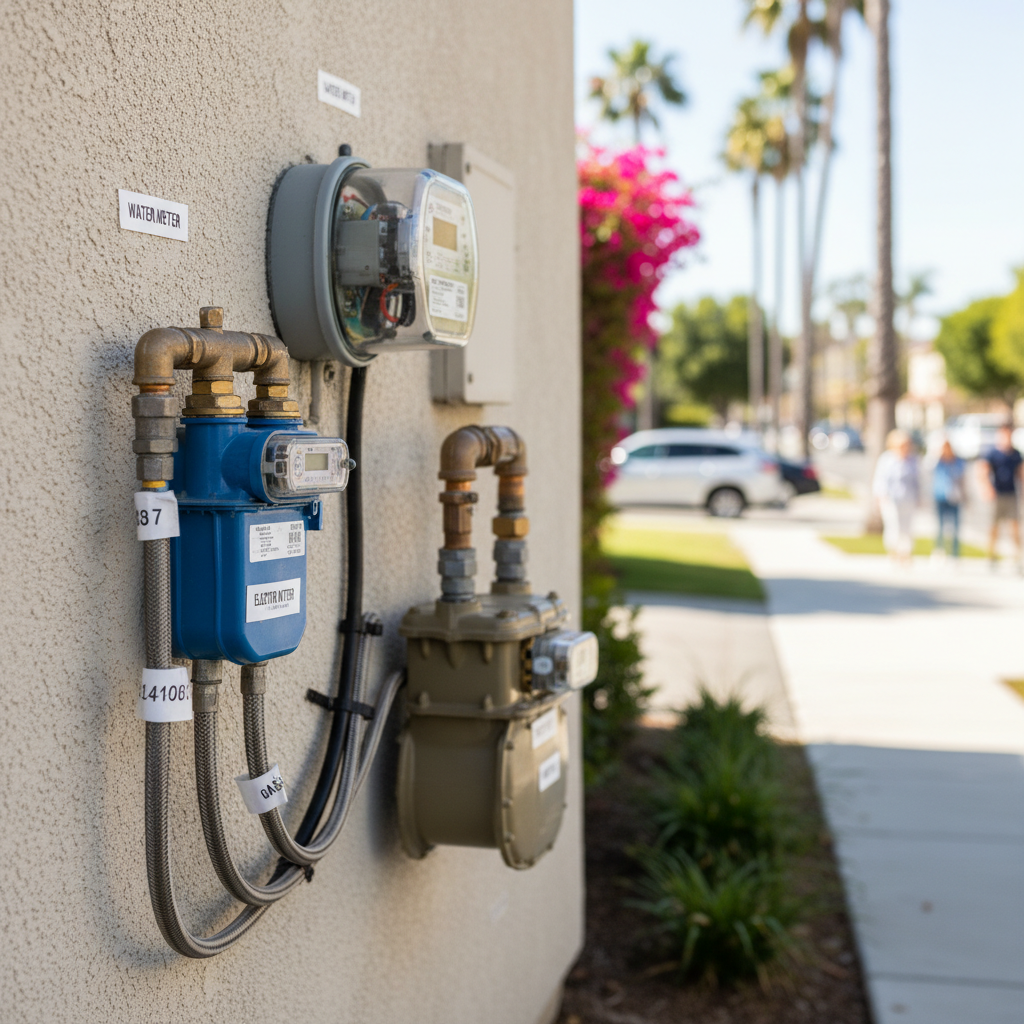
California's Game-Changing ADU Regulations and Utility Fees
California has been at the forefront of encouraging ADU development to address its housing crisis. Recognizing that high development fees, including utility connection charges, could be a significant barrier, the state legislature passed several pivotal bills that specifically address and limit these fees for ADUs. This is where understanding ADU utility capacity fees California truly becomes critical.
The Key Legislation: AB 68, AB 881, and AB 671
Starting with significant reforms in 2017 (SB 1069) and further strengthened in 2020 (AB 68, AB 881, AB 671), California law now provides substantial relief for ADU owners regarding utility capacity fees:
1. Exemption for Existing Connections:
Perhaps the most impactful provision is that a new or separate utility connection fee or capacity charge is generally NOT permitted for an ADU that is constructed within an existing single-family dwelling or an existing accessory structure (like a garage conversion) OR for an ADU that uses the existing utility connection of the primary dwelling.
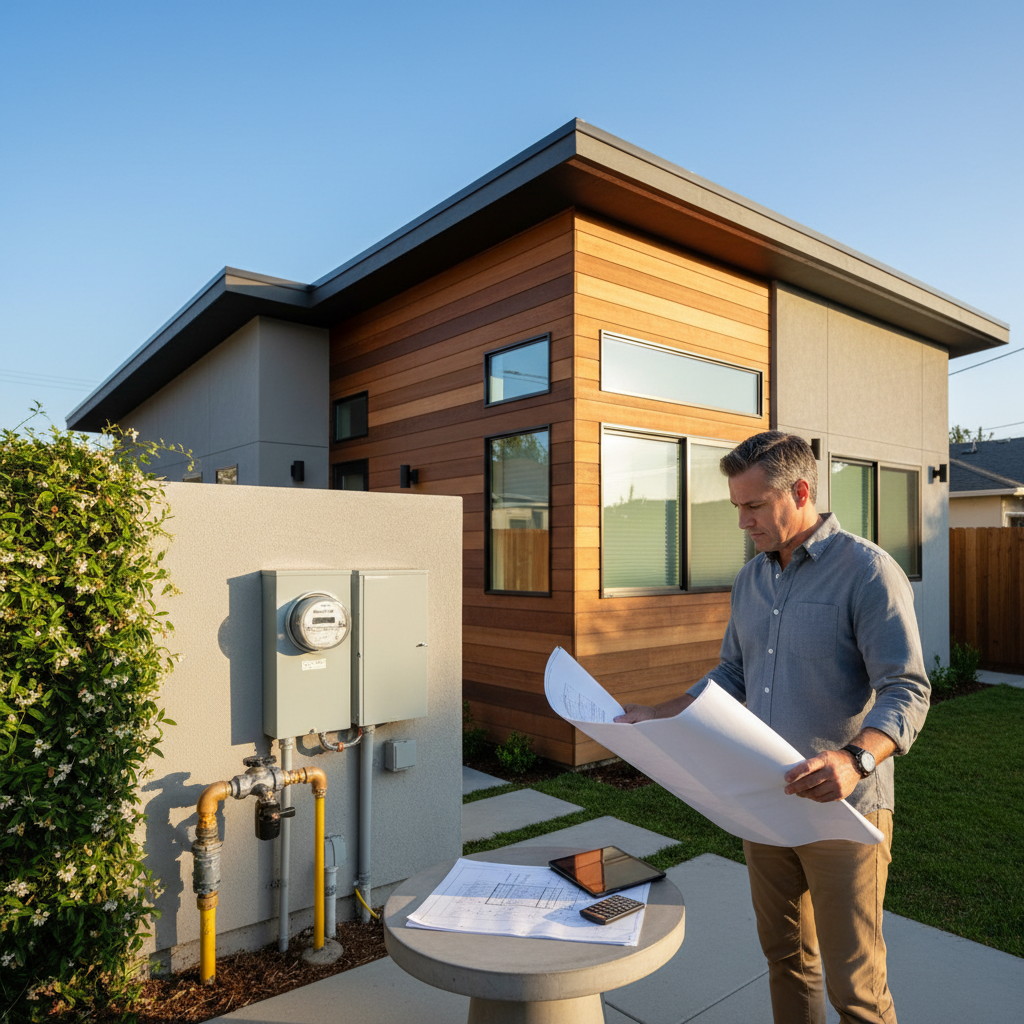
This means if your ADU shares the same water meter, sewer lateral, electrical panel, or gas line as your main house, most utility capacity fees are waived entirely. This exemption alone can save homeowners tens of thousands of dollars.
2. Proportional Fees for New Connections:
If your ADU requires a new or separate utility connection (e.g., a detached ADU far from the main house, or if local codes require a separate meter), the fees must be proportionate to the burden the ADU places on the utility system, based on its size or impact. This prevents agencies from charging the same full capacity fees as they would for a brand new primary residence.
For example, if an ADU is 50% the size of the primary dwelling, the utility capacity fee for a new connection might be limited to 50% of the fee typically charged for a new primary home connection.
3. Junior Accessory Dwelling Units (JADUs):
JADUs, which are typically smaller and contained within the existing footprint of a single-family home, are explicitly exempt from new or separate utility connection fees and capacity charges.
4. Impact on Different Utilities:
While the state laws provide broad protections, the specifics can vary slightly by utility and local agency:
- Water & Sewer: These are often the most significant capacity fees. The state law provides clear directives for exemptions and proportional charges.
- Electricity & Gas: Similar rules apply. If you're upgrading your electrical panel to accommodate the ADU, you might still incur costs for the upgrade itself, but separate utility capacity fees for the ADU might be waived if it shares the existing service.
Understanding these nuances is crucial for accurate budgeting. If you're feeling overwhelmed by the complexities of these regulations and how they apply to your specific project, don't hesitate to get a free ADU project estimate from GatherADU. We can help clarify these costs.

How Are Proportional Fees Calculated?
When a new connection is necessary and fees are permitted, the method of calculating proportional fees varies by utility provider and local jurisdiction. Common factors include:
- Square Footage: The ADU's square footage relative to the primary dwelling or a typical single-family home.
- Number of Fixture Units: For water and sewer, this relates to the number of plumbing fixtures (toilets, sinks, showers) in the ADU.
- Meter Size: Sometimes, the size of the new meter installed can dictate the fee.
It's important to remember that local agencies cannot simply charge a full new-home connection fee for an ADU. They must demonstrate that the fee is truly proportional to the ADU's impact.
The Impact on Your ADU Project Budget
Thanks to California's progressive ADU laws, the financial burden of utility capacity fees has been significantly reduced for many homeowners. For an ADU that reuses existing connections, these fees can drop from potentially tens of thousands of dollars to zero. This represents a massive saving and makes ADU construction far more accessible.
However, it's not always zero. You'll still need to budget for:
- Actual Connection Costs: Labor and materials to physically connect your ADU to the existing utility lines on your property. This is different from capacity fees.
- Panel Upgrades: If your existing electrical panel can't handle the additional load, an upgrade will be necessary.
- Permit Fees: Separate from utility fees, these are charged by the city/county for plan review and inspections.
- Specific Local Agency Fees: While state law limits utility capacity fees, some local agencies might still charge other development-related impact fees that are not explicitly covered by the ADU utility fee exemptions. Always verify with your local planning department.
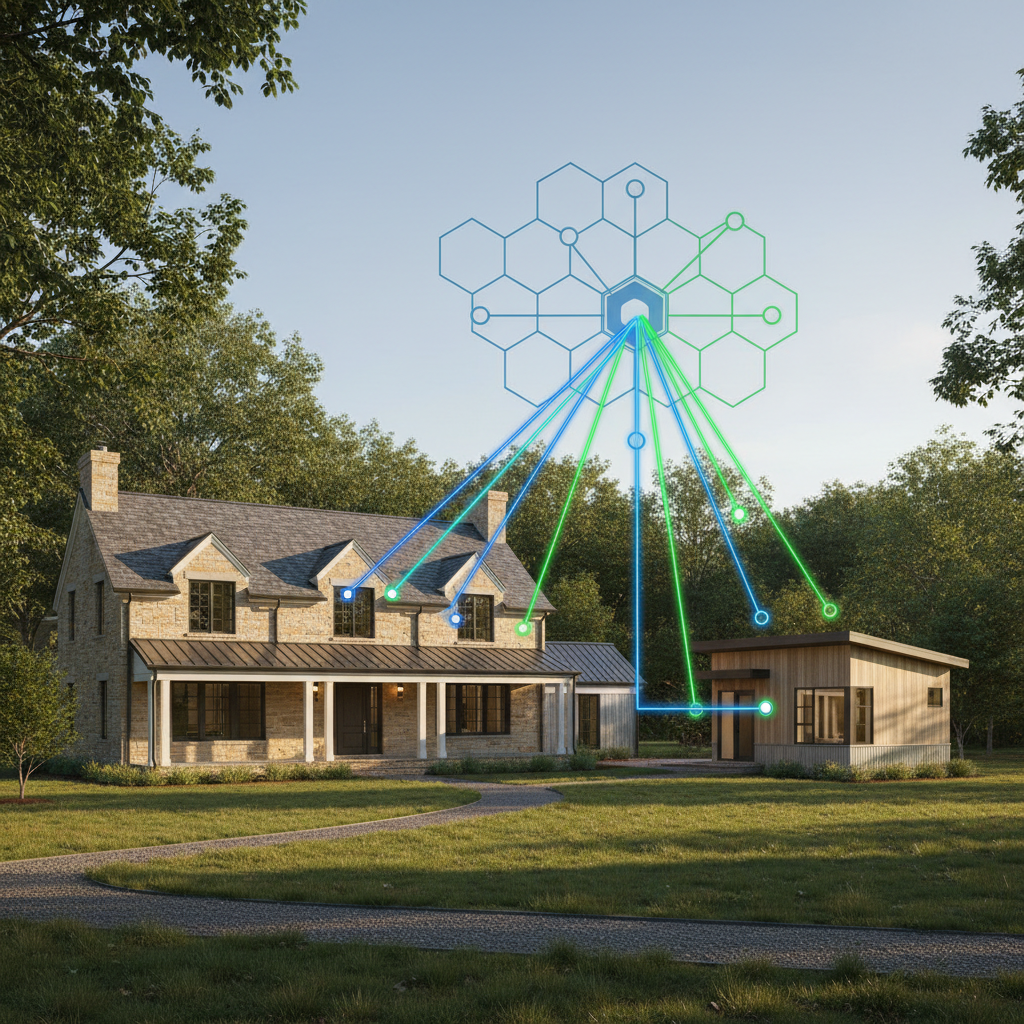
Navigating the Process: What Homeowners Should Do
Understanding the state regulations is the first step. The next is applying that knowledge to your specific project:
- Consult with GatherADU: As ADU specialists, we stay up-to-date on all California regulations and local ordinances. We can help you understand which fees apply to your project based on your location and ADU type.
- Review Local Agency Websites: Most city and county planning departments, as well as local utility providers, publish their fee schedules online. Look for sections specifically pertaining to ADUs.
- Ask Specific Questions: When discussing your project with utility companies or the planning department, explicitly ask about utility capacity fees and reference the state laws (e.g., AB 68/881 exemptions) to ensure they are applying the correct regulations.
- Get Everything in Writing: Always request written confirmation of fee estimates and exemptions.
Don't assume that every official you speak with will be fully up-to-date on the latest ADU legislation. You might need to gently educate them or advocate for your rights as an ADU builder under state law. Having a knowledgeable partner like GatherADU can make this process much smoother. Schedule a free consultation with our team to discuss your project's specific fee structure.
Conclusion
The landscape of ADU utility capacity fees California residents face has dramatically improved thanks to recent state legislation. For many, these fees are now significantly reduced or entirely eliminated, making ADU construction a more financially viable option. However, the specifics depend on your ADU's design, its connection to existing utilities, and your local jurisdiction.
While the regulations aim to streamline the process, navigating the various local agencies and utility providers can still be complex. GatherADU is here to be your expert guide, helping you understand all potential costs, secure the necessary permits, and build your dream ADU efficiently and affordably. Don't let confusing fees deter you from unlocking your property's full potential. Book your free ADU consultation today and take the first step towards a clear path to your backyard home.