When planning your Accessory Dwelling Unit (ADU), conversations often revolve around floor plans, square footage, and permits. Yet, one of the most visible and impactful decisions you'll make is your ADU exterior color selection. The colors and finishes you choose for your backyard home aren't just aesthetic; they play a critical role in how your ADU integrates with your main property, enhances curb appeal, and even influences its energy efficiency and long-term value. As California's leading ADU design and build company, GatherADU understands that thoughtful exterior design transforms a simple structure into a seamless extension of your home and lifestyle.
This comprehensive guide will walk you through the essential considerations for selecting exterior colors and materials for your ADU, ensuring your new space is not only functional but also a beautiful addition to your property.
Why Your ADU's Exterior Color Palette Matters
Your ADU is a permanent addition to your property, and its exterior presentation is the first thing anyone sees. A well-chosen color scheme offers numerous benefits:
- Curb Appeal & Property Value: A cohesive and attractive exterior significantly boosts your property's overall curb appeal and can increase its market value. A poorly chosen palette, conversely, can detract.
- Harmonious Integration: The goal is often for the ADU to feel like a natural extension of your main home, not an afterthought. Color is the most powerful tool for achieving this visual connection.
- Personal Expression: While blending is important, your ADU's exterior is also an opportunity to express your personal style, whether it's modern, traditional, or coastal.
- Environmental & Practical Factors: Lighter colors reflect sunlight, keeping interiors cooler in California's warm climate, potentially reducing energy costs. Darker colors absorb heat.
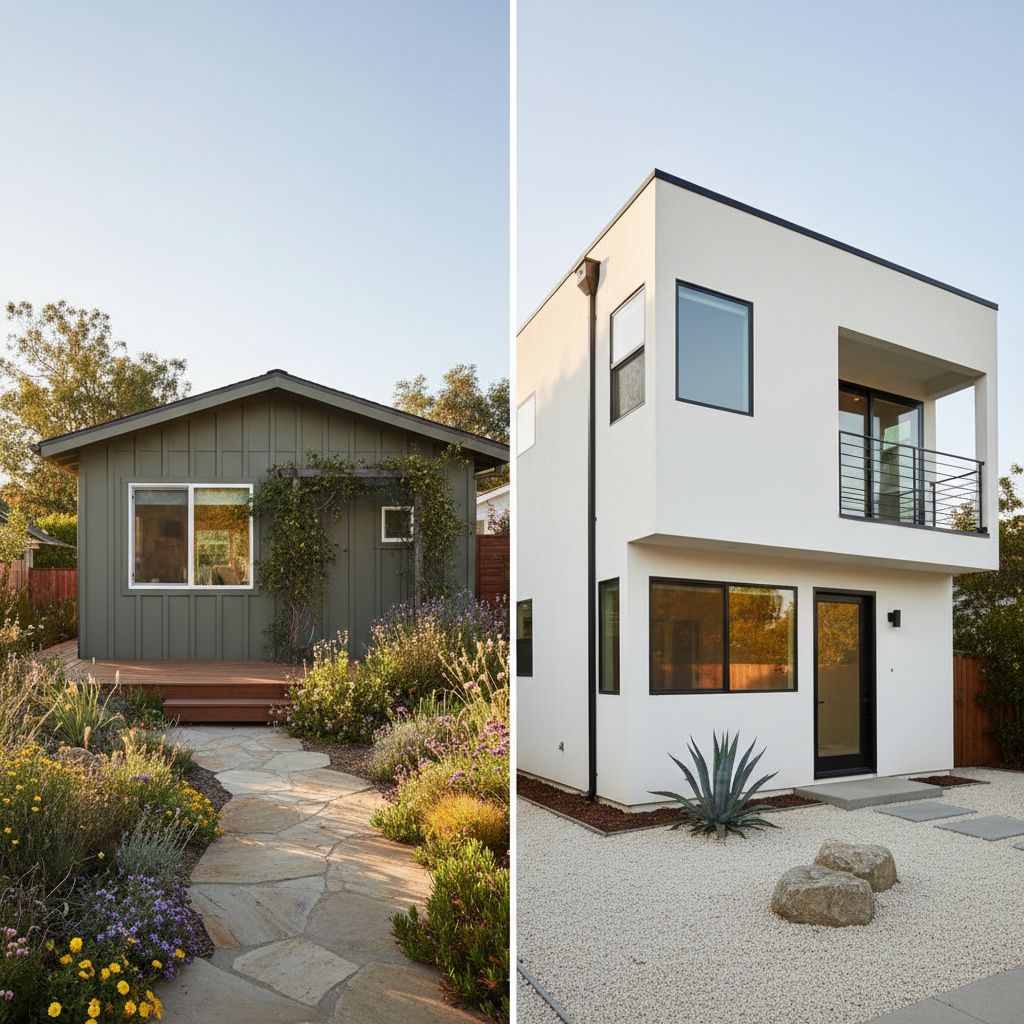
Key Factors Influencing Your ADU Exterior Color Selection
1. The Main House: Your Primary Design Cue
The most important element to consider when choosing your ADU's exterior colors is your existing main home. You generally have three approaches:
-
Harmonize: Select colors that are a few shades lighter or darker than your main house, or choose complementary colors from the same palette. This creates a cohesive, unified look.
-
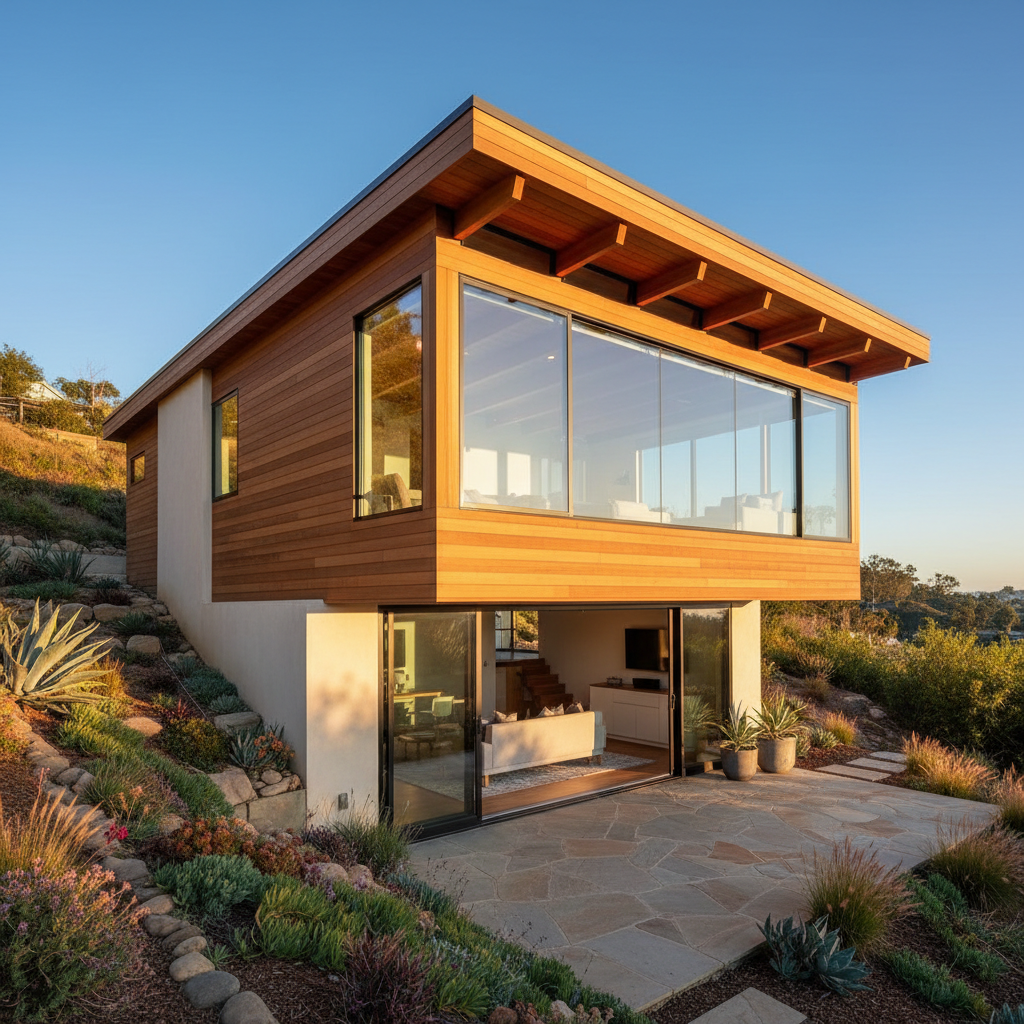
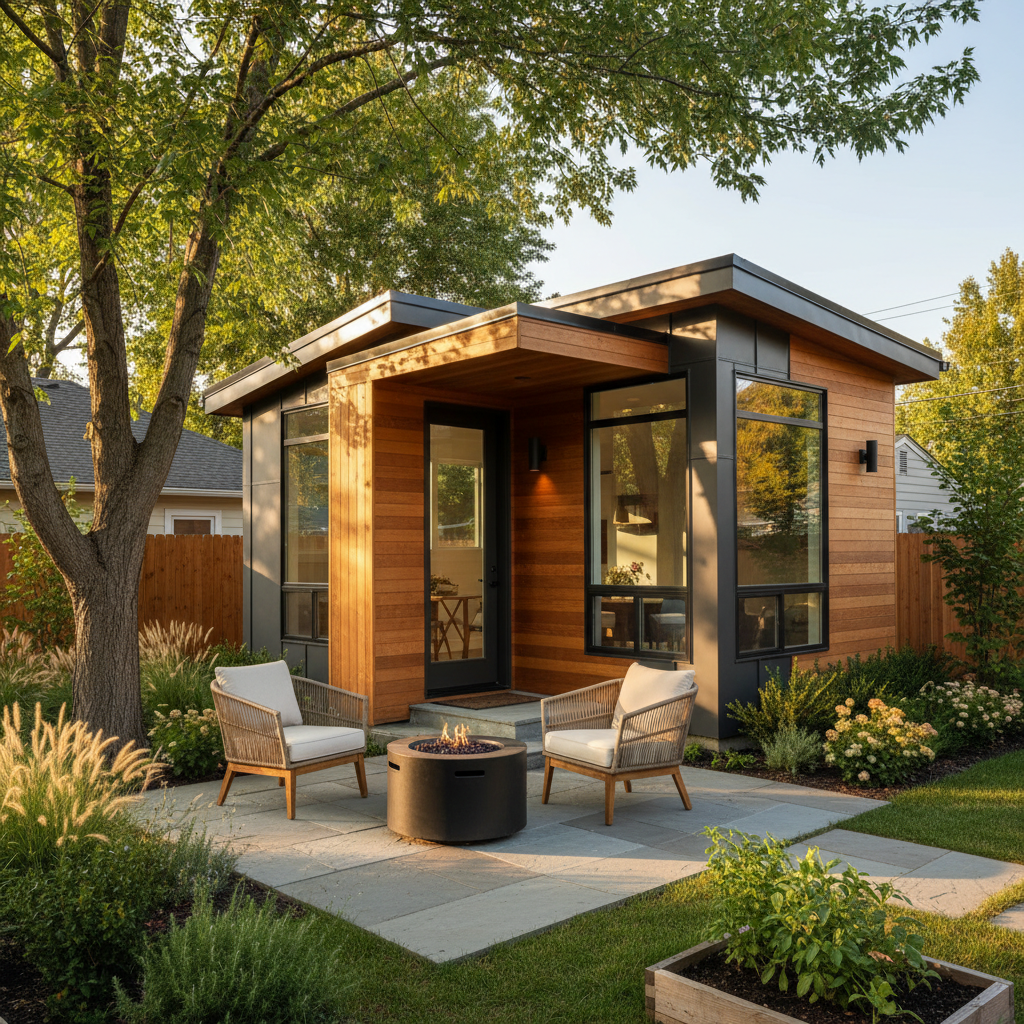
Contrast: Opt for a distinctly different, yet still complementary, color scheme that makes the ADU stand out while still feeling intentional. This works well for modern ADUs paired with traditional main homes, using materials like natural wood siding against a painted main house.
-
Match: Use the exact same colors and materials as your main house for a perfectly integrated aesthetic. This is often the safest choice for a seamless look.
2. The Surrounding Landscape and Environment
Think about your garden, mature trees, and local vegetation. Earthy tones like greens, browns, and muted grays blend beautifully with lush landscapes. Coastal areas might lean towards blues, whites, and sandy hues. Consider how natural light hits your property throughout the day, as colors can appear very different under direct sunlight versus shade.
3. Neighborhood and HOA Guidelines
Before finalizing any decisions, always check with your Homeowners' Association (HOA) if you have one. Many HOAs have strict guidelines regarding exterior colors and materials to maintain neighborhood uniformity. Even without an HOA, take a stroll around your neighborhood. While you don't want your ADU to be a clone, choosing colors that don't clash dramatically with surrounding homes can enhance community appeal.
4. ADU Style and Architecture
The architectural style of your ADU should also guide your color choices:
- Modern/Contemporary: Often feature monochromatic palettes (grays, whites, blacks), bold accents, or natural materials like wood and concrete.
- Traditional/Craftsman: Benefit from richer, deeper colors – forest greens, deep reds, warm browns, and classic blues, often with contrasting trim.
- Farmhouse: Typically favor whites, creams, light grays, often with black or dark gray accents.
- Coastal: Light blues, whites, sandy beiges, and natural wood tones evoke a breezy, relaxed feel.
5. Light Reflectance Value (LRV) and Climate Considerations
The LRV of a paint color indicates how much light it reflects. Higher LRV (lighter colors) means more light reflected, keeping the surface cooler. In sunny California, lighter colors can contribute to a cooler interior for your ADU, reducing cooling costs. Darker colors absorb more heat. This is an important practical consideration, especially for south-facing walls.
If you're feeling overwhelmed by the myriad of choices and want expert guidance to ensure your ADU's exterior perfectly complements your property and meets all local regulations, don't hesitate to schedule a free consultation with GatherADU. Our design team specializes in creating cohesive and beautiful backyard homes.
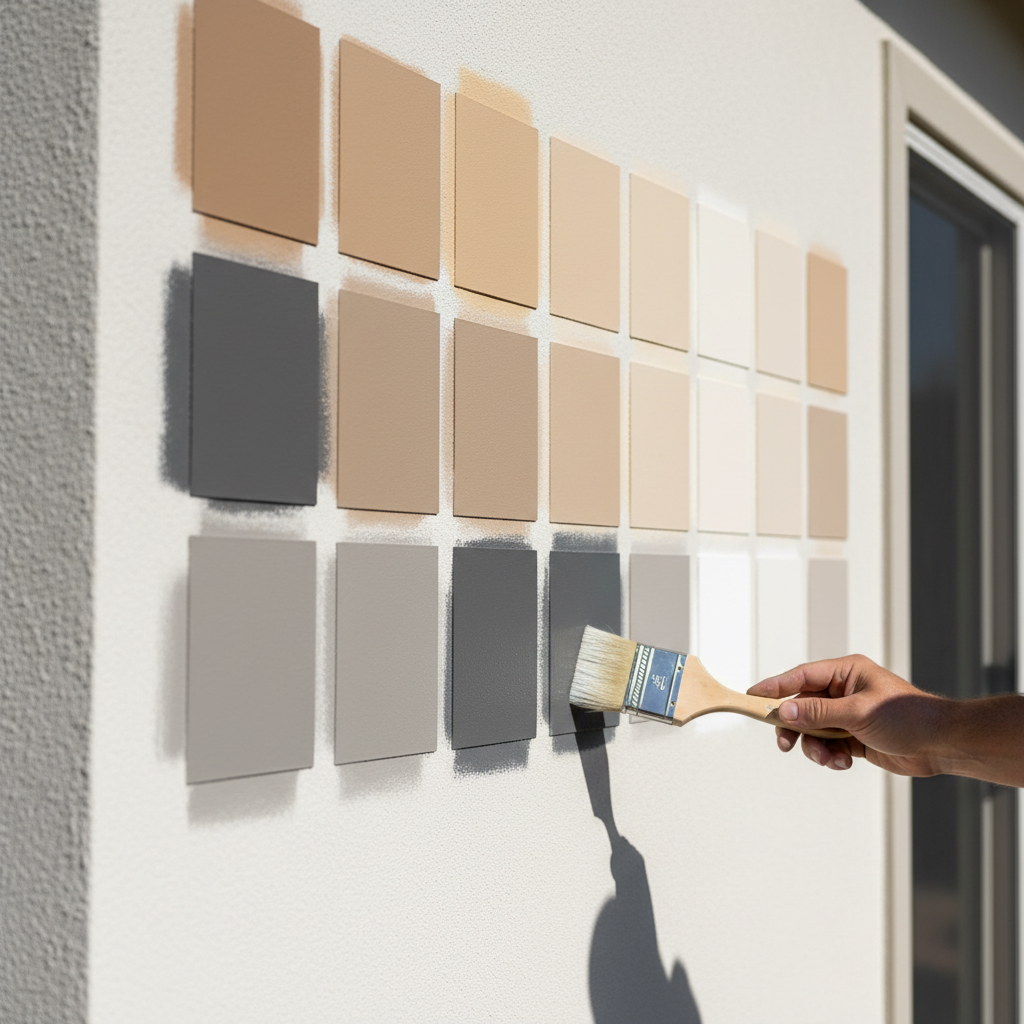
Components of Your ADU's Exterior Palette
A complete exterior color scheme involves more than just one paint color. It's a symphony of different elements:
1. Main Body Color
This is the dominant color of your ADU's siding. It sets the overall tone and mood. Neutrals like grays, whites, and tans are popular for their versatility and timeless appeal. Greens and blues can create a serene, natural look, while bolder colors can make a statement.
2. Trim Color
Trim includes window frames, door frames, corner boards, fascia, and soffits. It can either contrast with the main body color to highlight architectural features or blend in for a more subdued, monolithic look. White trim is classic and crisp, while dark trim can add sophistication.
3. Accent Colors
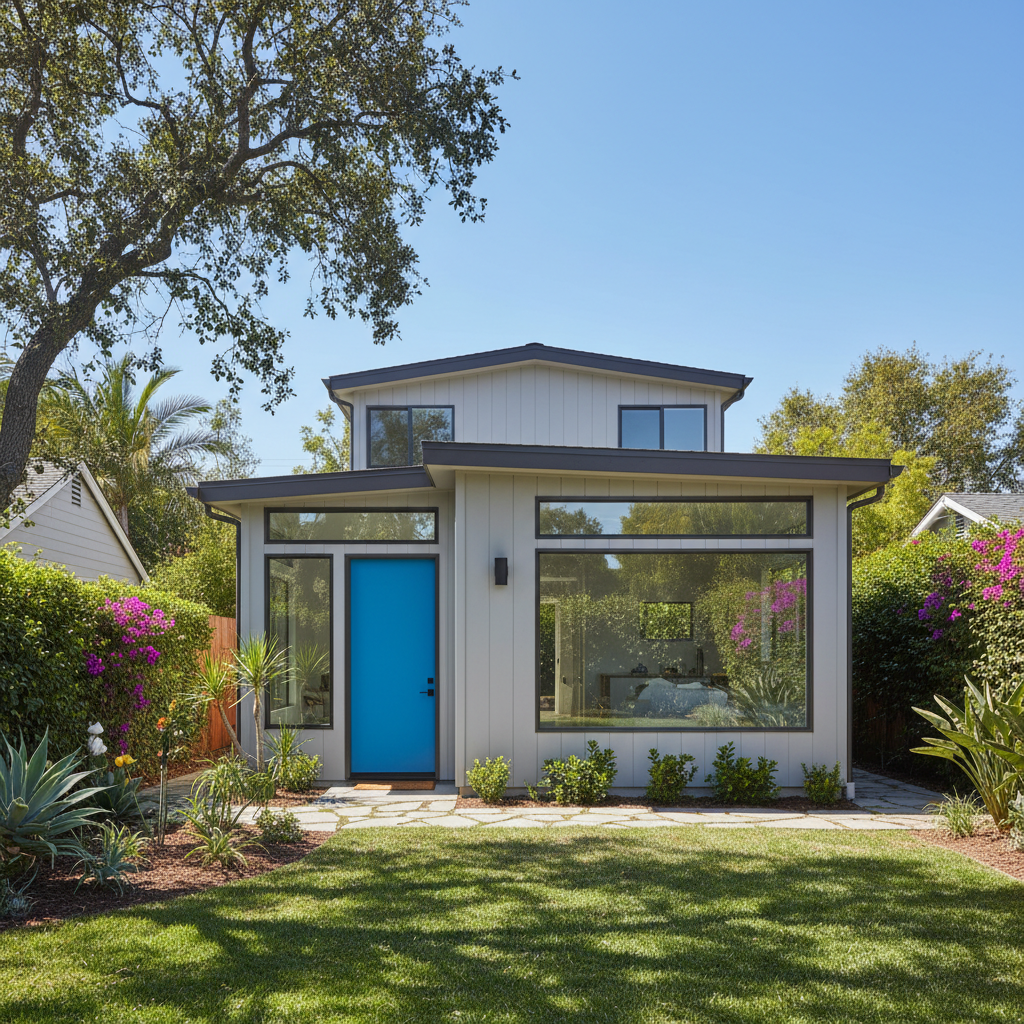
These are used sparingly on elements like the front door, shutters, porch railings, or unique architectural details. Accent colors are where you can introduce a pop of personality or a bolder hue without overwhelming the overall design. They should complement both the main body and trim colors.
4. Roofing Material and Color
The roof is a significant visual component. Its color and material (shingles, metal, tile) should harmonize with your chosen paint palette. Darker roofs can anchor the structure, while lighter roofs can make it feel airier and reflect heat.
5. Hardscaping and Landscaping Elements
Don't forget elements like pathways, patios, decking, and even the colors of your planting. These surrounding features are part of the overall visual experience and should be considered in your ADU exterior color selection process.
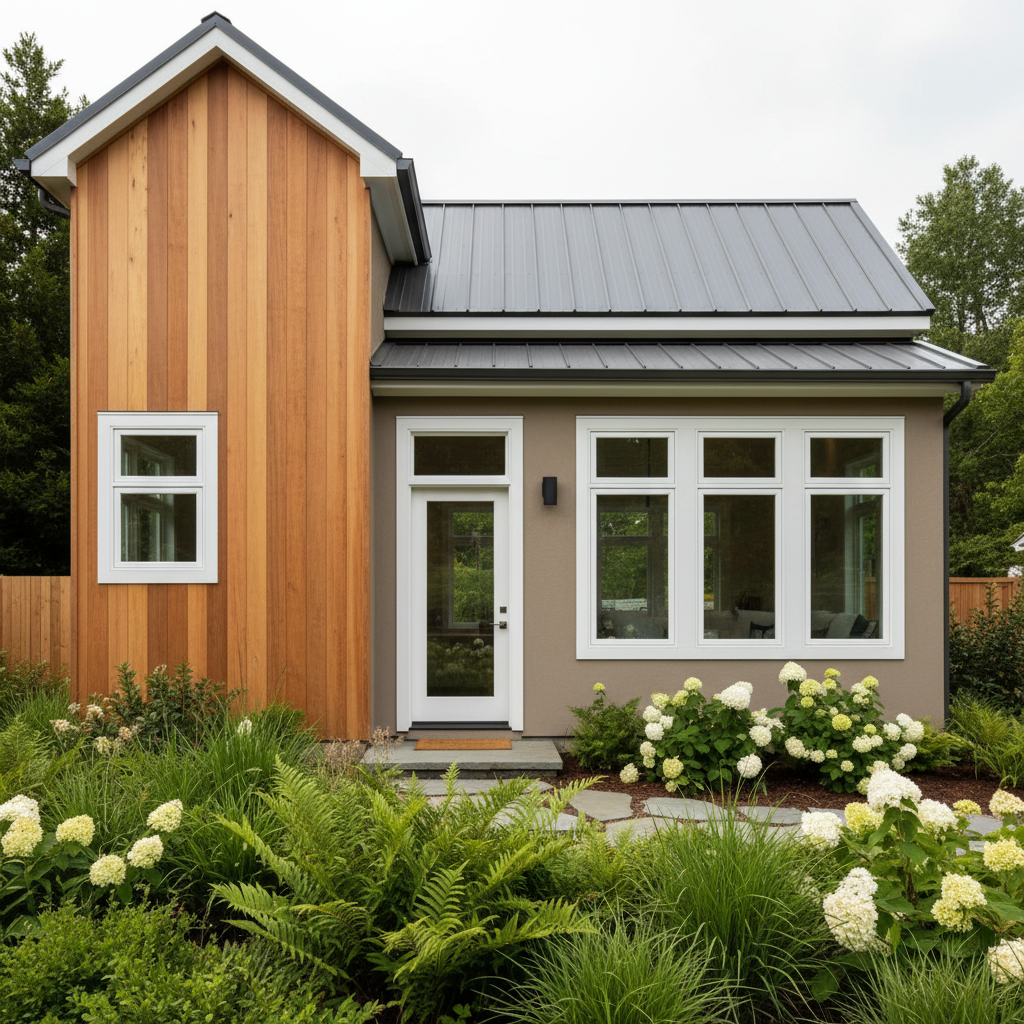
Practical Tips for Making Your Selection
Test, Test, Test!
Never choose a color from a small paint chip. What looks great on a tiny swatch can be entirely different on a large surface. Purchase sample pots of your top contenders and paint large swatches (at least 2x2 feet) directly onto different sections of your ADU's exterior. Observe them at different times of day and in various weather conditions. Light changes everything!
Consider the Undertones
Colors are complex and often have subtle undertones (e.g., a gray with a blue undertone, or a beige with a pink undertone). These undertones become more apparent on a large scale and can clash if not carefully considered.
Gather Inspiration
Look at homes you admire, browse architectural magazines, and create Pinterest boards. Pay attention to how different color combinations are used on ADUs and main homes in California. This can help you refine your preferences and discover new ideas.
Consult with Professionals
Architects and designers have an eye for color and an understanding of how it interacts with light, materials, and surroundings. They can provide invaluable advice, create renderings, and help you visualize the final outcome before you commit. Their expertise can save you from costly mistakes and ensure a stunning result.
Thinking about how a well-designed ADU could enhance your property's value and aesthetic, offering rental income or space for family? Get a free project estimate from GatherADU and discover the possibilities for your backyard.
Conclusion: A Harmonious Home Awaits
Your ADU exterior color selection is a foundational element of its overall design, impacting everything from curb appeal to energy efficiency. By thoughtfully considering your main home, the surrounding environment, architectural style, and practical factors, you can create a backyard home that is not only functional but also a beautiful and harmonious extension of your property.
Don't underestimate the power of color and material choices. With careful planning and expert guidance, your ADU can become a true gem. Ready to bring your ADU vision to life with a team that understands California design and construction inside and out? Book a free ADU consultation with GatherADU today and let's start designing your perfect backyard home.