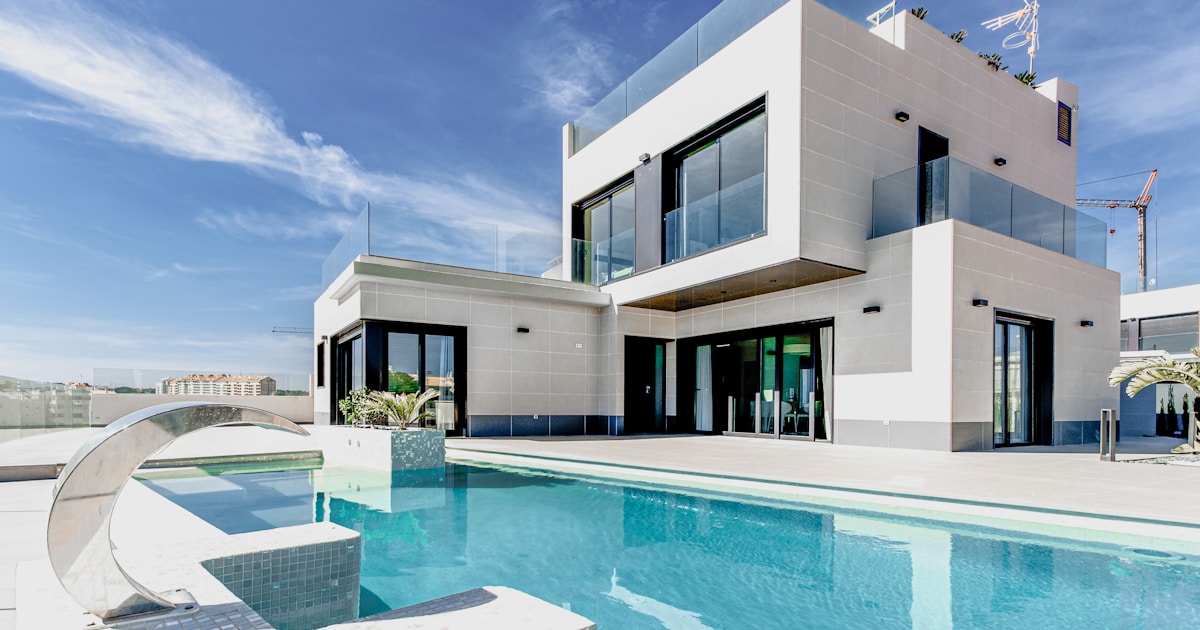

Accessory Dwelling Units (ADUs) have become increasingly popular in California cities, including Bell, as they offer homeowners a smart, versatile way to maximize property usage, increase home value, and provide extra living space. However, undertaking an ADU project requires careful planning and a trustworthy builder. In this guide, we'll cover everything you need to know about finding a reliable ADU builder in Bell, California, so that your ADU project can proceed smoothly, on budget, and up to code.
1. Understanding ADUs and Why They’re Beneficial
ADUs are secondary housing units built on the same lot as a primary residence. These units can be attached, detached, or even conversions of existing spaces like garages or basements. With housing demand increasing across California, ADUs provide homeowners with a cost-effective way to add living space for family members, create rental income, or even boost property value.
Benefits of ADUs include:
- Additional income: Renting out an ADU can provide steady revenue.
- Increased property value: ADUs generally raise the value of your home, making it an attractive option for future buyers.
- Flexible living arrangements: ADUs allow for multigenerational living or the option to house caregivers or family members.
Given the potential impact of ADUs on a homeowner’s finances and property, it’s critical to choose a skilled builder who is familiar with local zoning and building codes.
2. Evaluating the Qualifications of an ADU Builder in Bell
Hiring a competent ADU builder involves evaluating their experience, licensing, specialization, and track record with ADU projects. Here’s what to look for:
a) Licenses and Certifications
In California, builders must hold a valid contractor’s license issued by the California Contractors State License Board (CSLB). This certification indicates that the builder has met specific industry standards. For ADU projects, check that they possess the appropriate licensing classifications, such as B (General Building Contractor).
b) Experience and Specialization
ADUs have unique design and construction requirements, so hiring a builder with specialized ADU experience is essential. Check how many ADUs they have completed and ask for project examples, ideally in the Bell area or similar municipalities. Their experience will help ensure compliance with local regulations, such as height restrictions, lot coverage, and parking requirements.
c) Familiarity with Bell’s Local Regulations
Bell has specific zoning laws and ordinances for ADUs. A reliable ADU builder should be well-versed in these requirements, including setback requirements, size limitations, and environmental considerations, which can vary significantly from broader Los Angeles County regulations. Familiarity with the Bell permit office and established relationships can also expedite the approval process.
Schedule a call with an ADU expert
3. Researching and Selecting Your ADU Builder

Once you know what qualifications to seek, it’s time to start your search. Here are practical ways to find reliable ADU builders in Bell.
a) Online Research
Use trusted platforms like the National Association of Home Builders (NAHB), Houzz, Yelp, or Google to identify potential ADU builders in Bell. Pay attention to reviews and look for consistent patterns in feedback, both positive and negative.
b) Seeking Recommendations
Ask friends, neighbors, or local real estate agents if they know any reputable ADU builders. Getting firsthand experiences can offer invaluable insights into a builder’s reliability, communication style, and quality of work.
c) Attending Local ADU Expos and Workshops
ADU expos or workshops held in the Los Angeles County area can be great resources to meet ADU professionals. Builders at these events often showcase their work, offer advice, and demonstrate familiarity with local regulations.
d) Checking Professional Affiliations
Look for ADU builders affiliated with industry associations, such as the American Institute of Architects (AIA) or local building associations. Membership in these organizations often indicates a commitment to industry standards and ongoing education.
4. Key Factors in Choosing the Right ADU Builder
After narrowing down your list of potential builders, assess each one based on these essential factors:
a) Project Portfolio and References
A reliable ADU builder should provide a detailed portfolio showcasing their completed ADU projects, ideally including before-and-after images. Additionally, ask for references from recent clients and follow up with these contacts to ask about their experiences.
b) Communication and Transparency
Clear communication is essential for a successful ADU project. Ensure the builder listens to your needs, offers straightforward explanations, and maintains transparency regarding project timelines and costs. Miscommunication or lack of transparency can lead to misunderstandings and cost overruns.
c) Timeline and Project Management Skills
Ask for a timeline estimate, including major milestones, and verify that the builder has a structured approach to managing project phases. Reliable builders should have contingency plans in place to handle potential delays due to weather or material shortages, which could impact the completion date.
d) Budget Management and Cost Transparency
Reputable ADU builders in Bell will provide a detailed cost breakdown upfront, which should include labor, materials, permits, inspections, and contingency funds. While it's tempting to go with the lowest quote, beware of overly low bids, as they may indicate subpar materials or hidden fees.
Schedule a call with an ADU expert
5. Preparing for Your ADU Project: Initial Steps
To get the best results from your chosen builder, there are several preparatory steps you should take:
a) Budgeting and Financing
Budgeting is a foundational step for an ADU project. In Bell, ADUs can cost anywhere from $150,000 to $400,000 or more, depending on the size, complexity, and design preferences. Consider financing options like home equity loans, cash-out refinancing, or specific ADU loan programs that might be available in Los Angeles County.
b) Property Evaluation and Design Preferences
Discuss with your builder and architect about potential ADU layouts and design preferences. Consider whether you want a detached unit or a garage conversion and think about the long-term usability of the space.
c) Navigating Permits and Zoning Requirements
ADU builders should handle most permit applications, but familiarize yourself with the general permitting process. Typically, Bell will require site plans, floor plans, elevations, and construction plans, as well as compliance with energy efficiency standards.
6. Contractual Agreements and Insurance Coverage

Drafting a detailed contract is essential to protecting yourself and ensuring mutual accountability.
a) Contract Inclusions
A well-drafted contract should outline all project details, including:
- Scope of work with specific descriptions of labor and materials.
- Timeline and milestones with clearly defined start and end dates.
- Payment schedule linked to project milestones.
- Change order procedures detailing how any changes will be handled.
- Warranties on work quality and materials.
b) Insurance and Liability
Verify that your ADU builder has general liability insurance and workers’ compensation insurance. This protects you from potential liability should an accident or injury occur on-site.
7. Monitoring the ADU Construction Process
While a trustworthy builder should oversee the construction process, you’ll still want to keep a close eye on progress to ensure everything aligns with your expectations and contract.
a) Periodic Inspections
Request regular updates from your builder and schedule site inspections at critical stages, such as after framing, plumbing, and electrical installation. This will help identify any issues early, allowing for adjustments without major delays.
b) Maintaining Communication
Frequent communication is key to a smooth construction process. Use email to document discussions and ask questions. Any decisions or changes should be documented in writing.
8. Finalizing and Reviewing Your ADU Project
As the construction phase nears completion, ensure a smooth project wrap-up with these final steps:
a) Final Walkthrough and Inspections
Conduct a final walkthrough with your builder to verify that all work has been completed to your satisfaction and in line with the contract. Check each room, fixture, and appliance to ensure proper installation and functionality.
b) Addressing Final Payments
Once the project is complete and any final inspections have been approved, release the final payment as outlined in your contract. Retain a portion of the payment as a holdback to ensure any outstanding minor repairs or adjustments are completed promptly.
c) Obtain Warranties and Documentation
Request any warranties on materials, appliances, and the builder’s work. Keep copies of all documentation, including the contract, permits, inspection reports, and communication records.
9. Enjoying the Benefits of Your New ADU
Once your ADU is complete, you can begin reaping its benefits, whether it’s an additional income source, housing for loved ones, or extra living space. Remember, with proper planning, reliable guidance, and a skilled builder, your ADU project can be a valuable addition to your property for years to come.
Bell's ADU rules in 2026
A reliable Bell builder should know the City's ADU code and where state law now goes further. Bell's rules are in Chapter 17.54 of the Bell Municipal Code, adopted by Ordinance No. 1266 in 2020. The chapter still cites the old Government Code sections (65852.2 and 65852.22), which were moved to Sections 66310 through 66342 in 2024, and state ADU law has changed several times since 2020. Where the code and current state law differ, state law controls. The points below cover both, so ask the Planning Division in writing how it will apply any rule that affects your lot.
Review and where ADUs are allowed
- Ministerial review in 60 days: the City processes ADU and JADU applications without a hearing, within 60 days of receiving a complete application. Under Government Code Section 66317, an application that isn't approved or denied in that time is deemed approved.
- Zones: ADUs are allowed in the R-1, R-2, R-3, and C-3R zones, on any lot size.
- Nonconforming conditions: the City can't require you to fix existing nonconforming conditions on the property to get an ADU permit.
How many units
The code allows one ADU and one JADU on a lot with a single-family home. State law (Government Code Section 66323, as amended by SB 543, effective January 1, 2026) allows a conversion ADU, a JADU, and a new detached ADU of up to 800 square feet with 4-foot side and rear setbacks, all on the same lot.
On a lot with an existing apartment building, the code allows either up to two detached ADUs or conversion ADUs inside the building (25% of the units, and at least one), but not both. State law now allows up to eight detached ADUs on a lot with an existing multifamily building (no more than the number of existing units), and it allows them to be combined with conversion ADUs. If your lot has apartments, have your builder confirm the count with the City before design.
Size, height, and setbacks
- Size: the code limits an ADU to 50% of the main home's floor area or 1,200 square feet, whichever is less, and a JADU to 50% of the home or 500 square feet. If these limits or lot coverage would block an ADU of at least 800 square feet, the code still allows an 800-square-foot ADU. State law (Government Code Section 66321) also doesn't let a city set a maximum below 850 square feet for a studio or one-bedroom ADU, or 1,000 square feet for more than one bedroom.
- Height: the code limits ADUs to one story and 16 feet. State law allows a detached ADU 18 feet within one-half mile walking distance of a major transit stop or high-quality transit corridor (plus 2 feet to match the home's roof pitch), 18 feet on a lot with a multistory multifamily building, and an attached ADU 25 feet or the zone's limit, whichever is lower.
- ADUs over garages: the code allows an ADU on top of a one-story detached garage or other detached structure in the R-2, R-3, and C-3R zones, but not in R-1. Ask the City how it applies this limit now.
- Setbacks: the main home's front setback and 4 feet at the side and rear. A conversion of existing living area, a garage, or an accessory structure, or a rebuild in the same place and size, needs no setback. Expanding an accessory structure by up to 150 square feet for entry and exit can use a smaller side and rear setback if it's safe for fire and health.
- Attached means attached: an attached ADU or JADU must share a wall, floor, or ceiling with the home's living area, not just a breezeway or patio.
Local rules a builder should plan around
The code has rules that apply to ADUs built under local standards. Under Government Code Section 66323, a city can't add standards like these to the state-protected ADUs that section lists, such as a detached ADU of up to 800 square feet with 4-foot side and rear setbacks:
- Separation: 10 feet between the main home and a detached ADU.
- Open space: a lot with a detached ADU needs at least 100 square feet of ground-floor private open space next to the ADU, at least 10 feet in each direction. It can be in the side or rear setback or under a covered patio.
- Matching design: the ADU's architectural design and detailing, roof material, and exterior colors and finishes must match the main home.
Parking
The code requires one on-site space per ADU, which can be tandem or in a setback area. No space is needed for a JADU, within one-half mile walking distance of public transit, in a historic district, for an ADU entirely within the home or an accessory structure, where on-street permits aren't offered to the ADU's occupant, or within one block of a car-share vehicle. State law (Government Code Section 66322) also waives parking when an ADU is permitted with a new home. Lost garage or carport parking doesn't have to be replaced.
Deed restrictions, rentals, and owner occupancy
- Deed restriction: the code conditions every ADU and JADU on a recorded deed restriction barring separate sale. HCD's guidance says state law (Government Code Section 66315) doesn't allow a deed restriction on an ADU, so ask the City how it handles this today. A deed restriction is still allowed for a JADU.
- Rentals: an ADU or JADU can be rented, but not for less than 31 consecutive days, and can't be sold separately from the home.
- JADU owner occupancy: the code requires the owner to live in the home or the JADU. State law (Government Code Section 66333, as amended by AB 1154, effective January 1, 2026) allows owner occupancy to be required only for a JADU that shares a bathroom with the main house.
Fees, utilities, and sprinklers
- Impact fees: under Government Code Section 66311.5, no impact fee applies to an ADU with 750 square feet of interior livable space or less, or a JADU of 500 square feet or less.
- Utilities: an ADU may have its own gas, electric, and water meters and its own sewer connection, but the code doesn't require them.
- Sprinklers: not required if the main home doesn't need them.
Questions to ask a Bell ADU builder
- Has Bell updated Chapter 17.54 since 2020, and how will the City apply the parts that differ from current state law?
- Can I build a conversion ADU, a JADU, and a new detached ADU together, as state law now allows?
- How tall can my ADU be, and does my lot qualify for the transit height allowance?
- Will the City require a deed restriction on my ADU, and what will it say?
- Is the ADU 750 square feet of interior livable space or less, so it avoids impact fees?
If you'd like help checking a Bell lot or a builder's plans against the City's current rules, book a free consultation with our team. We've completed over 127 ADU project designs.
Last words
Finding a reliable ADU builder in Bell requires thorough research, attention to detail, and careful planning. By evaluating qualifications, obtaining recommendations, reviewing past projects, and understanding the local regulatory landscape, you can confidently choose a builder who meets your needs. With the right team and preparation, your ADU project in Bell can become a successful, valuable addition to your property that enhances both its functionality and value.