Disclaimer: Cost estimates in this article reflect 2025-2026 California market conditions and may vary based on location, size, design choices, and market fluctuations. Obtain quotes from multiple providers for accurate project-specific pricing.
The Prefab vs. Stick-Built ADU Debate
When planning an Accessory Dwelling Unit (ADU) in California, one of the first decisions you will face is whether to go with a prefabricated (prefab) or traditional stick-built construction approach. This choice affects everything from your budget and timeline to the design flexibility and long-term quality of your ADU.
The prefab ADU market has exploded in California over the past few years, with dozens of companies offering factory-built units that promise faster construction, lower costs, and streamlined permitting. But the reality is more nuanced than marketing materials suggest. Stick-built (also called site-built or traditional) construction remains the dominant method for ADU construction, and for good reason.
In this detailed comparison, we will break down the real costs, actual timelines, quality differences, design flexibility, and practical considerations of each approach. Our goal is to give you an honest, data-driven comparison so you can make the right choice for your property, budget, and needs.
Understanding the Construction Methods
What Is a Prefab ADU?
A prefab (prefabricated) ADU is a dwelling unit that is manufactured in a factory setting and then transported to your property for installation. Prefab ADUs come in several sub-categories:
- Modular ADUs: Built in modules (sections) in a factory, transported on flatbed trucks, and assembled on-site. These are built to the same building codes as site-built structures (California Building Code, not HUD code).
- Panelized ADUs: Wall panels, roof trusses, and floor systems are pre-built in a factory and assembled on-site. This hybrid approach uses factory precision with on-site flexibility.
- Shipping container ADUs: Converted shipping containers modified into living spaces. Generally the least expensive but most limited in design.
- Flat-pack/Kit ADUs: Pre-cut materials shipped to the site for assembly. Similar to panelized but with more on-site labor required.
What Is a Stick-Built ADU?
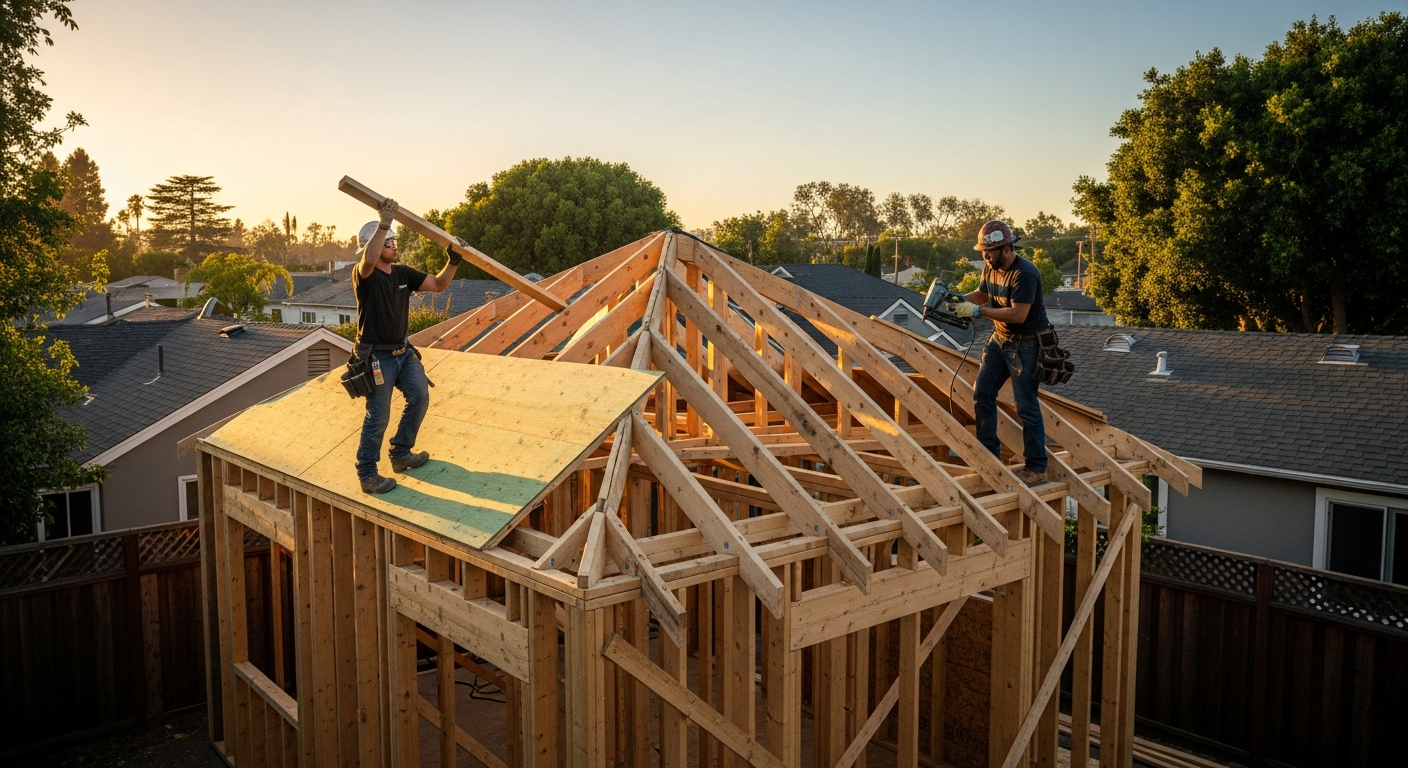
A stick-built ADU is constructed entirely on your property using traditional framing methods. Lumber is cut and assembled on-site, with all trades (framing, electrical, plumbing, HVAC, drywall, finishing) working sequentially at your property. This is the same construction method used for the vast majority of homes built in California.
Real Cost Comparison
Let's compare actual, all-in costs for both methods. It is important to note that many prefab companies advertise the unit price without including site preparation, utility connections, permits, and other essential costs. We will include everything.
Total Project Cost Comparison (800 sq ft, 2-bedroom ADU in Los Angeles)
| Cost Category | Prefab ADU | Stick-Built ADU |
|---|---|---|
| Design and Plans | $0 to $5,000 (often included) | $5,000 to $15,000 |
| Permits and Fees | $8,000 to $15,000 | $8,000 to $15,000 |
| Site Preparation | $10,000 to $30,000 | $8,000 to $20,000 |
| Foundation | $12,000 to $25,000 | $10,000 to $20,000 |
| Unit / Construction | $120,000 to $200,000 | $140,000 to $240,000 |
| Delivery and Crane | $5,000 to $20,000 | N/A |
| Utility Connections | $10,000 to $25,000 | $10,000 to $25,000 |
| Landscaping / Finishing | $5,000 to $15,000 | $5,000 to $15,000 |
| TOTAL ALL-IN COST | $170,000 to $335,000 | $186,000 to $350,000 |
| Per Square Foot | $213 to $419 | $233 to $438 |
As you can see, when you include all costs, the price difference between prefab and stick-built is often much smaller than advertised. The unit itself may be cheaper with prefab, but the site work, foundation, utility connections, and delivery costs bring the total much closer together.
Wondering What Your ADU Will Cost?
Use our free cost calculator to get an instant estimate for your project.
Try the Cost CalculatorReal Timeline Comparison
| Phase | Prefab ADU | Stick-Built ADU |
|---|---|---|
| Design and Planning | 2 to 4 weeks | 4 to 8 weeks |
| Permitting | 6 to 16 weeks | 6 to 16 weeks |
| Factory Build / Wait | 8 to 16 weeks | N/A |
| Site Prep and Foundation | 3 to 6 weeks | 3 to 6 weeks |
| On-Site Construction | 1 to 3 weeks | 12 to 20 weeks |
| Utility Connections | 2 to 4 weeks | Included in construction |
| Final Inspections | 1 to 3 weeks | 1 to 3 weeks |
| TOTAL TIMELINE | 5 to 10 months | 6 to 14 months |
The timeline advantage of prefab is real but often overstated. While the on-site construction time is dramatically shorter (1 to 3 weeks vs. 12 to 20 weeks), the total project timeline from start to finish is only moderately faster because permitting, site preparation, and utility connections take the same amount of time regardless of construction method.
One important caveat: factory build times can vary dramatically depending on demand. During peak periods, some prefab companies have backlogs of 6 to 12 months, which can completely negate the timeline advantage.
Quality and Customization Comparison
Build Quality
Both prefab and stick-built ADUs can achieve excellent quality when executed by reputable providers. However, there are inherent differences:
| Quality Factor | Prefab ADU | Stick-Built ADU |
|---|---|---|
| Construction Environment | Climate-controlled factory | Outdoor, weather-dependent |
| Material Waste | Lower (optimized cutting) | Higher (on-site cutting) |
| Quality Control | Factory QC standards | Depends on contractor |
| Design Flexibility | Limited to available models | Fully customizable |
| Material Selection | Limited upgrades available | Unlimited choices |
| Architectural Style | Modern/contemporary focus | Any style to match home |
Site Compatibility
One of the most significant practical differences is site compatibility. Prefab ADUs require:
- Truck access: Wide enough streets and driveways for flatbed delivery
- Crane access: Adequate space for a crane to lift and place the module
- Overhead clearance: No overhead wires, tree branches, or other obstructions
- Level foundation: Must be perfectly level and precisely dimensioned
Stick-built ADUs have no such restrictions. Materials are brought in piece by piece, making them suitable for lots with tight access, narrow driveways, steep slopes, or overhead obstructions. In dense urban neighborhoods like those found throughout Los Angeles, site access can be the deciding factor.
Ready to Start Your ADU Project?
Get a free consultation with our ADU experts and discover your property's potential.
Schedule Free ConsultationWhich Method Is Right for You?
Choose Prefab If:
- You have easy site access (wide driveway, no overhead obstructions)
- Your lot is relatively flat
- You are comfortable with the available design options
- You want to minimize on-site construction disruption
- You are building a standard-size ADU (400 to 800 sq ft)
- The factory build time fits your timeline
Choose Stick-Built If:
- You have limited site access or a challenging lot
- You want a custom design that matches your main home's architecture
- You need specific materials or finishes
- You are building on a hillside lot
- You want maximum control over design decisions
- You are building a larger ADU (800+ sq ft)
- You have a reliable local builder you trust
Frequently Asked Questions
Is a prefab ADU really cheaper than stick-built?
When comparing unit cost alone, prefab is typically 10% to 20% less expensive. However, when you include all project costs (site preparation, foundation, delivery, crane, utility connections, and permits), the total price difference often narrows to 5% to 15%. Some prefab projects end up costing the same as or more than stick-built, especially on challenging sites.
How long does a prefab ADU take from start to finish?
Total project timeline for a prefab ADU is typically 5 to 10 months, including design, permitting, factory build, site preparation, delivery, and final connections. The on-site work is much faster (1 to 3 weeks), but the overall timeline includes factory production and permitting which take months.
Can I customize a prefab ADU?
Most prefab companies offer limited customization within their standard models, such as finish selections, fixture upgrades, and layout modifications. However, major structural changes, unique floor plans, or matching a specific architectural style are generally not possible with prefab. If customization is important, stick-built is the better choice.
Do prefab ADUs last as long as stick-built?
Yes. Modular ADUs built to California Building Code standards are constructed to the same structural requirements as site-built homes and have comparable lifespans of 50+ years with proper maintenance. The factory construction environment can actually produce tighter tolerances and more consistent quality.
What if my lot has limited access for delivery?
If your property has narrow driveways, tight turns, overhead power lines, or other access constraints, a prefab ADU may not be feasible. Some companies offer panelized options that can be delivered in smaller pieces, but fully modular units require significant access. A site assessment is essential before committing to prefab.
Which method has better resale value?
Both methods produce ADUs that add comparable value to your property. Appraisers evaluate ADUs based on size, quality, finishes, and functionality rather than construction method. A well-built prefab ADU adds the same value as a well-built stick-built ADU of the same size and quality.
Browse Our ADU Floor Plans
Explore our collection of pre-designed floor plans from 400 to 1,200 sq ft.
View Floor PlansCustomization Comparison: Prefab vs. Stick-Built ADUs
One of the most important factors California homeowners weigh when choosing between prefab and stick-built ADUs is the level of customization available. Each construction method offers different degrees of flexibility, and understanding these differences helps you select the approach that best matches your vision and property requirements.
Prefab ADU Customization Options
Modern prefab ADU manufacturers have expanded their customization offerings significantly in recent years. While prefab units start from a set of standard designs, most manufacturers now allow modifications within their established frameworks:
- Floor plan variations: Choose from multiple pre-engineered layouts within each size category, typically offering 3 to 8 floor plan options per model
- Exterior finish selections: Select from a curated palette of siding materials, colors, and trim options that coordinate with your main home
- Interior finish packages: Upgrade cabinets, countertops, flooring, and fixtures from tiered packages (standard, premium, and luxury)
- Window and door placement: Some manufacturers allow adjustments to window and door positions within structural constraints
- Fixture and appliance choices: Select from approved fixture brands and appliance packages that fit the pre-engineered utility connections
The key limitation of prefab customization is structural modification. You generally cannot alter the overall footprint, roof pitch, or load-bearing wall positions because these elements are engineered as a system and manufactured to precise specifications.
Stick-Built ADU Customization Options
Stick-built ADUs offer virtually unlimited customization because every element is constructed on-site to your specifications:
- Complete design freedom: Any floor plan, any shape, any size within your local zoning limits
- Architectural matching: Replicate the exact architectural style, materials, and details of your main home
- Custom structural elements: Vaulted ceilings, loft spaces, unusual roof profiles, and non-standard room configurations
- Material selection: Use any material from any supplier without being limited to a manufacturer's approved list
- Site-specific adaptation: Custom foundations, grading solutions, and layouts that perfectly fit irregular lots or challenging terrain
- Integrated features: Built-in furniture, custom storage solutions, and specialty rooms designed to your exact specifications
The trade-off for this design freedom is higher cost and longer construction timelines. Custom design work, engineering, and on-site construction require more professional hours and materials than standardized prefab approaches. For more on the overall costs of building an ADU in California, see our detailed breakdown.
How Prefab and Stick-Built ADUs Impact Resale Value
Resale value is a significant consideration for California homeowners investing in an ADU. Both prefab and stick-built ADUs add value to your property, but the impact varies based on construction quality, design appeal, and local market perceptions.
Stick-Built ADU Resale Advantages
Stick-built ADUs generally command a premium in resale scenarios because buyers perceive them as permanent, high-quality additions to the property. When the ADU matches the architectural style of the main home, it appears as an intentional, cohesive addition rather than an afterthought. Appraisers typically value stick-built ADUs at 60% to 80% of their construction cost, and in hot California markets, the return can exceed 100% of the investment. The ability to customize every detail means stick-built ADUs can be designed specifically to maximize appeal in your local market.
Prefab ADU Resale Advantages
Prefab ADUs from reputable manufacturers also add substantial resale value, particularly when they feature modern, attractive designs. Premium prefab units from well-known California manufacturers can appraise comparably to stick-built units. The brand recognition of certain prefab manufacturers can actually be a selling point, as buyers associate the brand with quality and reliability. Additionally, prefab ADUs often come with manufacturer warranties that transfer to new owners, providing an added layer of buyer confidence.
Factors That Affect ADU Resale Value Regardless of Construction Method
Several factors influence your ADU's impact on resale value regardless of whether it is prefab or stick-built:
- Permitted and fully code-compliant construction (unpermitted ADUs can actually decrease property value)
- Quality of finishes and materials
- Functional floor plan with full kitchen and bathroom
- Separate entrance and private outdoor space
- Rental income potential (documented rental history is particularly valuable)
- Energy efficiency features including insulation, windows, and solar capability
For a deeper analysis of ADU investment returns, explore our guide on ADU ROI in California.
Frequently Asked Questions About Prefab vs. Stick-Built ADUs
Which is cheaper overall, prefab or stick-built ADU?
Prefab ADUs are generally 10% to 30% less expensive than comparable stick-built units. A typical prefab ADU in California costs $150,000 to $300,000 all-in (including site preparation, foundation, delivery, and installation), while a similar stick-built ADU costs $200,000 to $400,000. However, these ranges overlap significantly depending on the level of customization and finishes selected. Basic stick-built ADUs can cost less than premium prefab models. The most accurate comparison requires getting quotes for both approaches for your specific project.
How long does a prefab ADU take compared to stick-built?
From permit approval to move-in, prefab ADUs typically take 3 to 5 months, while stick-built ADUs take 6 to 12 months. The time savings with prefab come primarily from factory manufacturing happening simultaneously with on-site foundation work. However, prefab manufacturers may have order backlogs of 2 to 4 months, so total timeline from initial order to completion can be comparable. Learn more about ADU construction timelines in California.
Are prefab ADUs as durable as stick-built ADUs?
Yes, quality prefab ADUs are built to the same California Building Code standards as stick-built construction and are equally durable. Factory-controlled environments actually offer some advantages for material quality because lumber and other components are not exposed to weather during construction. Prefab ADUs undergo rigorous quality control inspections during manufacturing. The structural integrity, insulation performance, and longevity of a well-manufactured prefab ADU are comparable to stick-built construction.
Can I get a prefab ADU that matches my home's architectural style?
This depends on the architectural style of your home and the manufacturer's offerings. Modern, contemporary, and farmhouse styles are well-represented in the prefab market. Traditional styles like Spanish Colonial, Craftsman, and Victorian are harder to replicate in prefab due to their ornamental details and complex rooflines. Some manufacturers offer custom exterior packages that can approximate these styles with matching siding, trim, and roofing materials. For historic or architecturally significant properties, stick-built construction typically provides a better stylistic match.
Do banks and lenders treat prefab and stick-built ADUs differently for financing?
Most California lenders treat permitted prefab and stick-built ADUs similarly for financing purposes, as both are classified as permanent structures on a foundation. Construction loans, home equity lines of credit (HELOCs), and cash-out refinances are available for both types. However, some lenders may be more familiar with one construction method over the other, and appraisers in certain markets may have less experience valuing prefab structures. Shop multiple lenders and provide documentation of the ADU's quality and comparable values. For more on funding options, see our guide to ADU financing in California.