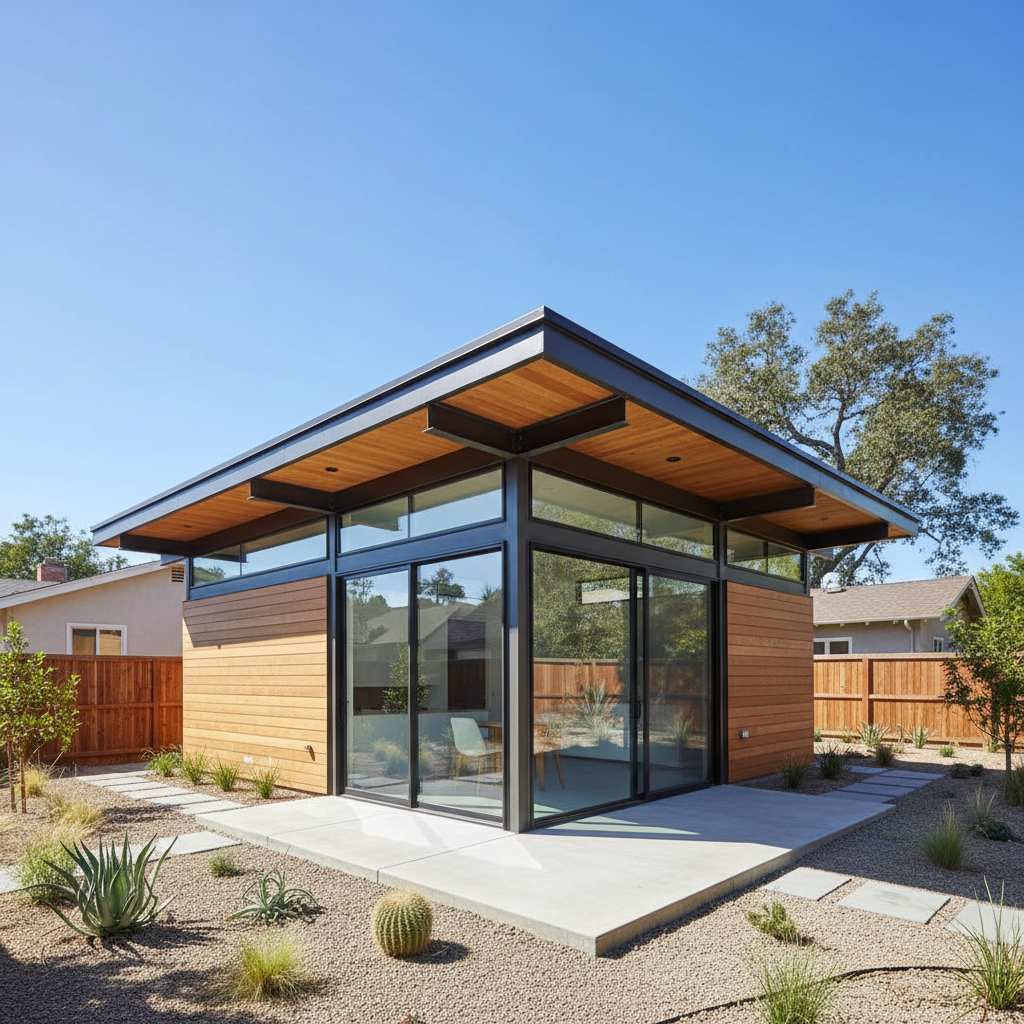

When you embark on the journey of building an Accessory Dwelling Unit (ADU) in California, you'll encounter a variety of terms and processes. One phrase that might arise and potentially cause a bit of confusion is 'planning commission.' Many homeowners wonder: What is a planning commission, and does your ADU need to go before one? The good news is that for the vast majority of ADU projects, the answer is a resounding 'no.' However, understanding what a planning commission is and the rare circumstances under which they might be involved can provide valuable peace of mind and clarity for your backyard home project.
What Exactly Is a Planning Commission?
A planning commission is a body of appointed citizens that advises and makes recommendations to a city council or county board of supervisors on matters related to land use, zoning, and development. They play a crucial role in shaping the physical development of a community, ensuring that growth aligns with the general plan and specific community goals.
Key Responsibilities of a Planning Commission:
- Land Use Planning: They review and recommend updates to a city's or county's General Plan, which is the foundational document guiding future development.
- Zoning Ordinances: They interpret, enforce, and recommend amendments to zoning ordinances that dictate what can be built where (e.g., residential, commercial, industrial zones).
- Development Project Review: For certain types of projects, especially those requiring discretionary approval (more on this below) or significant deviations from standard rules, they hold public hearings, gather input, and make decisions or recommendations.
- Environmental Review: They often oversee environmental impact assessments for larger projects.
- Policy Making: They help formulate policies related to housing, transportation, open space, and economic development.
In essence, planning commissions act as a critical checkpoint for development, ensuring that new construction and land use changes are well-considered, legally compliant, and beneficial to the community.

The Planning Commission's Role in ADU Development: A California Perspective
Historically, many development projects, particularly those that required variances or conditional use permits, would often find their way before a planning commission for review and approval. However, California's approach to ADUs is intentionally different.
Ministerial Approval: The Game Changer for ADUs
California state law has significantly streamlined the ADU approval process. The key concept here is ministerial approval. This means that if your ADU project meets all the objective standards outlined in state law and local ordinances (which must align with state law), the local planning department must approve it. There's no discretionary review, no subjective judgment, and crucially, no need for a planning commission hearing.
This ministerial approval process was established precisely to encourage ADU construction by making the permitting process faster, more predictable, and less costly. It removes the potential for neighborhood opposition or subjective interpretation by local officials to derail a compliant ADU project.
Ministerial vs. Discretionary Approval: Why It Matters for Your ADU
Understanding the distinction between these two types of approvals is fundamental to grasping why most ADUs bypass the planning commission.
-
Ministerial Approval:
- Definition: Involves little or no personal judgment by the public official as to the wisdom or manner of carrying out the project. The decision is based on whether the project meets pre-established, objective standards and criteria.
- Examples: Building permits for standard construction, ADU permits that meet all state and local standards.
- Process: Staff review, check against objective standards, approval if compliant. No public hearings or planning commission involvement.
-
Discretionary Approval:
- Definition: Requires the exercise of judgment or deliberation by the public agency. The agency has the authority to approve, conditionally approve, or deny a project based on subjective criteria, policy considerations, or potential impacts.
- Examples: Conditional Use Permits (CUPs), Variances, General Plan Amendments, major subdivisions.
- Process: Often involves public hearings, planning commission review, and potential appeals to the city council.
For your ADU, as long as it adheres to the size, setback, height, and other development standards set by state law and your local jurisdiction's compliant ordinance, it qualifies for ministerial approval. This is a huge advantage, as it significantly reduces the time, complexity, and uncertainty often associated with traditional development projects.

When Might an ADU Project (Rarely) Involve a Planning Commission?
While the vast majority of ADUs enjoy ministerial approval, there are a few very specific and uncommon scenarios where a planning commission might become involved. These are typically exceptions to the rule, often arising from unusual circumstances or specific local overlays:
-
Appeals: If a planning staff decision regarding your ADU is appealed (either by you, if you feel a decision was unjust, or by a neighbor, although neighbor appeals are heavily restricted for ADUs by state law), that appeal might eventually be heard by a planning commission or city council.
-
Variances for Non-Compliant Elements (Rare): State law provides significant flexibility for ADU setbacks and other standards. However, if your project proposes something truly outside of state and local ADU regulations (e.g., an exceptionally tall structure in a view corridor) and you seek a variance for it, that variance request might be subject to discretionary review and thus planning commission consideration. This is highly unlikely for typical ADUs.
-
Historic Preservation Districts: If your property is located within a designated historic district, or if the primary dwelling is a historic resource, your ADU project might require a Certificate of Appropriateness or similar review. This review process, ensuring the ADU is compatible with the historic character, could involve the planning commission or a specific historic preservation commission.
-
Environmentally Sensitive Areas: Properties located in very specific environmentally sensitive zones (e.g., coastal zones with specific overlay requirements, areas with significant natural habitats) might have additional layers of review that could, in rare cases, involve a commission, especially if the ADU project deviates from standard environmental protections.
-
Local Ordinance Amendments: Very occasionally, a city might propose a significant amendment to its general ADU ordinance (e.g., to adopt new state laws or address specific local conditions). Such policy changes would go before the planning commission for recommendation before being adopted by the city council.
It's important to reiterate: these scenarios are the exception, not the rule. The intent of California's ADU laws is to bypass these discretionary reviews for compliant projects.

Navigating the Process: When to Seek Expert Help
Understanding the nuances of local zoning codes, state ADU laws, and the permit application process can be complex. While most ADUs won't see a planning commission, ensuring your project is designed to meet all ministerial requirements from the outset is crucial for a smooth approval process.
This is where an experienced ADU specialist like GatherADU becomes invaluable. We stay up-to-date with the latest state laws and local ordinances across California, ensuring your design is compliant and optimized for ministerial approval. We handle the intricacies of permitting, so you don't have to worry about whether your project will get bogged down in unnecessary reviews.
Don't let the complexities of planning and permits deter you from building your dream backyard home. Let us guide you through every step. Schedule a free ADU consultation with GatherADU today to discuss your project and get a clear path forward.
Conclusion
For the vast majority of homeowners in California looking to build an ADU, the good news is that your project will likely never need to go before a planning commission. Thanks to state laws emphasizing ministerial approval, compliant ADUs are designed for a streamlined, predictable, and efficient permitting process. Understanding the difference between ministerial and discretionary review is key, and knowing that your project falls under the former provides significant advantages.
While rare exceptions exist, focusing on designing an ADU that adheres to established state and local standards will keep your project on the fast track. If you're ready to explore the possibilities of adding an ADU to your property without the hassle and uncertainty of complex planning reviews, GatherADU is here to help. Book your free ADU consultation with us and let's get started on bringing your backyard home vision to life.