
Introduction
Imagine having an extra living space on your property—a place for your in-laws, a rental unit for extra income, or even a private office. With many homeowners now exploring the potential of Accessory Dwelling Units (ADUs), Lemon Grove has emerged as a popular location for such ventures. In this comprehensive guide, we'll explore everything you need to know about building an ADU in Lemon Grove. From understanding what exactly an ADU is to navigating financial and legal concerns, we've got you covered.
Understanding ADUs
Definition and Types of ADUs
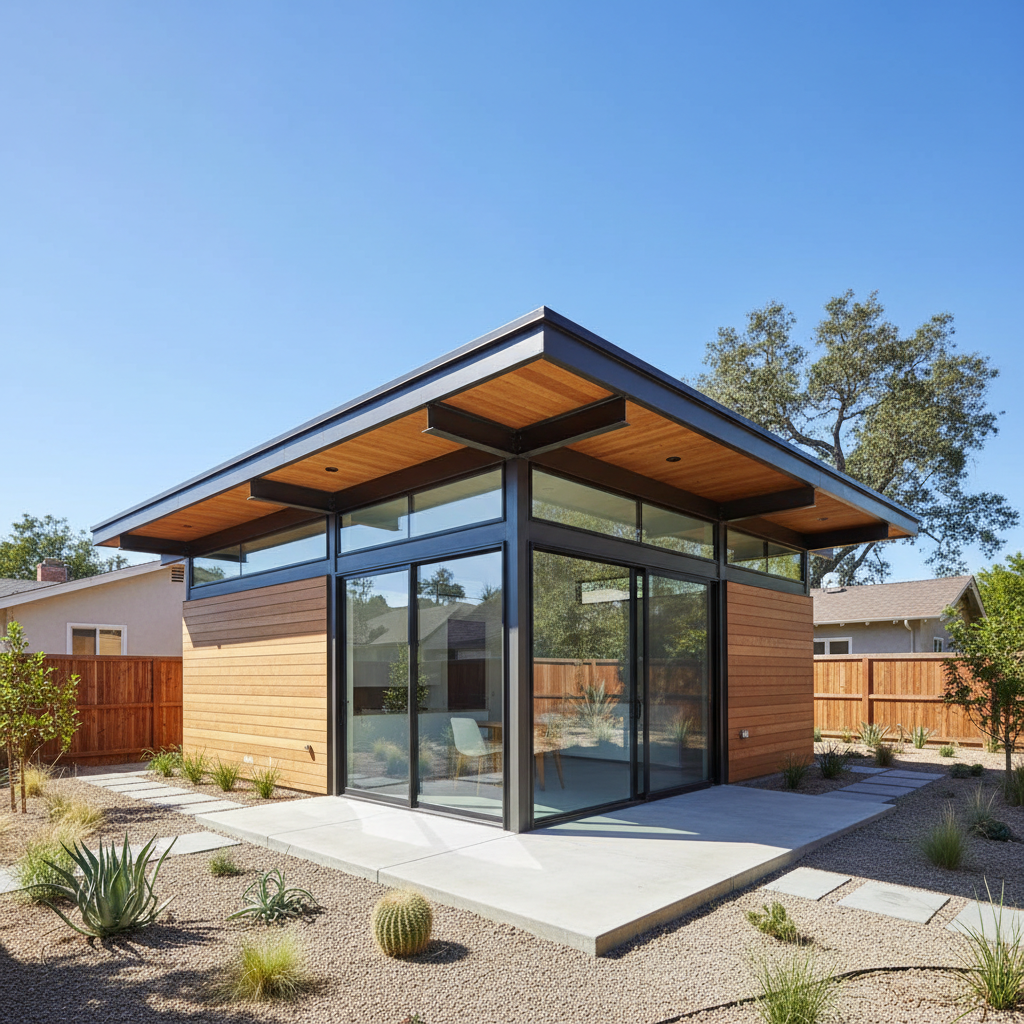
An ADU, or Accessory Dwelling Unit, is a secondary housing unit on a single-family residential lot. They come in various forms, including detached units, attached units that share a wall with the main house, and internal units that are part of the existing structure, like a basement or attic conversion. Each type offers different benefits and challenges, so it's essential to choose the one that best suits your needs.
Benefits of Building an ADU
The advantages of building an ADU are numerous. Firstly, an ADU can provide an additional stream of income if rented out. Secondly, it offers flexible living arrangements for extended family members. Lastly, an ADU can increase your property's overall value. Many homeowners find that the long-term financial benefits far outweigh the initial investment.
Legal Framework in Lemon Grove
Zoning Laws and Regulations
Before you start your ADU project, you need to familiarize yourself with Lemon Grove's zoning laws and regulations. The city has specific rules about where ADUs can be built, minimum lot sizes, and the maximum allowable square footage. Understanding these regulations is crucial to avoid potential legal hurdles down the line.
Permitting Process and Costs
Navigating the permitting process can be daunting, but it's a necessary step. You'll need to submit detailed plans and undergo several inspections. Permit fees can vary, but budgeting for these costs upfront will save you from surprises later. Typically, homeowners in Lemon Grove can expect to spend a few thousand dollars on permits.
Financial Considerations
Initial Investment and ROI
Building an ADU requires a significant initial investment, but the potential return on investment (ROI) can be substantial. Factors such as construction quality, design, and rental potential all play a role in determining ROI. It's advisable to perform a thorough cost-benefit analysis to understand the financial implications better.
Schedule a consultation with our ADU experts
Financing Options
Financing your ADU project can be challenging, but several options are available. Home equity loans, construction loans, and personal savings are common financing methods. Some homeowners also explore government grants and incentives specifically aimed at promoting ADU construction. Consulting with a financial advisor can help you choose the best option for your situation.

Design and Construction
Tips for Designing a Functional ADU
Designing an ADU involves more than just aesthetics; functionality is key. Consider factors like storage, natural lighting, and multi-purpose spaces. A well-designed ADU can serve multiple functions over its lifetime, making it a wise long-term investment.
Choosing the Right Contractor
Selecting a reputable contractor is crucial for a successful ADU project. Look for contractors with experience in building ADUs and check their references. A good contractor will guide you through the construction process, ensuring that your project stays on schedule and within budget.
Rental and Use Considerations
Understanding Rental Market Dynamics
If you're planning to rent out your ADU, understanding the rental market dynamics in Lemon Grove is essential. Research local rental rates, vacancy rates, and tenant preferences. This information will help you set competitive rental prices and attract quality tenants.
Alternative Uses for ADUs
ADUs aren't just for rentals. Many homeowners use them as guest houses, home offices, or even art studios. The flexibility of an ADU allows you to adapt the space to meet your changing needs over time, making it a versatile addition to your property.
Environmental Impact and Sustainability
How ADUs Contribute to Sustainable Living
ADUs offer several environmental benefits. They promote sustainable living by making efficient use of existing land and resources. Additionally, many homeowners incorporate energy-efficient designs and materials into their ADUs, further reducing their environmental footprint.
Community Development
Beyond individual benefits, ADUs contribute to broader community development. They provide affordable housing options and help create more vibrant, diverse neighborhoods. By building an ADU, you're not just enhancing your property; you're contributing to the community's overall well-being.
Case Studies and Success Stories
Real-world Examples
Hearing from others who have successfully built ADUs in Lemon Grove can provide valuable insights and inspiration. For instance, Jane and John Smith built a detached ADU on their property and now enjoy a steady rental income. Similarly, the Johnsons converted their garage into a beautiful, functional living space for their aging parents.
Lemon Grove's ADU rules in 2026 (Municipal Code Section 17.24.060)
Lemon Grove's ADU and junior ADU (JADU) rules are in Section 17.24.060(D)(1) of the Lemon Grove Municipal Code, last amended in 2022 (Ord. 461). On December 10, 2025, the California Department of Housing and Community Development (HCD) sent the City a findings letter saying the section does not comply with state ADU law (Gov. Code 66310 to 66342) on several points, and gave the City until January 9, 2026 to respond. We have not found an amended ordinance since then. So read the local code side by side with state law, and where the two differ, ask the City in writing which rule it will apply to your project.
What's settled: the local code as written
- Where ADUs are allowed: with single-family and multifamily homes in residential zones. There is no minimum lot size, and ADUs and JADUs don't count toward density.
- How many: on a lot with one single-family home, the code allows one ADU and one JADU. On a lot with more than one house, it allows one internal or detached ADU. On a multifamily lot, it allows up to two detached ADUs plus conversions of non-living space (at least one, or up to 25% of the existing units).
- ADU size: at least 150 square feet. A new ADU can be up to 100% of the main home's size or 1,200 square feet, whichever is less; if the main home is under 800 square feet, an 800-square-foot ADU is still allowed.
- JADU size: 150 to 500 square feet, inside the home, with no expansion of the existing structure.
- Garage and accessory building conversions: no maximum size, height limit, or setback, as long as you don't expand the structure by more than 150 square feet (the code allows that much for entry and exit).
- Height: 16 feet for a detached ADU. Attached and internal ADUs and JADUs follow the main home's height limit for the zone.
- Setbacks for new attached or detached ADUs: 4 feet on the side and rear (or less if the zone allows), 4 feet on the street side of a corner lot, and the zone's normal front setback.
- Parking: one space per ADU, but none is needed if the ADU is within a half-mile walk of public transit, in a historic district, inside the main home or an existing accessory structure, where on-street permits are required but not offered to the ADU occupant, or within one block of a car-share vehicle. A garage or carport removed to build an ADU doesn't have to be replaced. Spaces can be tandem or in setbacks.
- Fire sprinklers: not required unless the main home needs them.
- Design: the code asks that ADUs use the same or a complementary style, materials, and colors as the main home.
- JADU owner occupancy: the owner must live in the JADU or the main home, and a deed restriction must be recorded.
What HCD says has to change
HCD's December 2025 letter lists 16 findings. The ones most likely to affect a homeowner's design:
- More units: under Gov. Code 66323, a single-family lot can have a converted ADU, a new detached ADU of up to 800 square feet with 4-foot side and rear setbacks, and a JADU, for three units in addition to the house. HCD says the City's "one ADU and one JADU" limit, and its one-ADU limit on lots with more than one house, conflict with that.
- Multifamily lots: state law allows up to eight detached ADUs on a lot with an existing multifamily building (but no more than the number of existing units), not the code's two.
- Height: the code's flat 16-foot cap on detached ADUs doesn't reflect the higher minimums in Gov. Code 66321(b)(4), which can allow 16, 18, or 20 feet depending on the site.
- Front setbacks: a front setback can't be used to block an 800-square-foot ADU with 4-foot side and rear setbacks.
- Conversions: no setback can be required for existing living space or an accessory structure converted to an ADU, and setbacks over 4 feet don't apply to new ADUs except for fire and safety.
- JADU parking: the City can't require you to replace parking when an attached garage becomes a JADU.
- Sprinklers: building an ADU can't trigger sprinklers in the existing main home (Gov. Code 66314(d)(12)).
- Design rules: only objective standards are allowed, so "complementary" style and "same or better quality" materials can't be enforced as written.
- Deed restriction: a JADU deed restriction should cover no separate sale and the JADU's size and features, not owner occupancy.
- Review timeline: the City must approve or deny a complete ADU application within 60 days, with a full set of comments if it denies.
Other state rules that apply in Lemon Grove
- Owner occupancy: since January 1, 2026, state law (AB 1154, Gov. Code 66333) limits owner occupancy to JADUs that share a bathroom with the main home. If your JADU has its own bathroom, ask the City in writing how it will apply its owner-occupancy rule.
- Impact fees: no impact fee can be charged on an ADU with 750 square feet of interior livable space or less (Gov. Code 66311.5). Larger ADUs can be charged in proportion to the main home's size. Utility connection fees and school fees are separate.
- Old code numbers: the code still cites Gov. Code 65852.2 and 65852.22. SB 477 renumbered those sections to Gov. Code 66310 to 66342, so look up the current numbers when you compare.
How to use this when you plan
- Start with the code as written, since that's the City's adopted code.
- Where your design relies on state law instead, such as a third unit, a taller ADU, or a JADU without replacement parking, cite the Gov. Code section on your plans and ask the City to confirm in writing before you finalize the design.
- Ask the City whether it has amended Section 17.24.060 or adopted findings in response to HCD, because either would change what applies.
Rules change, so confirm the current code with the City of Lemon Grove Community Development Department before you finalize a design. If you'd like help working out what your lot allows, book a free consultation.
Final thoughts
Building an ADU in Lemon Grove is a significant undertaking, but the rewards can be substantial. From financial gains to enhanced property value and community benefits, the advantages are clear. If you're considering this venture, take the time to understand all the factors involved and plan accordingly.
For personalized advice and further information, consider consulting with our expert team. We're here to help you every step of the way in turning your ADU dream into a reality.