When you're designing an ADU, every square foot matters. You want to maximize livable space while meeting building codes, and bedroom sizing is one of the most important calculations to get right. Build bedrooms too small and they won't qualify as legal bedrooms. Build them too large and you're wasting valuable square footage that could go to other uses.
Let me walk you through the minimum requirements and some practical strategies for sizing bedrooms in California ADUs.
The Basic Minimums
California building code establishes clear minimums for bedroom size:
70 square feet minimum for a single-occupancy bedroom. This is the floor, the absolute smallest a room can be and still count as a bedroom.
7 feet minimum dimension in any horizontal direction. You can't have a very long, very narrow room, even if the total area exceeds 70 square feet.
50 square feet per occupant for rooms intended for multiple people. A bedroom for two needs at least 100 square feet.
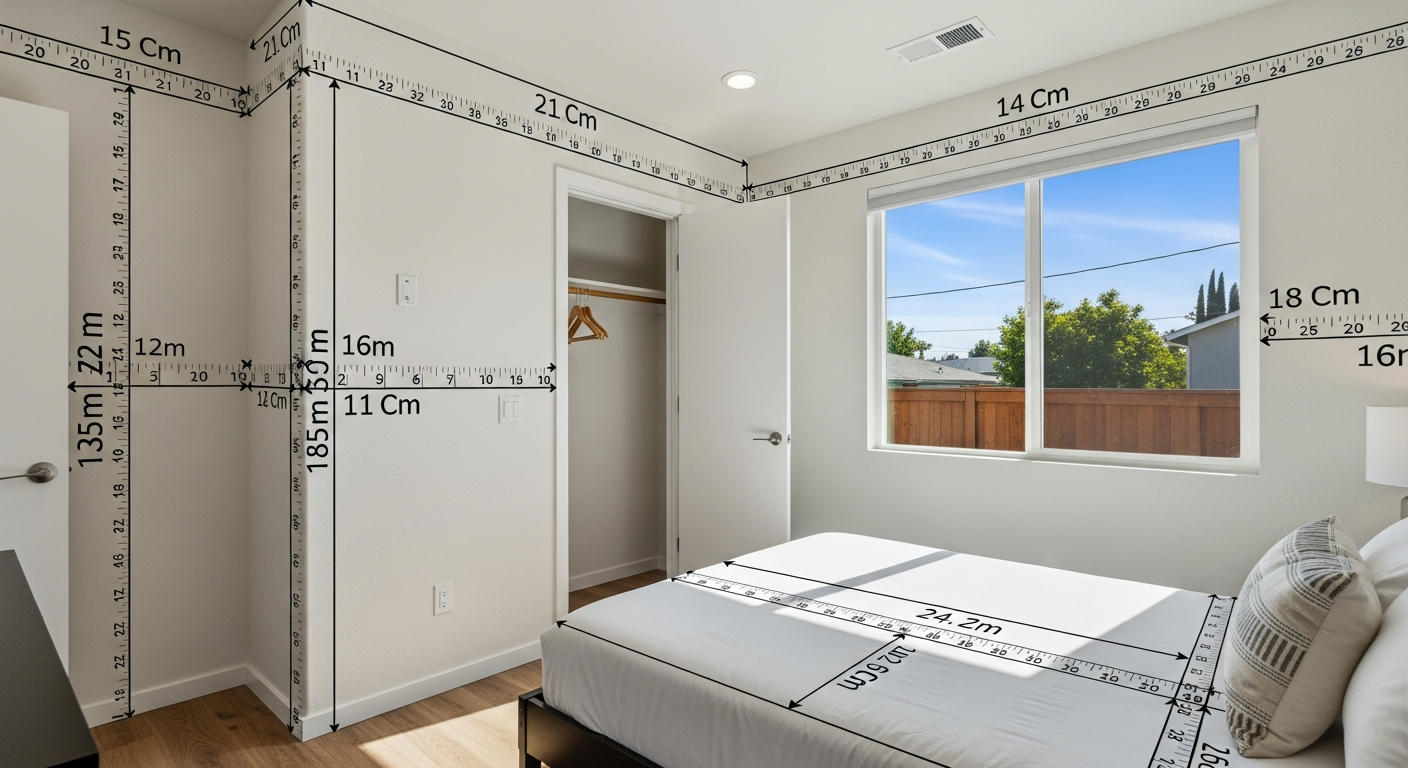
What do these minimums look like in practice? A 70 square foot bedroom is quite small. Think 7 feet by 10 feet, or 8 feet by 8.75 feet. That's enough for a twin or full bed with minimal additional furniture. A nightstand, maybe. A small dresser if you're creative with placement.
Most people find bedrooms in the 100 to 120 square foot range much more comfortable for primary sleeping spaces. That's enough for a queen bed with nightstands, a dresser, and room to move around.
Practical Bedroom Sizes for ADUs
While 70 square feet is the legal minimum, here are more practical targets based on intended use:
| Bedroom Type | Recommended Size | Typical Dimensions |
|---|---|---|
| Small guest room/office | 80-100 sq ft | 8' x 10' to 10' x 10' |
| Standard single bedroom | 100-120 sq ft | 10' x 10' to 10' x 12' |
| Primary bedroom (couple) | 120-150 sq ft | 10' x 12' to 12' x 12' |
| Primary with closet/bath access | 150-200 sq ft | 12' x 14' area |
In a one-bedroom ADU, you might allocate 120 to 150 square feet for the bedroom, giving occupants comfortable space while leaving room for a generous living area, full kitchen, and bathroom.
In a two-bedroom ADU, you might size the primary bedroom at 120 square feet and the secondary at 100 square feet, creating a clear hierarchy while keeping both rooms functional.
What Gets Measured
Understanding what counts toward your bedroom square footage helps you design efficiently.
Only floor space counts. The measurement is taken at floor level. You can't count space occupied by built-in furniture, platforms, or other obstructions.
Closets don't count. The 70 square feet minimum is for the bedroom itself. Closet space is additional, not included in the calculation.
Sloped ceilings matter. Under a sloped ceiling, only areas with at least 5 feet of clearance count toward bedroom area. Areas with 7'6" or greater ceiling height must make up at least 50% of the required floor area.
This last point is important for ADUs built under rooflines or in attic spaces. That charming dormer bedroom might not qualify if too much of the floor area falls under low ceilings.
Maximizing Bedroom Count in Your ADU
More bedrooms typically mean higher rent, so it's worth considering whether you can fit two bedrooms into your ADU rather than one.
Here's the rough math: A one-bedroom ADU needs roughly 400 to 500 square feet minimum to be comfortable. A two-bedroom ADU needs 600 to 800 square feet. If you're building in the 700 to 1,000 square foot range, two bedrooms is definitely achievable.
Strategies for maximizing bedroom count:
Compact common areas. An efficient kitchen with smart storage takes less space than a spread-out design. A living area that opens to the kitchen eliminates hallway square footage.
Shared bathroom. One bathroom serving two bedrooms saves significant square footage compared to having ensuites.
Minimal hallways. Every square foot of hallway is space that could be part of a room. Design bedrooms to open directly off living areas where possible.
Right-sized bedrooms. The primary bedroom doesn't need to be enormous. A 110 square foot primary and 90 square foot secondary both qualify as legal bedrooms and leave more room for other uses.
Egress in Small Bedrooms
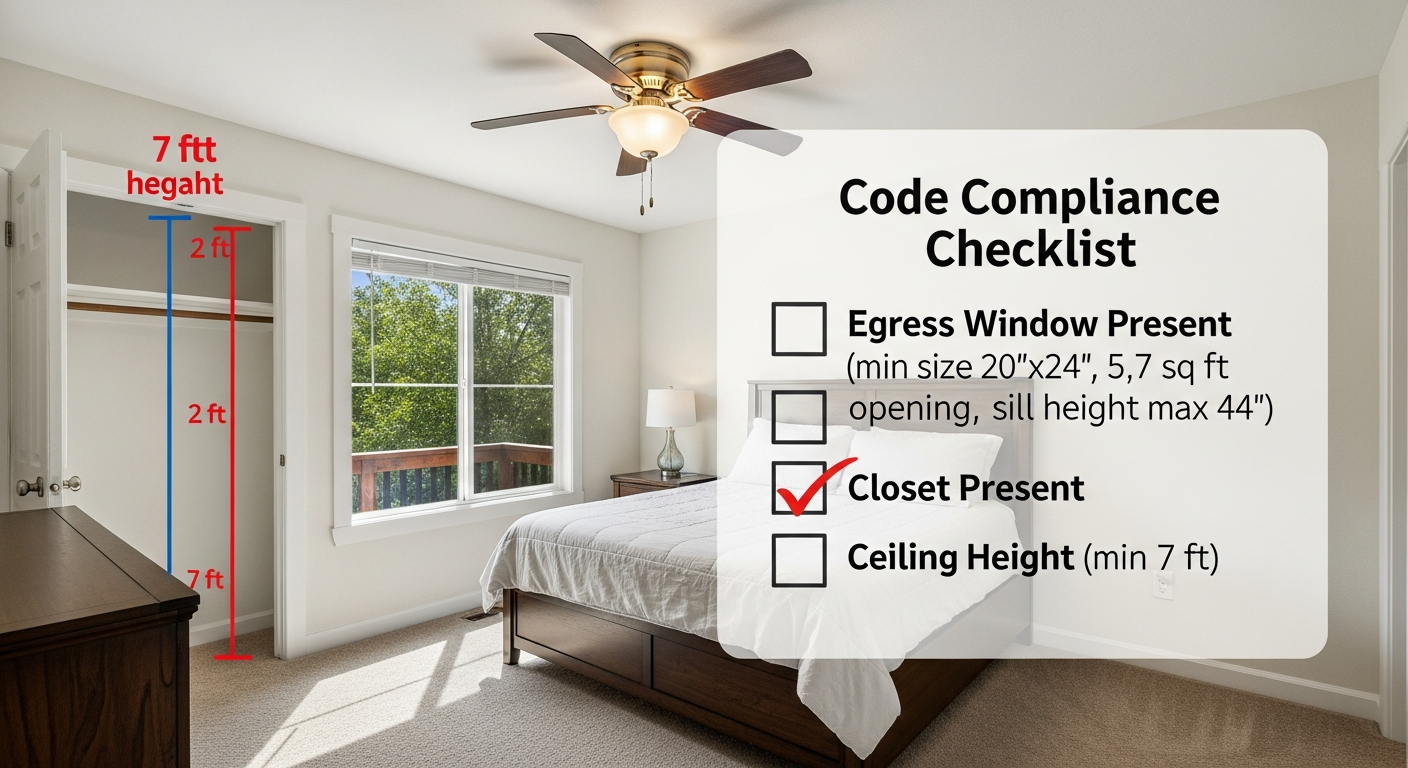
The smaller the bedroom, the more challenging it can be to meet egress requirements. Remember, you need a window with at least 5.7 square feet of openable area (5.0 for ground floor), with specific height and width minimums.
In a very small bedroom, that egress window represents a significant portion of wall space. You need to plan for it from the start, not try to squeeze it in after the room is designed.
The window placement also affects furniture layout. You can't put a bed in front of an egress window if it blocks the escape route. In a 70 square foot room, window placement basically dictates where the bed can go.
The Closet Decision
As I mentioned, closets aren't legally required for a room to be a bedroom in California. But should you include them anyway?
In almost all cases, yes. Here's why:
Appraisers expect them. When your property is appraised for financing or sale, some appraisers won't count a room as a bedroom without a closet, even though code doesn't require one.
Tenants expect them. People need somewhere to hang clothes. A bedroom without a closet is less appealing to renters.
They're inexpensive to add. During construction, building a 2'x4' closet costs very little. Adding one later is much more expensive.
A small reach-in closet of 6 to 10 square feet is sufficient for a secondary bedroom. A larger 16 to 24 square foot walk-in works well for a primary bedroom. Either way, the closet space is additional to the 70 square foot minimum.
When Smaller Makes Sense
There are situations where designing bedrooms closer to the minimum makes sense:
Studio conversions. If you're adding a Murphy bed alcove or sleeping nook to what was an open studio, 70 to 80 square feet might be all you have. As long as it meets code, it counts.
Second bedrooms. The secondary bedroom in a two-bedroom unit doesn't need to be as generous as the primary. Many renters use the second bedroom as an office or guest room, where compact size is less of an issue.
Maximizing common space. Some tenants prefer a larger living area over spacious bedrooms. Keeping bedrooms efficient lets you allocate more to the kitchen and living room.
Need Help With Your ADU Layout?
Getting bedroom sizing right is crucial for both code compliance and tenant appeal. We can help you design efficient layouts that maximize your ADU's potential.
Call us at (323) 591-3717 or schedule a free consultation to discuss your project.
The Bottom Line
Bedroom sizing in ADUs requires balancing code minimums, tenant comfort, and overall space efficiency. The key points to remember:
- 70 square feet minimum, 7 feet minimum dimension
- Egress window required regardless of size
- Closets not required but strongly recommended
- 100 to 120 square feet is more comfortable for everyday use
- Ceiling height requirements can disqualify otherwise adequate spaces
Start your design with bedroom locations and sizes in mind, then work the rest of the layout around them. Bedrooms have the strictest requirements of any room type, so getting them right first simplifies everything else.
Sources cited:
- California Building Standards Commission. (2022). California Building Code, Title 24, Part 2.
- California Department of Housing and Community Development. (2023). ADU Handbook.