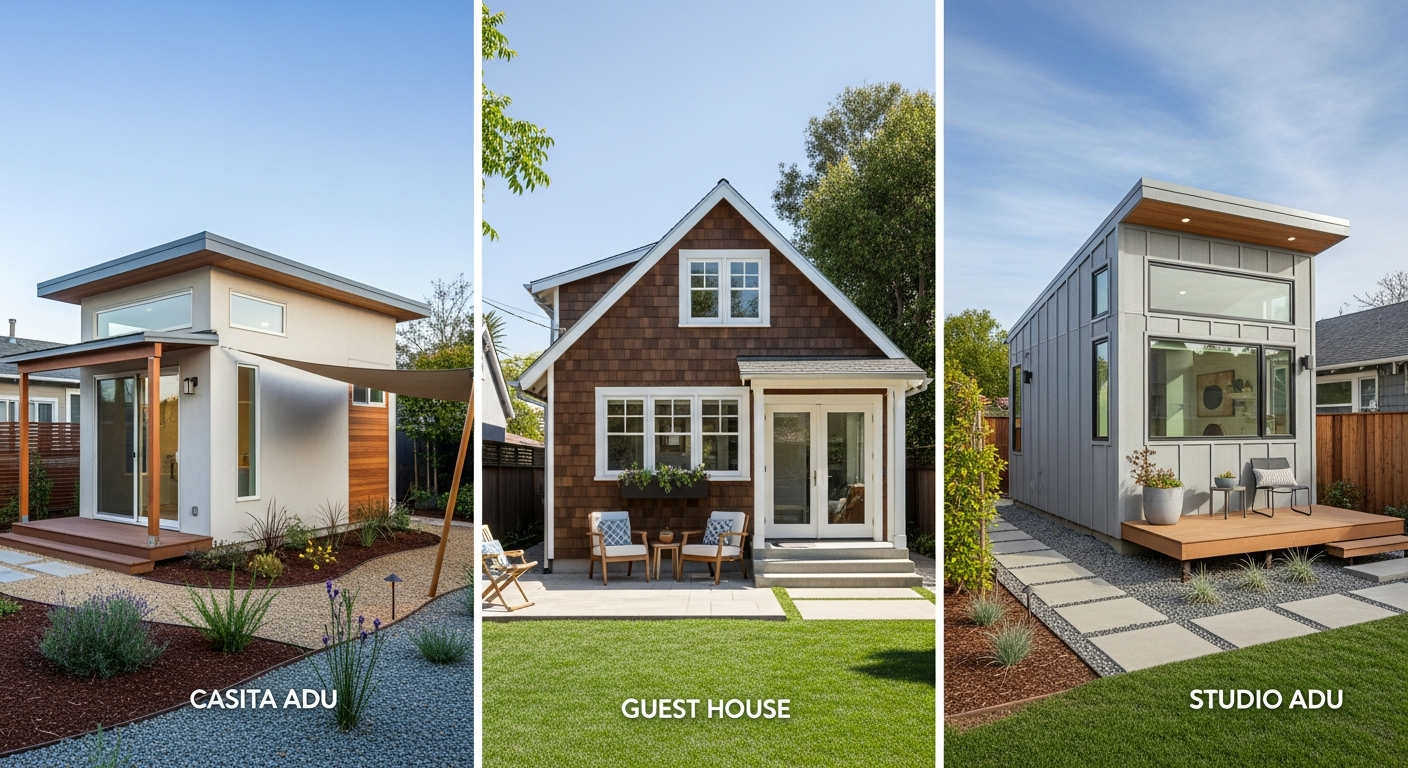
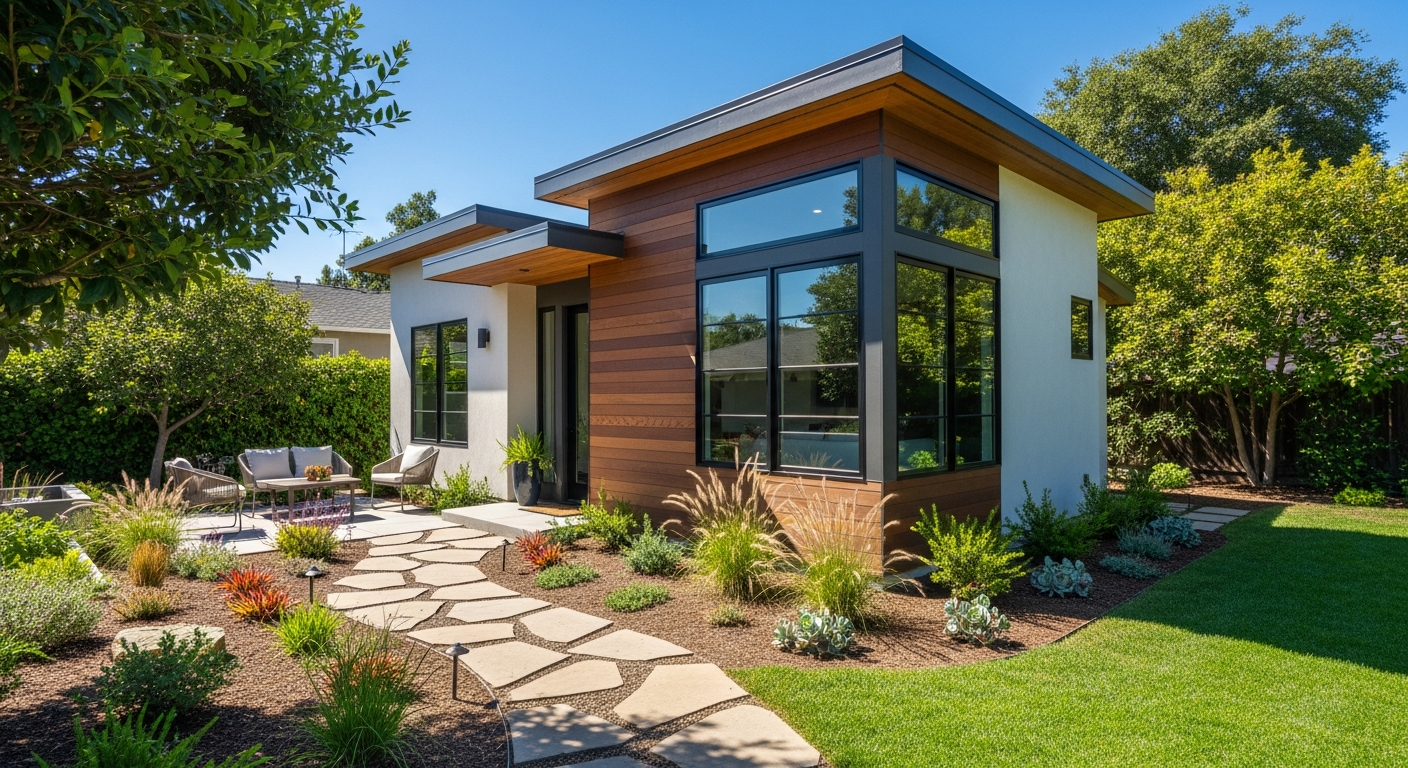
A detached ADU sits separately from your main house, typically in the backyard. It's a standalone structure with its own entrance, walls, roof, and complete living facilities. For many homeowners, this configuration offers the most appealing combination of privacy, flexibility, and functionality.
But building a detached structure involves more complexity than a garage conversion or attached addition. Let me walk you through everything you need to know about detached ADU projects.
Why Choose a Detached ADU?
Detached ADUs have several advantages over attached options:
Maximum privacy. With space between the ADU and your main house, both you and your tenant (or family member) enjoy greater separation. Sound doesn't transmit through shared walls. Visual privacy is easier to achieve.
Separate utilities. It's straightforward to give a detached ADU its own utility meters, making it easy for tenants to pay their own bills.
Design flexibility. A detached structure can face any direction, have windows on all sides, and be positioned for optimal sun exposure and views.
Higher rental rates. Tenants often pay a premium for the privacy and independence of a detached unit compared to attached apartments or converted garage units.
Property value impact. Detached ADUs tend to add more to property values than attached units or conversions because they're perceived as more desirable.
California Regulations for Detached ADUs
California state law sets the framework for ADUs, but local jurisdictions add their own requirements. Here's what typically applies to detached units:
Size Limits
State law allows detached ADUs up to 1,200 square feet for units with more than one bedroom. Single-bedroom and studio units can still be up to 850 square feet under state minimums, though many jurisdictions allow the full 1,200 regardless of bedroom count.
Setback Requirements
Detached ADUs must be at least 4 feet from side and rear property lines. This is more generous than traditional accessory structure setbacks in many areas. Front setbacks follow the same rules as your main house.
Height Limits
Single-story detached ADUs can typically be up to 16 feet tall. Two-story ADUs or ADUs above a garage can often go to 18 or 20 feet, depending on local rules and distance from property lines.
Lot Coverage
Your total structures (main house plus ADU plus other buildings) can't exceed lot coverage limits, typically 40% to 50% of the lot depending on zoning. However, California law allows an 800 square foot ADU regardless of lot coverage rules, providing a guaranteed minimum.

The Construction Process
Site Assessment
Before designing anything, you need to understand your site. Key considerations include:
- Available space after setbacks
- Slope and drainage patterns
- Location of existing utilities (water, sewer, electrical, gas)
- Trees that might need removal or protection
- Access for construction equipment
- Neighboring windows and privacy considerations
A professional site assessment identifies constraints and opportunities that inform your design.
Design and Engineering
Detached ADU construction requires professional drawings including:
- Architectural plans showing floor layout, elevations, and details
- Structural engineering for foundation and framing
- Electrical plans
- Plumbing plans
- Energy compliance documentation (Title 24)
Design costs typically run $5,000 to $15,000 depending on project complexity and the design firm.
Permitting
California requires jurisdictions to approve compliant ADU applications within 60 days. The process involves:
- Submitting plans to the planning department
- Plan check review for zoning compliance
- Building department review for code compliance
- Payment of permit fees (varies by jurisdiction)
- Permit issuance
Some jurisdictions have streamlined ADU permitting with pre-approved plans or expedited review. Others are still slow. Research your specific city's process.
Construction
Detached ADU construction follows a predictable sequence:
- Site preparation: Clearing, grading, trenching for utilities
- Foundation: Typically concrete slab-on-grade for ADUs
- Framing: Walls, roof structure
- Rough mechanical: Plumbing, electrical, HVAC rough-in
- Insulation and drywall: Building envelope completion
- Finishes: Cabinets, flooring, fixtures, paint
- Final mechanical: Fixture installation, system testing
- Inspections and certificate of occupancy
Timeline varies, but expect 6 to 12 months from permit application to move-in for most detached ADU projects.
Costs for Detached ADUs
Detached ADUs typically cost more than conversions because you're building an entirely new structure. In Southern California, expect:
| Unit Size | Typical Cost Range |
|---|---|
| 400-500 sq ft studio | $150,000 - $220,000 |
| 600-700 sq ft 1-bedroom | $200,000 - $280,000 |
| 800-1,000 sq ft 2-bedroom | $280,000 - $380,000 |
| 1,000-1,200 sq ft 2-bedroom | $320,000 - $450,000 |
These ranges cover design, permits, construction, and typical site work. Challenging sites, premium finishes, or complex designs push costs higher. Simpler projects with efficient design can come in lower.
Per-square-foot costs typically run $300 to $450 for basic to mid-range finishes. High-end finishes can push this to $500 or more.
Special Considerations for Detached ADUs
Utility Connections
Running utilities from your main house to a detached ADU adds cost. The longer the run, the more you'll spend on trenching and materials. Electrical is usually straightforward. Plumbing and sewer can be more complex, especially if significant grade changes require pumps or special engineering.
Gas is often skipped in new ADUs. Electric appliances, especially heat pump HVAC and induction cooking, eliminate the need for gas lines.
Fire Separation
ADUs within 5 feet of property lines or the main house typically need fire-rated wall construction on the close side. This adds some cost but isn't usually prohibitive.
Access and Pathways
Your tenant needs a way to reach the ADU without walking through your private spaces. Plan for a pathway from the street or driveway to the ADU entrance. This pathway should be accessible, well-lit, and clearly defined.
Privacy Planning
Think about sightlines between the ADU and your main house. Where are windows placed? Can the tenant see into your living spaces, or vice versa? Strategic window placement, landscaping, and fencing can address privacy without making either space feel enclosed.
Ready to Explore Detached ADU Options?
Every property has unique opportunities and constraints. We can assess your site and show you what's possible.
Call us at (323) 591-3717 or schedule a free consultation to start planning your detached ADU.
Prefab vs. Site-Built
Detached ADUs can be built traditionally on-site or assembled from prefabricated components. Each approach has trade-offs.
Site-built offers maximum customization. You can design exactly what you want for your specific site. Quality depends on your contractor, but good builders produce excellent results.
Prefab can be faster once manufacturing begins, though lead times for ordering can offset this. Quality is consistent since construction happens in controlled factory conditions. However, site preparation and foundation work still happen on-site, and transportation and crane costs add to the budget.
Neither approach is inherently better. The right choice depends on your priorities, timeline, and budget.
Is a Detached ADU Right for You?
Consider a detached ADU if:
- You have adequate backyard space after setbacks
- Privacy between the ADU and main house is a priority
- You want maximum flexibility in design and orientation
- Your garage is needed for parking or storage
- You're thinking long-term about property value and appeal
Consider alternatives if:
- Your backyard is small or heavily sloped
- Budget is limited and you have a suitable garage for conversion
- You want to minimize site disruption during construction
For many homeowners, a detached ADU represents the best of all worlds: a complete, private residence that maximizes rental income and property value while preserving your own living space.
Sources cited:
- California Department of Housing and Community Development. (2023). "ADU Handbook."
- UC Berkeley Terner Center for Housing Innovation. (2022). "ADU Progress Report."