You might think a bedroom is just a room with a bed, but California law sees it differently. What counts as a legal bedroom has specific requirements that affect everything from how many bedrooms you can claim on a real estate listing to whether your ADU passes inspection. Get this wrong, and you could face issues with permits, appraisals, and even habitability.
Understanding these requirements matters especially for ADU projects, where every square foot counts and you want to maximize the number of bedrooms you can legitimately claim.
The Basic Requirements for a Legal Bedroom
California building codes establish minimum standards for any room to qualify as a bedroom. These aren't suggestions; they're requirements that inspectors verify during the permitting process.
Minimum Floor Area
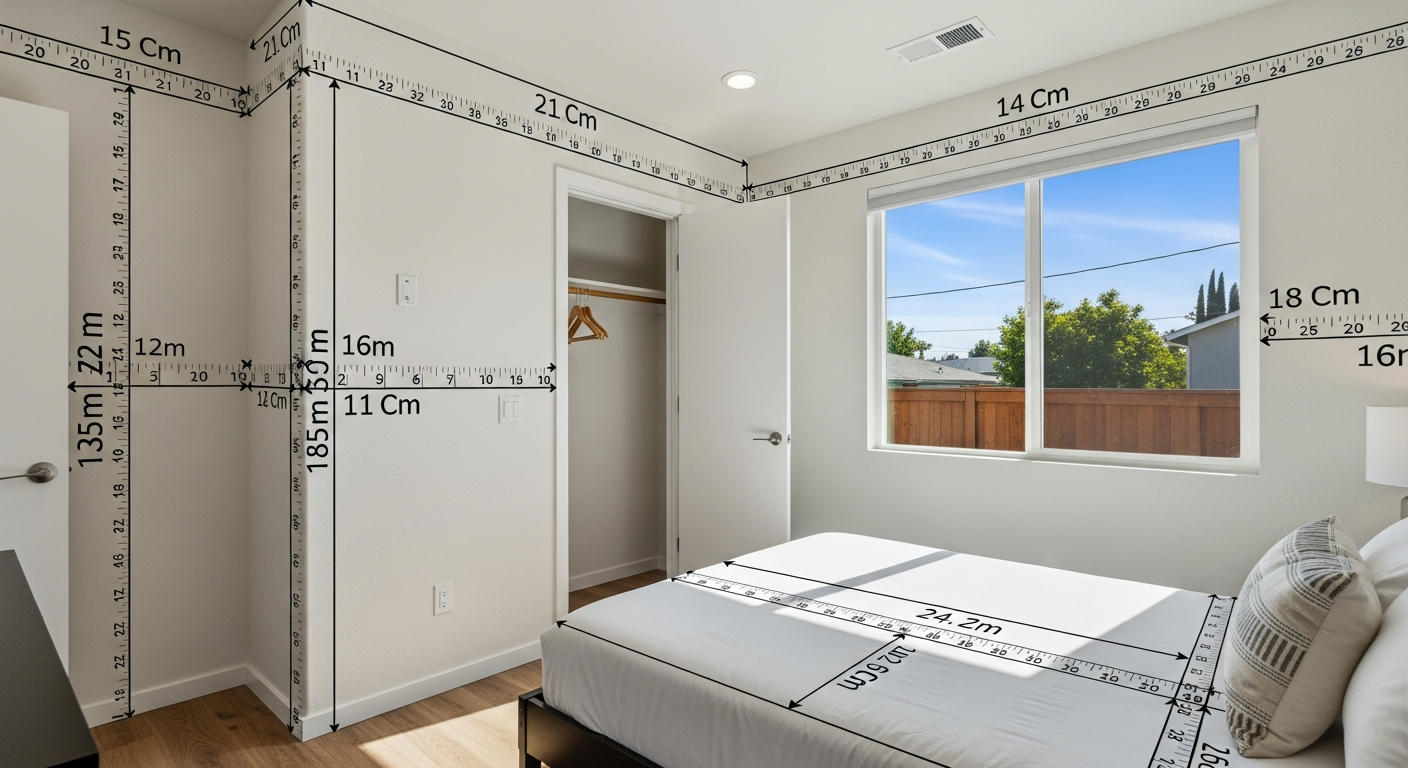
A bedroom must have at least 70 square feet of floor area. This is the absolute minimum for a room occupied by one person. For rooms intended for two or more occupants, you need 50 square feet per person, so a double-occupancy bedroom needs at least 100 square feet.
These measurements apply to usable floor area only. That means area under sloped ceilings that doesn't meet ceiling height requirements (more on that below) doesn't count toward your 70 square feet.
Minimum Dimensions
Beyond total area, a bedroom must be at least 7 feet in any horizontal direction. You can't have a 2-foot wide by 35-foot long space and call it a bedroom, even though the math works out to 70 square feet. The room needs to be functional for sleeping, which requires reasonable proportions.
Ceiling Height
At least 50% of the required floor area must have a ceiling height of at least 7 feet 6 inches. Under sloped ceilings, portions with less than 5 feet of clearance don't count toward the required floor area at all.
This matters particularly for attic conversions, loft spaces, or rooms under rooflines. The cozy nook under the eaves might not qualify as bedroom space even if you can technically fit a bed there.

Egress Requirements: The Safety Exit
Perhaps the most important bedroom requirement is egress, meaning a way to escape in an emergency. Every bedroom must have at least one window or door that opens directly to the outside and meets specific size requirements.
Egress Window Minimums
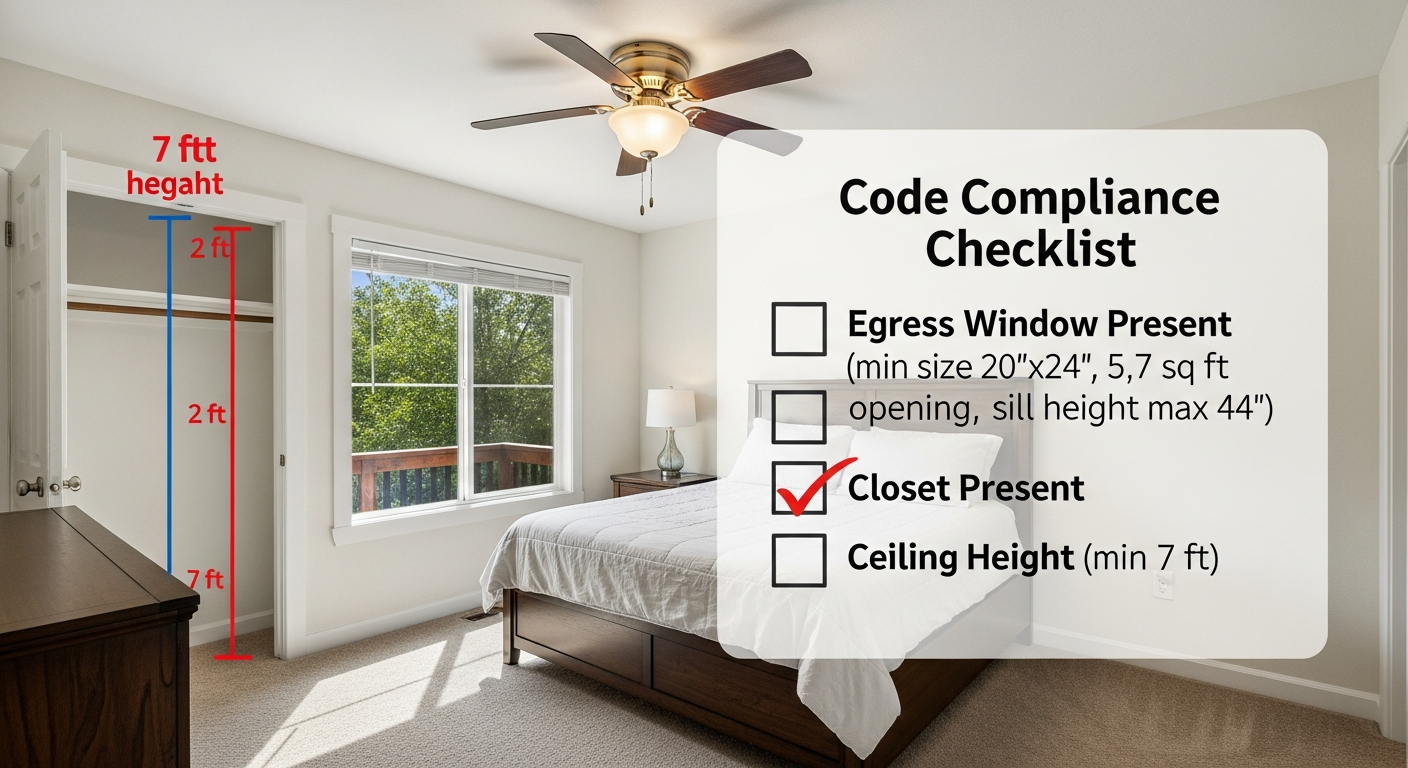
An egress window must have:
- Minimum opening area of 5.7 square feet (or 5.0 square feet for ground-floor windows)
- Minimum opening height of 24 inches
- Minimum opening width of 20 inches
- Maximum sill height of 44 inches above the floor
These requirements ensure that an adult can physically fit through the window to escape a fire. They also allow firefighters to enter through the window for rescue operations.
The sill height requirement is often overlooked. If your window is 48 inches off the floor, it doesn't qualify as egress even if it's large enough. This comes up frequently in basement conversions where windows are set high in the wall.
Alternative Egress Doors
A door that opens directly to the outside can serve as egress instead of a window. This is common in garage conversions and ADUs where bedrooms are on the ground floor. The door must open without special knowledge or tools, and sliding doors can work as long as they meet the minimum dimensions.
The Closet Question
Here's where things get interesting. Many people believe that a bedroom must have a closet to be considered legal. This is a persistent myth, but it's not quite accurate.
California building code does not require a closet for a room to be classified as a bedroom. The egress, size, ceiling height, and ventilation requirements are what legally define a bedroom. A room meeting all those requirements is a bedroom whether or not it has a closet.
However, real estate practice is different from building code. When appraising homes and listing properties, the presence of a closet often matters. Some appraisers won't count a room as a bedroom without a closet, even if it meets building code requirements. Some MLS systems require a closet for bedroom classification.
The practical advice: if you're building a bedroom, include a closet. It's inexpensive to add during construction, and it eliminates any ambiguity about the room's status for future buyers, appraisers, or tenants.
Ventilation and Light
Bedrooms must have natural light and ventilation. The requirements specify:
- Glazing (window) area equal to at least 8% of the floor area
- Openable window area equal to at least 4% of the floor area
For a 100 square foot bedroom, that means at least 8 square feet of window glass and at least 4 square feet of operable (openable) window area. Note that these are separate from the egress requirements. Your egress window can count toward both requirements if it's large enough.
Heating Requirements
California requires habitable rooms, including bedrooms, to have heating capable of maintaining a temperature of at least 68 degrees Fahrenheit at a point 3 feet above the floor. This doesn't mean every bedroom needs its own register or heating unit, but the heating system must be capable of adequately heating the space.
Air conditioning is not required by code, though it's increasingly expected by tenants and buyers in most of California.
Electrical Requirements
Bedrooms must have certain electrical provisions:
- At least two electrical outlets or one outlet and one light fixture
- Arc-fault circuit interrupter (AFCI) protection on all bedroom circuits
- Smoke detectors hardwired with battery backup
The AFCI requirement is relatively recent and is a common issue in older home renovations. Adding a bedroom to an older home typically triggers the need to bring electrical service up to current code.
| Requirement | Minimum Standard |
|---|---|
| Floor area (single occupant) | 70 sq ft |
| Floor area (double occupant) | 100 sq ft |
| Minimum horizontal dimension | 7 feet |
| Ceiling height (50% of area) | 7' 6" |
| Egress window opening | 5.7 sq ft (5.0 ground floor) |
| Egress window sill height | Max 44" above floor |
| Natural light (glazing) | 8% of floor area |
| Natural ventilation (openable) | 4% of floor area |
Bedrooms in ADU Projects
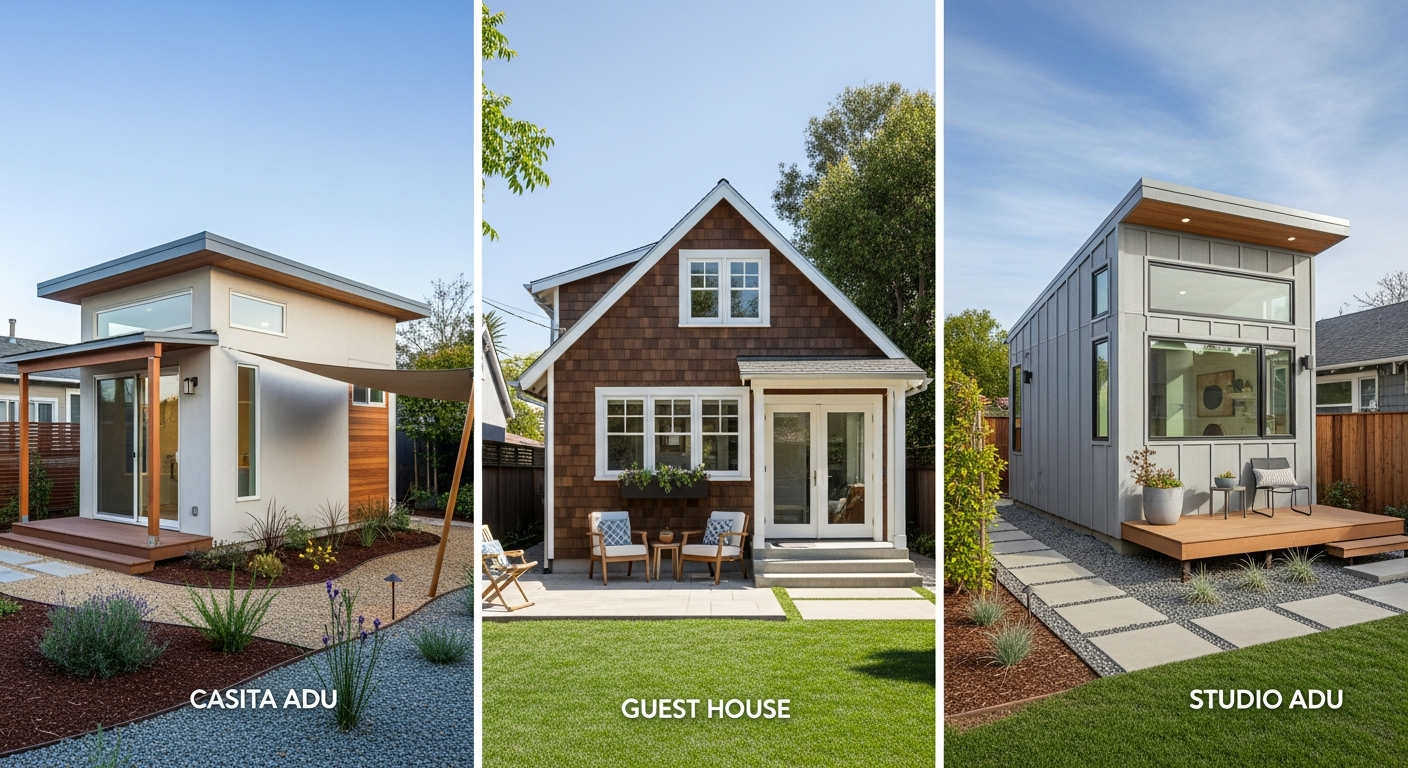
For ADU construction, bedroom requirements become particularly important because they affect your unit's rental value and appeal.
A one-bedroom ADU rents for significantly more than a studio in most markets. A two-bedroom commands even higher rents. But you can only count bedrooms that actually meet the legal requirements.
Common bedroom issues in ADU projects include:
Inadequate egress. Converting an existing space like a garage may require cutting new window openings or enlarging existing ones to meet egress requirements. This is often one of the more expensive aspects of a conversion.
Ceiling height in converted spaces. Garages often have ceilings at exactly 8 feet, which is fine. But adding insulation and finishes can reduce this. Make sure your finished ceiling still meets the 7'6" requirement.
Basement bedrooms. California doesn't have traditional basements in most areas, but where they exist, egress is often a challenge. Window wells may be required to provide code-compliant egress.
Loft bedrooms. Sleeping lofts are popular in small ADUs, but they rarely meet bedroom requirements. Low ceilings, inadequate egress, and access via ladder rather than stairs typically disqualify lofts as legal bedrooms. They can still be used for sleeping, but you can't count them as bedrooms in your unit count.
Planning Your ADU Bedrooms?
Getting bedroom requirements right from the start saves money and hassle later. We can help you design ADU layouts that maximize legal bedroom count while meeting all code requirements.
Call us at (323) 591-3717 or schedule a free consultation to discuss your project.
Common Misconceptions
"This room has a closet, so it's a bedroom." Wrong. A closet doesn't make a room a bedroom. The egress, size, and other requirements do.
"I can count my loft as a bedroom." Almost always wrong. Lofts rarely meet ceiling height and egress requirements.
"Any window counts as egress." Wrong. The window must meet specific size and sill height requirements.
"I don't need permits to add a bedroom." Wrong. Adding a bedroom involves structural, electrical, and safety work that requires permits.
Why These Rules Exist
Building codes aren't arbitrary bureaucracy. The bedroom requirements exist primarily for fire safety. When you're asleep, you're at your most vulnerable. A fire that traps you in a room without adequate escape routes can be fatal.
The egress window requirements were developed from studies of how people escape residential fires and how firefighters conduct rescues. The size and height specifications reflect what's actually needed for a person to fit through a window under emergency conditions.
Similarly, the size minimums ensure that bedrooms are actually functional for their intended purpose rather than converted closets or hallways being counted as sleeping space.
Getting It Right
If you're building new or renovating, work with professionals who understand these requirements from the start. Adding egress windows or adjusting room dimensions after the fact is expensive and disruptive.
If you're evaluating an existing space, measure carefully and check all requirements before assuming a room qualifies as a bedroom. That "bonus room" in your listing photos might be a legal liability if it doesn't actually meet code.
And when in doubt, consult your local building department. Requirements can vary slightly between jurisdictions, and they can clarify what applies to your specific project.
Sources cited:
- California Building Standards Commission. (2022). California Building Code, Title 24, Part 2.
- International Residential Code. (2021). Chapter 3: Building Planning.