When you start researching secondary living spaces for your property, you'll quickly encounter three terms that seem to mean similar things: casita, ADU, and guest house. Real estate listings, home improvement shows, and even contractors sometimes use these words interchangeably, which doesn't help when you're trying to figure out what you actually want to build.
The truth is that these terms describe different aspects of the same general concept. Understanding the distinctions will help you communicate clearly with professionals, navigate the permitting process, and make the best decision for your property and circumstances.
Starting with Definitions
Let's get the basic definitions out of the way, then we'll dig into why the differences matter.
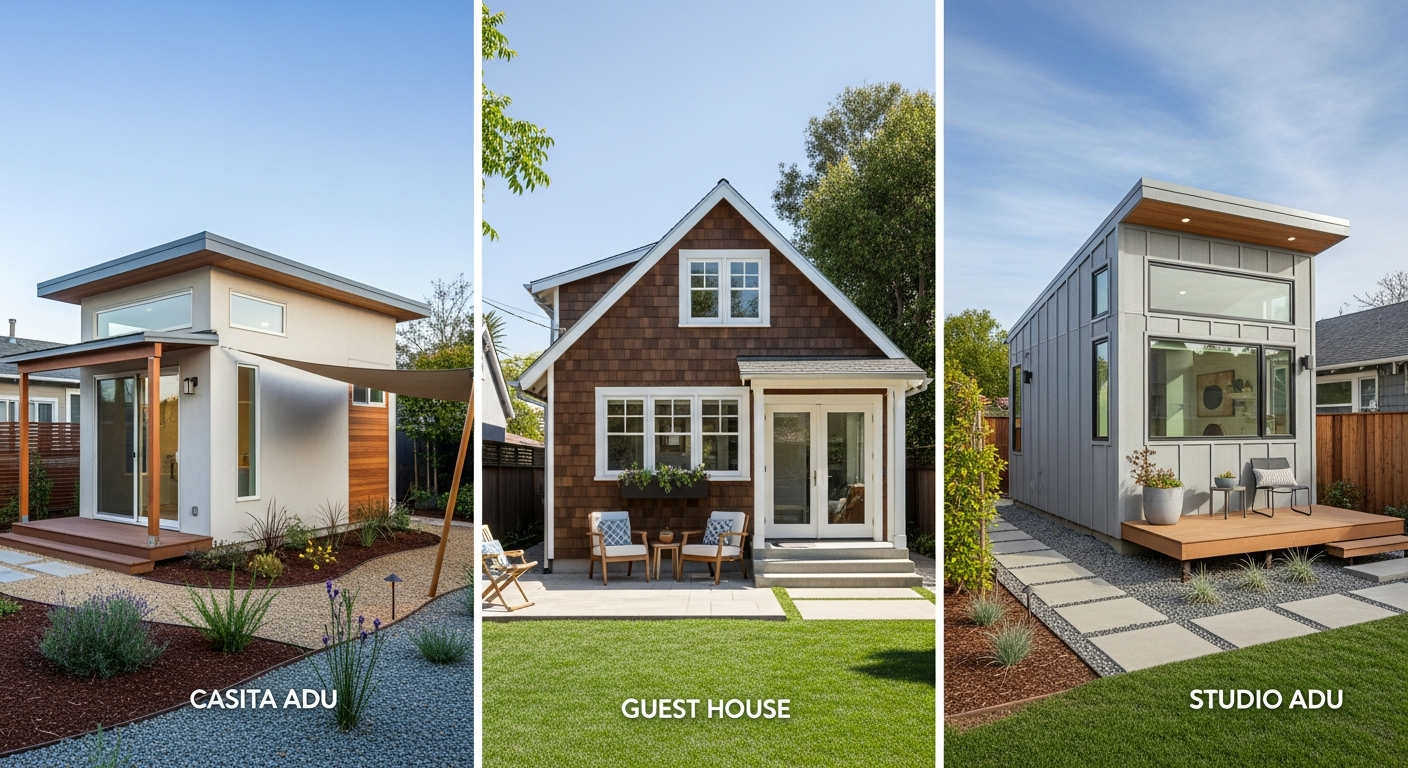
A guest house is any secondary structure designed to accommodate overnight visitors. This is the broadest and most informal of the three terms. A guest house might be a converted garage with a futon, a pool cabana with a daybed, or a fully appointed cottage with its own kitchen and bathroom. The term describes function, not form or legal status.
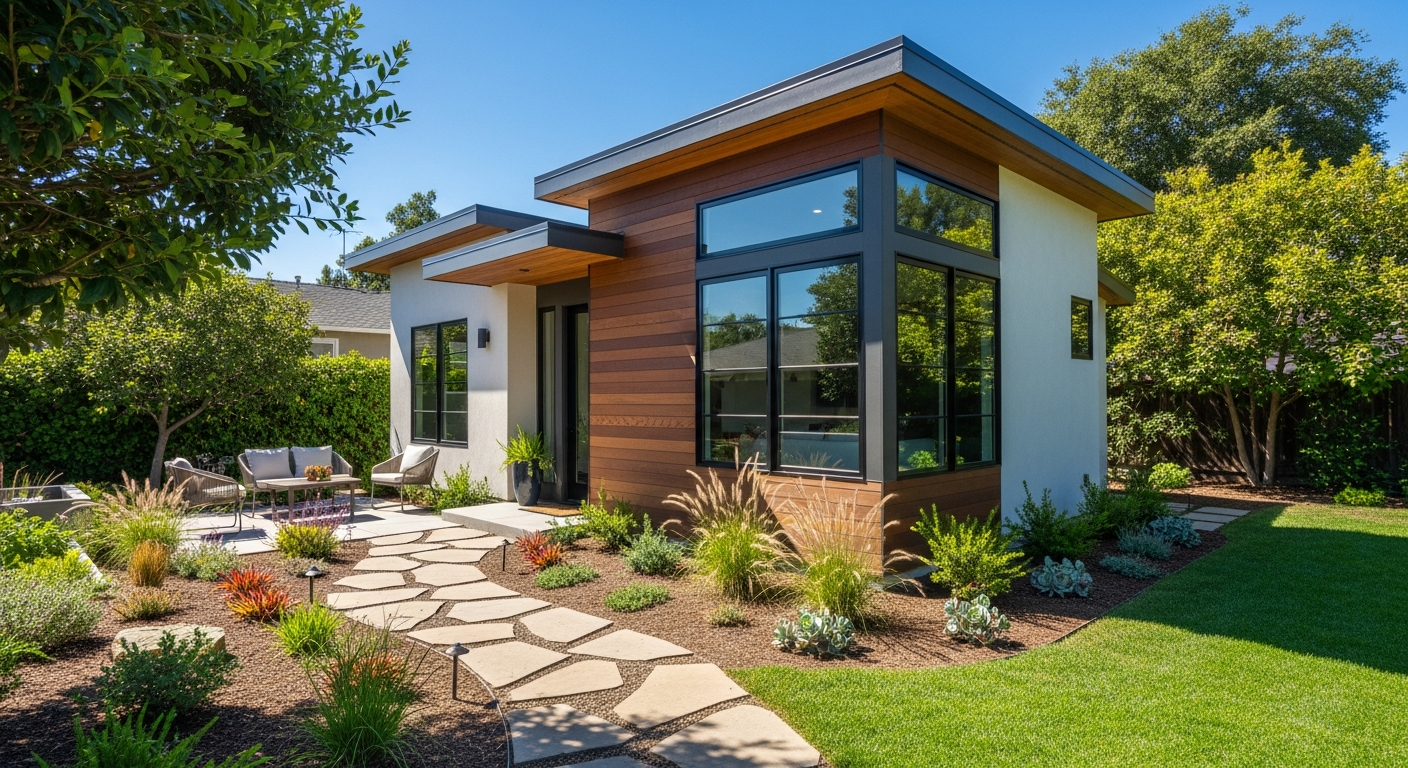
A casita is a Spanish term meaning "little house." It traditionally refers to a small separate dwelling with Southwestern architectural character. Most casitas are more complete than a simple guest room, typically including a bathroom and often a kitchen or kitchenette. The term describes style and cultural heritage more than legal classification.
An ADU, or Accessory Dwelling Unit, is a legal term defined by California state law. It describes a complete, self-contained living unit with its own entrance, kitchen, bathroom, and sleeping area. ADUs must be permitted, must meet building codes, and can legally be rented to tenants. The term describes legal status, not appearance.
Why Legal Status Matters
Of these three terms, only "ADU" has a specific legal meaning. This matters more than you might initially think.
If you build a space and call it a guest house, you haven't really defined its legal status. Can you rent it? Maybe, maybe not, depending on whether it was built with permits and what those permits allow. Can you claim it as square footage when selling your home? Again, that depends on the paperwork, not what you call the space.
If you build a space and call it a casita, you've described its appearance but not its legal standing. A casita could be a properly permitted ADU, or it could be an unpermitted structure that exists in a legal gray area. The name doesn't tell you which.
If you build a permitted ADU, you know exactly where you stand. The unit has been reviewed by building officials, meets safety codes, and can legally be occupied and rented. When you sell your property, the ADU is recognized as additional living space that adds value. Insurance policies can cover it properly. There's no ambiguity.
For most homeowners, going through the ADU permitting process is the right choice. It costs more upfront and takes more time, but the clarity and flexibility you gain are worth it. According to the California Department of Housing and Community Development, properly permitted ADUs add an average of 20% to 30% to property values in high-demand markets.

Practical Differences in Use
Beyond legal considerations, these three types of spaces often differ in how they're equipped and used.
Guest Houses: The Minimal Option
Guest houses at the simpler end of the spectrum might not have any kitchen facilities at all. They provide sleeping space separate from the main house, perhaps with a bathroom, but guests still rely on the main home for meals and most daily activities.
This works fine for occasional visitors who stay a few nights at a time. It keeps construction costs lower since you're not dealing with plumbing for a kitchen or the electrical requirements of major appliances. Many pool houses and converted garages fall into this category.
The limitation is obvious: without a kitchen, the space doesn't support independent living. It's meant for guests who will spend most of their waking hours in the main house or out and about, not for long-term occupants who want to cook their own meals.
Casitas: The Middle Ground
Traditional casitas typically fall somewhere between a basic guest house and a full apartment. They usually have a bathroom, often have a kitchenette with a small refrigerator and microwave, and provide enough amenities for someone to live somewhat independently.
This setup works well for extended family visits, adult children who spend most of their social time with the family but want their own space to retreat to, or as a potential rental for a tenant who doesn't need a full kitchen.
The architectural style of casitas also distinguishes them. Stucco walls, tile roofs, exposed beams, and indoor-outdoor living spaces connect these structures to Spanish Colonial and Southwestern design traditions. In California, this aesthetic feels at home in many neighborhoods.
ADUs: Complete Living Spaces
A permitted ADU is essentially a small complete home. California law requires that ADUs have their own entrance, a full kitchen with cooking facilities and food preparation space, a bathroom, and sleeping area. These aren't suggestions; they're requirements for getting your building permits approved.
This completeness makes ADUs suitable for any use case. Family members can live fully independently. Long-term tenants can sign leases and treat the space as their home. The occupant doesn't need access to the main house for anything.
ADUs can be designed in any architectural style, including casita style. So you could have a casita that's also a permitted ADU, getting both the aesthetic you want and the legal protection that comes with proper permitting.
Size Comparisons
Size varies considerably across all three categories, but some generalizations hold.
Guest houses at the simpler end might be just 150 to 300 square feet, essentially a bedroom with or without a bathroom. These are true "in-law quarters" in the old-fashioned sense.
Casitas traditionally range from 400 to 800 square feet, large enough to include a small living area, kitchenette, bedroom, and bathroom. This is enough space for one or two people to live comfortably.
California allows ADUs up to 1,200 square feet for detached units, and many homeowners take advantage of this allowance. At 1,000+ square feet, an ADU can include two bedrooms, a full kitchen, living area, and bathroom. It's genuinely a complete small home.
Of course, these are generalizations. You could build a 200 square foot ADU or a 1,000 square foot guest house. The terms don't strictly define size, they describe function, style, and legal status.
Cost Differences
Construction costs vary based on size, finishes, site conditions, and how much work you're starting from scratch versus converting existing space. But in general:
A basic guest house conversion might cost $30,000 to $80,000. If you're converting an existing garage or pool house and not adding a kitchen, the work is relatively straightforward. You're primarily dealing with insulation, HVAC, possibly a bathroom addition, and finishes.
A casita-style structure with kitchenette typically runs $100,000 to $200,000. You're adding plumbing for the kitchenette and bathroom, dealing with electrical requirements, and likely doing more significant construction work.
A fully permitted ADU with complete kitchen ranges from $150,000 to $400,000 or more in Southern California. The wide range reflects differences in size, finishes, whether you're building detached or converting existing space, and local labor and material costs.
Remember that a permitted ADU adds more value to your property than an unpermitted guest house or casita. The total cost of an ADU project should be viewed as an investment, not just an expense.
| Type | Typical Size | Cost Range | Can Rent Legally |
|---|---|---|---|
| Basic Guest House | 150-400 sq ft | $30,000-$80,000 | Usually no |
| Casita with Kitchenette | 400-800 sq ft | $100,000-$200,000 | If permitted as ADU |
| Full ADU | 400-1,200 sq ft | $150,000-$400,000 | Yes |
Converting Between Categories
One question that comes up often: can you upgrade a guest house to an ADU later, or start simple and add more over time?
The answer is yes, but with some caveats. Converting an existing structure to a permitted ADU requires meeting current building codes. If your guest house was built 30 years ago without permits, bringing it up to code might require significant work beyond just adding a kitchen.
If you're planning ahead, you can build a simpler structure now in a way that makes future ADU conversion easier. Run adequate electrical service, rough in plumbing for a kitchen, build to current structural codes. Then when you're ready to add the kitchen and get ADU permits, the foundation is already in place.
The best approach depends on your timeline and budget. If you're certain you want rental income eventually, going straight to a permitted ADU makes the most sense. If your needs are more modest right now but might expand, planning for future conversion is a reasonable compromise.
Architectural Style: Separate from Legal Status
I want to emphasize something that sometimes gets lost in these discussions: architectural style is completely independent of legal classification.
You can build a permitted ADU that looks like a traditional Spanish casita, with stucco walls, tile roof, arched doorways, and exposed beams. You can also build a permitted ADU in modern style, Craftsman style, farmhouse style, or any other aesthetic.
Similarly, a "guest house" could be modern, traditional, or anything in between. The term describes use, not appearance.
When talking with designers and builders, be clear about both what you want the space to do (its function and legal status) and what you want it to look like (its architectural style). These are separate decisions that should both be addressed in your planning.
Ready to Explore Your Options?
We can help you understand what's possible on your property and which approach makes the most sense for your goals and budget.
Call us at (323) 591-3717 or schedule a free consultation to get started.
What Should You Build?
With all these options, how do you decide what's right for your situation?
Start with your goals. If you just want a comfortable place for occasional guests and don't anticipate renting the space, a simple guest house might suffice. If you want to house family members long-term or generate rental income, you need a complete living space with proper permits.
Consider your timeline. If you need the space soon and budget is tight, a simpler approach might make sense now, with plans to upgrade later. If you can take time to plan and save, going straight to a permitted ADU provides maximum flexibility from day one.
Think about resale. A properly permitted ADU adds significant value to your property. An unpermitted structure might add nothing, or might even create complications when you try to sell. If you're thinking long-term, the permitted route is almost always better.
Evaluate your property. Some lots have constraints that limit what you can build. Setback requirements, height limits, lot coverage maximums, and utility connections all factor into what's practical. A professional assessment can help you understand your options.
Making the Right Choice
The terminology can be confusing, but the underlying decision is fairly straightforward. You need to decide two things: what you want the space to do, and what you want it to look like.
For function, the key question is whether you want the space to support fully independent living and whether you want the option to rent it. If yes to either, you need a permitted ADU.
For appearance, consider what fits your property and personal taste. Casita style works beautifully in many California neighborhoods. But so do many other styles. Pick what you love and what complements your main house.
Then work with professionals who understand both the legal requirements and the design possibilities. The best projects seamlessly combine practical function with beautiful form, creating spaces that work well and look great for years to come.
Sources cited:
- California Department of Housing and Community Development. (2023). "Accessory Dwelling Unit Handbook."
- UC Berkeley Terner Center for Housing Innovation. (2022). "ADU Progress Report."