If you've been looking at real estate listings in California or the Southwest, you've probably seen the word "casita" pop up more than a few times. It's one of those terms that sounds romantic and inviting, conjuring images of adobe walls and terra cotta tiles. But what exactly does it mean, and is it different from a guest house or an ADU?
The short answer is that "casita" is the Spanish word for "little house," and that's essentially what it describes: a small, separate dwelling on a residential property. But there's more nuance to it than that, and understanding the distinctions can help you figure out what you're looking for in a property or what you might want to build.
The Origins and Meaning of Casita
Casita comes directly from Spanish, where "casa" means house and the diminutive suffix creates "casita," or little house. The term became popular in areas with strong Spanish and Mexican heritage, particularly California, Arizona, New Mexico, and Texas.
Historically, casitas were common in hacienda-style properties where the main residence sat at the center of a compound with smaller outbuildings serving various purposes. Some housed extended family members. Others provided quarters for workers or household staff. Still others served as studios, workshops, or simply places for guests to stay with a bit more privacy than the main house could offer.
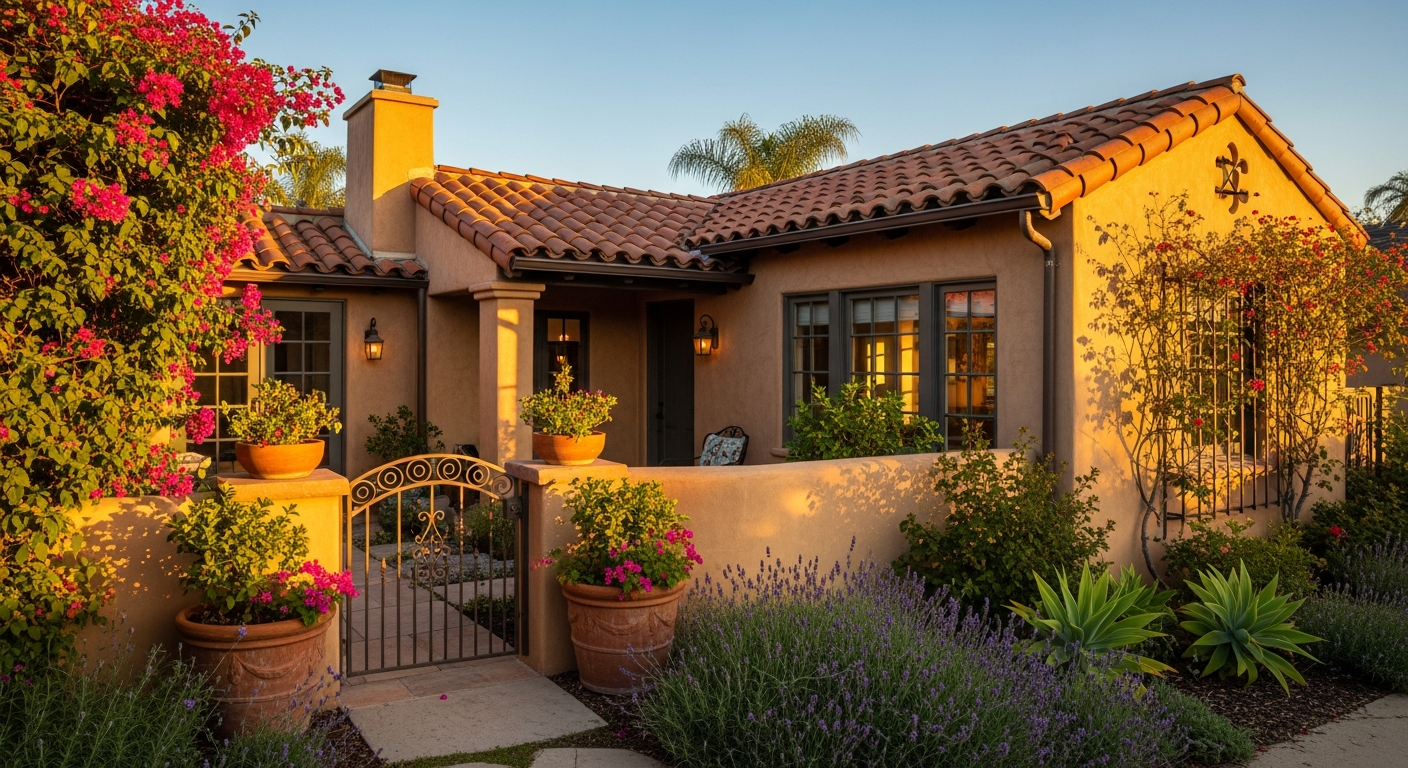
The architectural style of a traditional casita reflects these Southwestern roots. Think stucco or adobe walls, clay tile roofs, rustic wood beams, and an indoor-outdoor flow suited to warm climates. Arched doorways, courtyards, and thick walls designed to stay cool in summer heat are all hallmarks of the style.
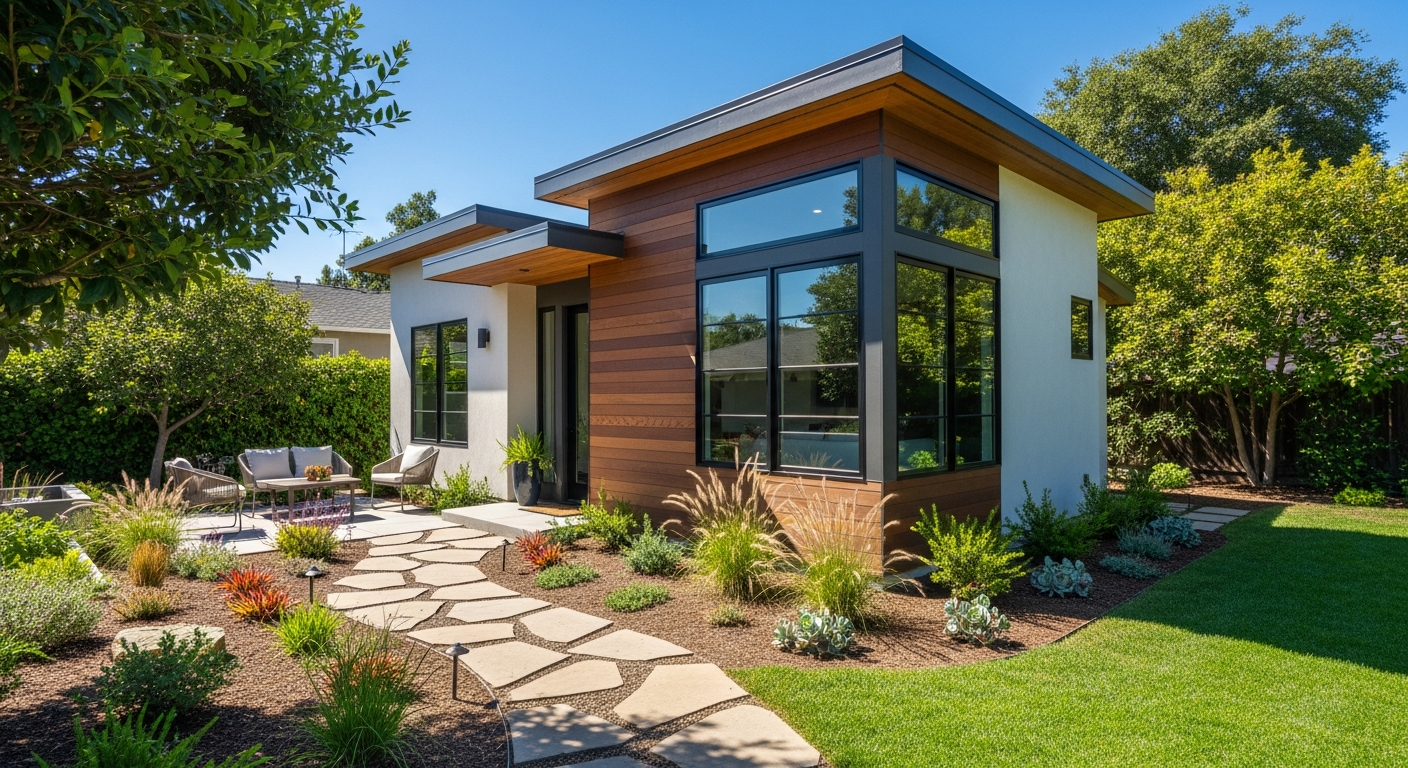
Of course, modern casitas don't have to follow any particular architectural tradition. The term has expanded to describe any small, separate living structure on a residential property, regardless of style. A contemporary casita might feature clean modern lines, or it might reference Spanish Colonial revival, California Craftsman, or any other aesthetic.
Casita vs. Guest House vs. ADU: What's the Difference?
People use these terms somewhat interchangeably, which can make things confusing. Let me try to clarify the distinctions.
A guest house is a general term for any secondary structure meant for overnight guests. It might be as simple as a converted pool house with a daybed, or as complete as a fully equipped cottage. Guest houses don't necessarily have kitchens or full bathrooms. The defining characteristic is simply that they provide a place for visitors to sleep separate from the main residence.
A casita, as I mentioned, traditionally refers to a small house with Spanish or Southwestern character. Most casitas are more complete than a basic guest house, typically including at least a bathroom and often a kitchenette or full kitchen. They're designed for more independent living, whether for extended family, long-term guests, or rental tenants.
An ADU, or Accessory Dwelling Unit, is a legal classification defined by California state law. It's a complete, self-contained living unit with its own entrance, kitchen, bathroom, and sleeping area. ADUs must be permitted and meet building codes. They can be any architectural style, including casita-style design.
Here's the important thing to understand: a casita can be an ADU, and many ADUs are designed in casita style. The terms describe different aspects of the same structure. "Casita" refers to the look and feel. "ADU" refers to the legal status. A properly permitted casita is an ADU. An unpermitted casita is something else entirely, usually a legal gray area that limits how you can use the space.
Quick Reference Guide
| Feature | Guest House | Casita | ADU |
|---|---|---|---|
| Definition | Functional | Stylistic/Cultural | Legal |
| Full Kitchen | Optional | Usually | Required |
| Full Bathroom | Optional | Usually | Required |
| Separate Entrance | Varies | Usually | Required |
| Can Be Rented | Depends | If Permitted | Yes |
| Architectural Style | Any | Spanish/Southwestern | Any |
Why Casitas Are So Popular in California
California's climate and culture make casitas particularly appealing. The mild weather in much of the state means outdoor living is possible year-round, and casitas often embrace that with patios, courtyards, and connections to the garden.
The state's Spanish colonial and Mexican heritage also means that Southwestern architecture feels natural and appropriate in many neighborhoods. A casita that might look out of place in New England fits right in across much of California.
Beyond aesthetics, practical factors drive casita popularity. Housing costs in California are among the highest in the nation, and families are looking for ways to maximize their properties. A casita can provide space for aging parents who want to stay close but maintain independence. It can offer housing for adult children saving for their own homes. It can generate rental income to help with mortgage payments. Or it can simply increase the property's flexibility and value.
Research from the California Housing Partnership shows that the state is short approximately 1.3 million homes affordable to lower-income households. Casitas and ADUs represent one piece of the solution to this housing crisis, adding density in established neighborhoods without dramatically changing neighborhood character.
Design Elements of a Traditional Casita
If you're drawn to the casita aesthetic, you might be wondering what specific design elements define the style. While there's room for interpretation, certain features appear consistently in casita-style buildings.
Exterior Features
Stucco walls are perhaps the most defining characteristic. Traditional stucco was made from lime, sand, and water applied over adobe or stone. Modern stucco uses Portland cement and can be applied over various substrates. The texture is typically smooth or lightly textured, and colors range from warm whites and creams to terra cotta, ochre, and soft pastels.
Clay tile roofs, usually in terra cotta colors, provide the iconic profile of Spanish Colonial architecture. Modern alternatives include concrete tiles that mimic the look at lower cost, though purists prefer the real thing.
Arched doorways and windows soften the lines and add visual interest. These might be full semicircular arches or more subtle curved tops to rectangular openings.
Exposed wooden beams, often rough-hewn or distressed, add rustic charm and tie the structure to its historical roots. These beams might appear in ceiling overhangs, pergolas, or as purely decorative elements.
Courtyards and covered patios extend living space outdoors. A traditional casita might open onto a private courtyard with a fountain or garden, creating a sense of enclosure and privacy.
Interior Elements
Inside, casita style often includes tile floors, typically saltillo (Mexican terra cotta) or decorative Talavera tiles as accents. The colors tend toward warm earth tones with occasional pops of vibrant color in tilework or textiles.
Exposed ceiling beams continue from exterior to interior, often with tongue-and-groove planking between them. Whitewashed or plaster walls create a clean backdrop for colorful art and furnishings.
Fireplaces, sometimes featuring kiva-style rounded corners, serve as focal points and add warmth during cooler months. Even in California's mild climate, a fireplace provides ambiance and makes the space feel complete.

Building a Casita on Your Property
If you're thinking about adding a casita to your property, you'll need to navigate the same process as any ADU project. California law has made this easier in recent years, but there's still a clear path to follow.
First, check your zoning and understand what's allowed on your lot. Most residential properties in California can now add at least one ADU, but size limits, setback requirements, and other regulations vary by jurisdiction.
Next, work with a designer or architect to create plans that meet building codes while achieving the casita aesthetic you want. This is where style meets substance. Your casita can look as traditional or as contemporary as you like, but it still needs to meet structural, electrical, plumbing, and energy efficiency requirements.
Submit your plans for permits. California requires cities to approve compliant ADU applications within 60 days, and many jurisdictions have created streamlined processes for standard designs.
Once permits are approved, construction can begin. Working with a builder experienced in ADU construction will help ensure the project stays on track and meets your expectations.
The timeline from initial planning to move-in ready typically runs 8 to 14 months, depending on project complexity and local permitting timelines. Costs range widely based on size, finishes, and site conditions, but you can expect to spend $150,000 to $350,000 for a typical detached casita in Southern California.
Using Your Casita
Once your casita is complete, the possibilities are nearly endless. Here are the most common uses:
Housing for family members. This is the classic use case. Aging parents can live nearby with independence while family stays close for support. Adult children can save money while establishing their careers. Extended family visiting from out of state has a comfortable place to stay.
Rental income. A permitted casita/ADU can be rented to long-term tenants, providing steady monthly income. In high-demand California markets, this can mean $1,500 to $3,000 or more per month depending on size and location.
Home office or studio. With remote work becoming permanent for many professionals, a separate casita provides the ultimate home office: close enough for convenience but separate enough to maintain boundaries between work and home life.
Guest quarters. Even if you don't need the space for regular occupancy, a casita makes an incredible guest house. Visitors get privacy and comfort, and you don't have to give up a bedroom in your main home.
Combination uses. Some families start using their casita one way and transition to another as circumstances change. That's the beauty of building a complete, flexible space rather than a single-purpose structure.
Dreaming of a Casita?
We specialize in helping California homeowners add beautiful, functional living spaces to their properties. Whether you want traditional Southwestern style or something more contemporary, we can help you design and build the perfect casita for your needs.
Call us at (323) 591-3717 or schedule a free consultation to explore your options.
Casita Value and Return on Investment
Adding a casita isn't just about creating usable space. It's also a significant investment that can increase your property's value and potentially pay for itself over time.
According to research from Freddie Mac, properties with ADUs sell for approximately 20% to 30% more than comparable properties without them. The exact premium depends on your market, the quality of construction, and how the space is configured.
If you rent the casita, the return on investment accelerates. At $2,000 per month in rental income, you're generating $24,000 per year. Over 10 years, that's $240,000 in gross income, often enough to recover your construction costs and then some.
Even if you never rent the space, the added flexibility and the property value increase make a casita a solid financial decision for most homeowners. It's not just spending money on your property. It's investing in your property's future.
The Emotional Appeal of Casitas
I've focused mostly on practical considerations, but I'd be missing something important if I didn't acknowledge the emotional appeal of casitas. There's something special about these little houses that goes beyond square footage and building codes.
A casita represents possibility. It's a separate world, even if it's just steps from your main house. Stepping through that door feels different than walking into a bedroom down the hall. You're entering a complete space, a home within a home.
For family members living in a casita, this separation provides dignity and independence. They're not staying in a spare room. They have their own place. That distinction matters more than you might expect.
For homeowners, a casita expands what your property can do and who it can serve. It's flexibility built into the landscape, ready for whatever comes next in your family's story.
Is a Casita Right for You?
If you're attracted to the casita concept, the next step is to explore what's possible on your specific property. Consider your lot size, the placement of your existing home, any easements or restrictions, and your budget.
Think about how you'd use the space now and how that might change in the future. The most successful casita projects are designed with flexibility in mind, able to serve multiple purposes as life evolves.
And consider the style. Do you want to embrace the traditional Southwestern aesthetic, or would a different architectural approach fit your property better? There's no wrong answer, only what works for you and your home.
Whatever you decide, a well-designed and properly permitted casita can be one of the best additions you ever make to your property. It adds space, adds value, and adds possibilities that simply don't exist without it.
Sources cited:
- California Housing Partnership. (2023). "California's Housing Emergency Update."
- Freddie Mac. (2022). "ADUs: Impact on Property Values and Housing Supply."