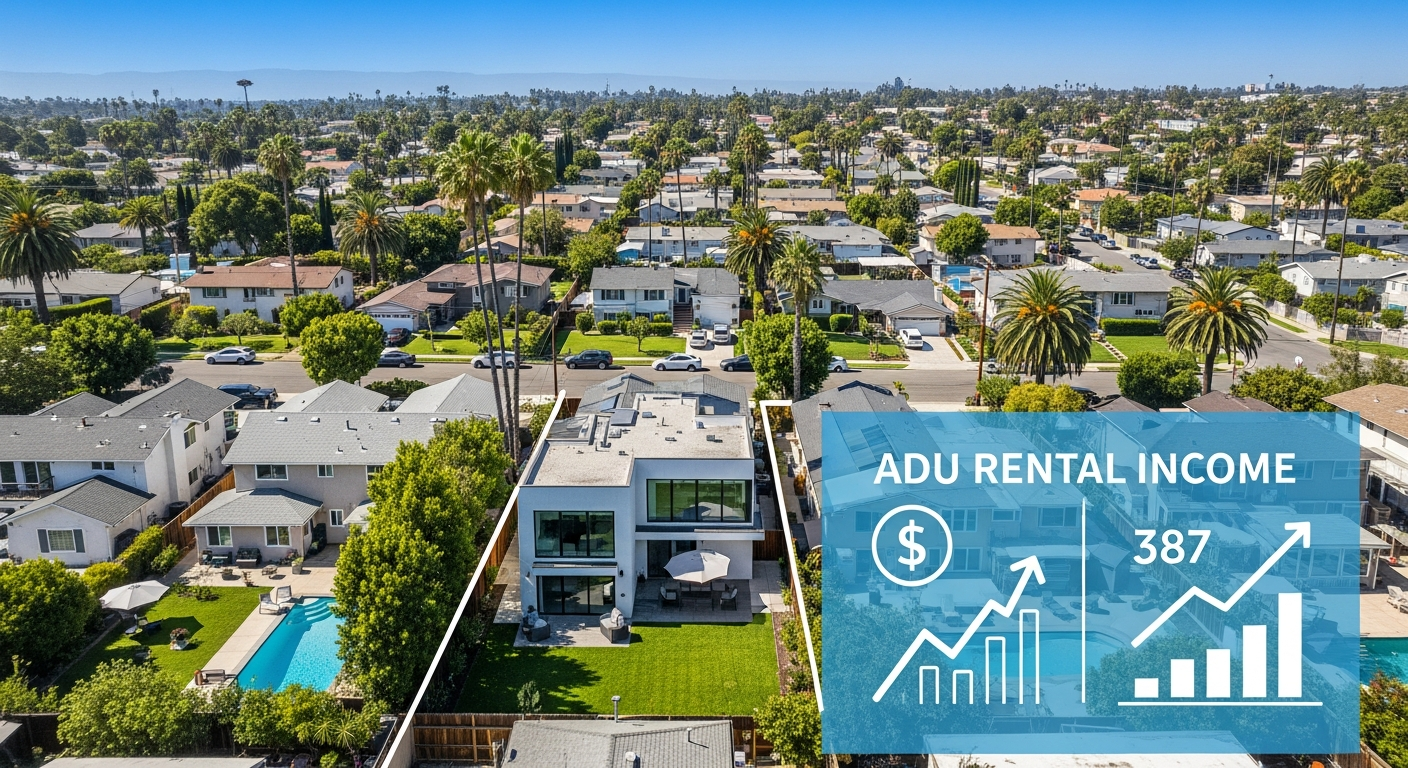
When people in Los Angeles talk about building an ADU, the conversation almost always turns to rental income. And why not? With rents averaging over $2,000 for a one-bedroom in many parts of LA County, the potential income from a backyard unit is substantial. But how much can you actually expect to make?
I've seen plenty of overly optimistic projections that promise the moon. I've also seen conservative estimates that undersell the opportunity. Let me give you a realistic picture based on actual market data and what I see in practice.
Current ADU Rental Rates in Los Angeles
Rental rates for ADUs vary significantly across LA County. Location matters enormously, as does unit size, quality, and amenities. Here's what you can expect as of 2024:
| Area | Studio | 1-Bedroom | 2-Bedroom |
|---|---|---|---|
| Westside (Santa Monica, Venice, Mar Vista) | $1,800-$2,400 | $2,400-$3,200 | $3,000-$4,000 |
| Central LA (Silver Lake, Echo Park, Los Feliz) | $1,600-$2,200 | $2,200-$2,800 | $2,800-$3,500 |
| San Fernando Valley | $1,400-$1,800 | $1,800-$2,400 | $2,400-$3,000 |
| South Bay (Torrance, Redondo, Manhattan Beach) | $1,600-$2,200 | $2,200-$3,000 | $2,800-$3,600 |
| SGV (Pasadena, South Pasadena, Arcadia) | $1,500-$2,000 | $2,000-$2,600 | $2,600-$3,200 |
| East LA / Southeast LA | $1,200-$1,600 | $1,600-$2,100 | $2,000-$2,600 |
These ranges represent well-finished units in decent condition. Premium finishes, exceptional locations, or unique features can command the higher end or beyond. Dated finishes, poor layouts, or undesirable locations will fall at or below the lower end.
Factors That Affect Your Rental Rate
Location Within Your Neighborhood
Being in a good neighborhood matters, but so does your specific location within that neighborhood. Proximity to restaurants, shops, transit, and parks increases appeal. A busy street with traffic noise decreases it. The exact same ADU can rent for $200 more or less per month based on its specific spot.
Unit Size and Layout
More square footage commands higher rent, but the relationship isn't linear. A 700 square foot one-bedroom doesn't rent for 40% more than a 500 square foot one-bedroom. The premium is smaller, often 10% to 15%.
Layout matters as much as size. An efficiently designed 500 square foot unit with good flow feels roomier than a poorly designed 600 square foot unit with awkward proportions.
Kitchen and Bathroom Quality
Tenants notice kitchens and bathrooms. Modern appliances, quartz counters, and quality fixtures justify higher rent. Builder-grade finishes and dated materials suppress it.
The difference between a basic kitchen and an upgraded one might be $15,000 in construction costs, but it can add $150 to $200 per month in rent. That's an excellent return on investment.
Parking
In Los Angeles, parking is currency. An ADU with a dedicated parking space can command $100 to $200 more per month than one without. If your property can accommodate tenant parking, include it. If not, be upfront in your listing and adjust pricing accordingly.
Outdoor Space
Private outdoor space significantly increases appeal. A small patio, deck, or garden access makes your ADU more attractive than apartment alternatives. Many tenants specifically seek ADUs because of outdoor space, and they'll pay for it.
Laundry
In-unit washer and dryer adds $50 to $100 per month in perceived value. It's also a significant convenience factor that helps you attract and retain good tenants.

Calculating Your Actual Income
Gross rent is what the tenant pays. Net income is what actually ends up in your pocket. They're not the same number.
Expenses to Account For
Vacancy. Even in high-demand Los Angeles, you'll have some vacancy between tenants. Budget for one month every two years, or about 4% of gross rent annually.
Maintenance and repairs. Things break. Appliances fail. HVAC needs servicing. Budget 5% to 10% of gross rent for ongoing maintenance.
Property taxes. Your ADU increases your property's assessed value, which increases property taxes. The exact increase depends on your situation, but budget several hundred to a couple thousand dollars annually.
Insurance. Landlord insurance for the ADU typically runs $500 to $1,500 per year.
Utilities (if included). If you're paying utilities for the tenant, budget accordingly. A well-insulated ADU might cost $100 to $200 per month for all utilities.
Sample Net Income Calculation
Let's run the numbers for a typical one-bedroom ADU in the San Fernando Valley renting for $2,100 per month:
| Item | Annual Amount |
|---|---|
| Gross Rent (12 months) | $25,200 |
| Less: Vacancy (4%) | ($1,008) |
| Less: Maintenance (7%) | ($1,764) |
| Less: Insurance | ($900) |
| Less: Property Tax Increase | ($1,500) |
| Net Operating Income | $20,028 |
That's roughly $1,670 per month in net income, or about 80% of gross rent. This is a reasonable expectation for a well-managed ADU.
Return on Investment
How does ADU rental income stack up as an investment? Let's continue our example.
Assume the ADU cost $180,000 to build (a reasonable cost for a garage conversion or modest new construction one-bedroom in LA). With net operating income of $20,028 annually, that's an 11.1% cash-on-cash return.
Compare that to:
- High-yield savings accounts: 4% to 5%
- Stock market average return: 7% to 10%
- Investment rental property cap rates in LA: 4% to 6%
The ADU performs well because you're not paying market price for the land. The land already belongs to you. You're only investing in construction costs, which makes the return significantly better than buying a separate rental property.
Add in property value appreciation, which Freddie Mac estimates at 20% to 30% for homes with ADUs, and the total return becomes even more attractive.
Maximizing Your Rental Income
Build What Renters Want
Research the rental market before you finalize your ADU design. What's in demand? What amenities do listings highlight? What do reviews of rental properties mention as positives and negatives?
Generally, renters want:
- Modern, functional kitchens
- Good natural light
- In-unit laundry (or at least laundry access)
- Outdoor space
- Parking
- Privacy from the main house
- Quiet, well-insulated space
Price Right From the Start
Overpricing leads to extended vacancy. A month of vacancy costs far more than pricing $100 below maximum. Research thoroughly, price competitively, and attract multiple applicants so you can choose the best tenant.
Screen Tenants Carefully
A problematic tenant costs money through late payments, damage, and eventual eviction costs. Thorough screening pays for itself many times over.
Maintain the Property
Well-maintained units command higher rent and attract better tenants. Don't let small issues become big problems. Respond to tenant concerns promptly.
Ready to Build Your Income-Generating ADU?
We can help you design and build an ADU that maximizes rental income while fitting your property and budget.
Call us at (323) 591-3717 or schedule a free consultation to discuss your project.
Is It Worth It?
For most LA homeowners with suitable properties, the answer is yes. Consider:
Financial upside. $20,000+ per year in net income is significant. Over 20 years, that's $400,000+ in rental income, likely far exceeding your construction costs.
Property value. Your home becomes worth 20% to 30% more with a permitted ADU. That's often $200,000 or more in added equity on a typical LA property.
Flexibility. If you don't want to rent, the ADU can house family, serve as a home office, or sit empty. You have options.
The costs are real and substantial. Building an ADU is a significant investment. But for those who can manage it, the returns make strong financial sense.
Sources cited:
- Zillow Research. (2024). "Los Angeles Rent Data."
- Freddie Mac. (2022). "ADUs: Impact on Property Values and Housing Supply."