The days of pool houses being nothing more than a place to store chlorine tablets and soggy towels are long gone. Today's pool houses serve multiple purposes, functioning as outdoor entertainment hubs, home offices, fitness studios, guest suites, and even income-generating rental properties. If you're building new or renovating an existing pool house, thinking about dual functionality from the start can dramatically increase the value you get from the space.
I've worked with homeowners who initially just wanted somewhere to change out of wet swimsuits and ended up with beautiful secondary living spaces that pay for themselves through rental income. The key is designing with flexibility in mind so your pool house can adapt as your needs change.
The Case for Dual-Purpose Pool Houses
Building any structure on your property represents a significant investment. A basic pool house might cost $50,000 to $100,000 even without living amenities. Add a bathroom, and you're approaching the cost of a simple guest room. Add a kitchen, and you're not far from ADU territory.
Given that you're already spending substantial money, designing for multiple uses makes sense. A pool house that can function as guest quarters gives you a comfortable place for visiting family instead of cramped spare bedrooms. A pool house designed to ADU standards can generate $2,000+ monthly in rental income when you don't have guests.
Even if you're not ready to rent the space today, building it to code now means the option exists for the future. Retrofitting a basic pool house into a legal ADU later costs more than doing it right from the start.
Pool House Design Concepts
The Studio Suite
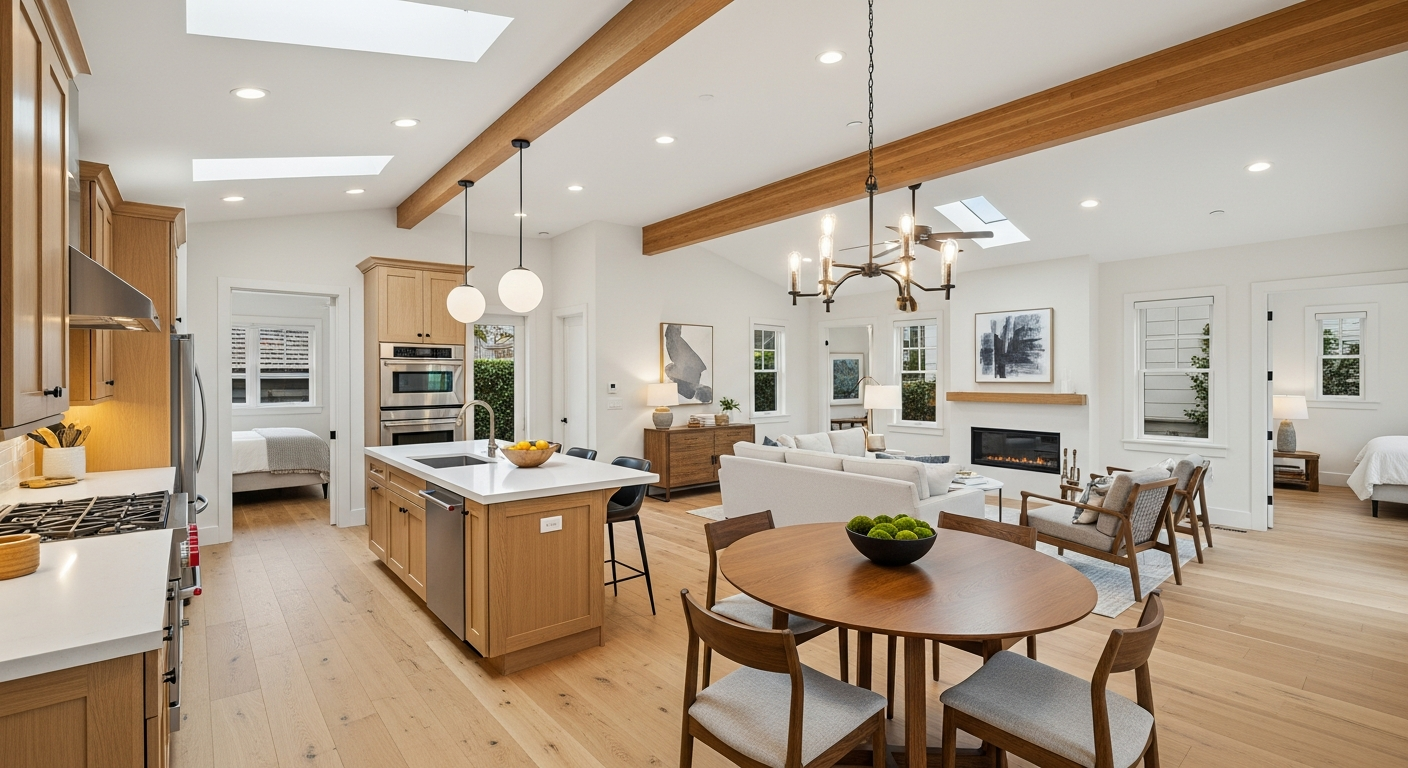
For smaller pool houses in the 300 to 500 square foot range, a studio layout works beautifully. This configuration combines sleeping, living, and cooking areas into one open space, with a separate bathroom.
Design tips for studio pool houses:
- Position the bed area away from the pool-facing windows for privacy
- Use a galley or L-shaped kitchen along one wall to maximize floor space
- Include generous closet storage since there's no separate bedroom
- Consider a Murphy bed or convertible sofa if you want the space to function as a living room when not used for sleeping
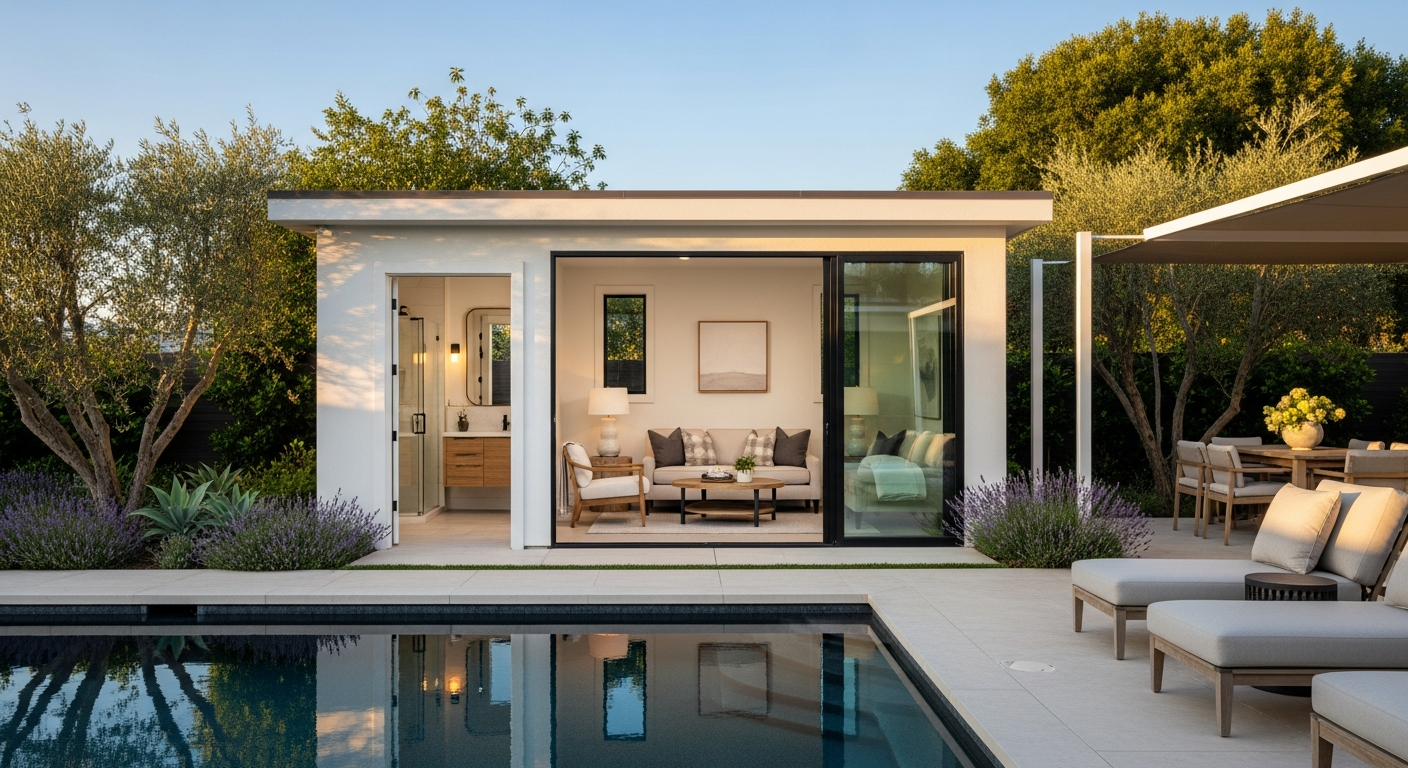
- Glass doors opening to the pool deck make the interior feel larger than it is
Studios rent well to single professionals and couples who prioritize location and outdoor amenities over interior square footage. In pool settings, this is often exactly what tenants want.
The One-Bedroom Retreat
With 500 to 800 square feet, you can create a true one-bedroom layout with distinct living and sleeping spaces. This configuration appeals to a broader range of guests and tenants.
Key design elements:
- A bedroom with a door provides privacy and reduces noise from the living area
- The kitchen can be larger and better equipped, making longer stays comfortable
- A living area with seating for multiple people makes the space social
- Consider positioning the bedroom at the back of the structure, away from pool activity noise
One-bedroom pool houses work well for extended family visits, when grandparents or adult children might stay for weeks at a time and want their own complete living space.
The Pool Pavilion Plus
This concept combines traditional pool house functions like shade, seating, and a bar area with a private guest suite tucked behind. The pool-facing side might feature an outdoor kitchen, comfortable lounge seating, and room for entertaining, while the back portion contains a bedroom, bathroom, and small kitchenette.
This hybrid approach works particularly well for homeowners who entertain frequently and want guest accommodations that feel private and removed from the party areas.
Essential Features for Guest-Ready Pool Houses
Whether you're hosting family or renting to tenants, certain features make pool houses function well as living spaces.
Climate Control
California evenings can be cool, and summer days can be scorching. Year-round comfort requires proper insulation and HVAC. Mini-split systems work well for pool houses since they provide both heating and cooling without ductwork.
Adequate Kitchen Facilities
For true guest quarters, you need more than a mini-fridge. A proper kitchen allows occupants to prepare meals and live independently. If you're building to ADU standards, full kitchen facilities are required anyway.
Consider:
- A 24-inch or 30-inch range (or cooktop and wall oven)
- A full-size or apartment-size refrigerator
- A dishwasher (space permitting)
- Adequate counter space for food preparation
- Storage for dishes, cookware, and pantry items
Comfortable Bathroom
Pool house bathrooms are often treated as afterthoughts, tiny rooms just big enough for a toilet and shower stall. For living quarters, invest in a bathroom that feels like part of a home rather than a rest stop.
This means adequate lighting, ventilation, storage for toiletries, and enough space to move comfortably. A 5x8 bathroom with a full shower works; a 3x5 closet with a toilet doesn't.
Good Lighting
Pool houses built for daytime use often have inadequate lighting for evening living. Layer lighting with ambient, task, and accent options. Include reading lights near the bed, good illumination in the kitchen, and dimmable options for relaxed evenings.
Sound Separation
If the pool house shares a wall with pool equipment or will be occupied while pool parties happen, consider soundproofing. Insulation in walls, solid-core doors, and quality windows all help reduce noise transmission.
Converting Existing Pool Houses
If you already have a pool house that wasn't built with living in mind, conversion is often possible. The process is similar to other garage and outbuilding conversions.
Common conversion projects include:
- Adding insulation to walls and roof
- Upgrading or adding windows for light and egress
- Installing a full kitchen where previously there was none or only a wet bar
- Expanding or improving the bathroom
- Adding HVAC for year-round comfort
- Upgrading electrical service to handle additional loads
- Creating a separate entrance if the pool house currently only opens onto the pool deck
The feasibility depends on your existing structure. Some pool houses are basically cabanas with minimal walls and no insulation, requiring substantial work to become habitable. Others are well-built structures that just need kitchen and HVAC additions.
Privacy and Access Considerations
Guests and tenants need to come and go without walking through your private outdoor spaces. This requires thoughtful site planning.
Ideally, the pool house has access from the street or driveway via a side yard path that doesn't pass through your main backyard. If your current layout funnels everyone through the pool area, consider adding a gate or pathway that provides an alternative route.
For rental situations, think about visual privacy as well as physical access. Can your tenant sit on their patio without being in your direct sightline? Can they enter and exit without passing your kitchen window? These details matter for comfortable coexistence.
Pool Access Arrangements
When guests or tenants live in your pool house, do they get to use the pool?
For family guests, the answer is usually an obvious yes. For tenants, it's more complicated. Some homeowners include pool access as an amenity, perhaps with limitations on hours or guest policies. Others exclude pool access entirely, treating the ADU as a separate rental property that happens to be near your pool.
There's no right answer, but be clear about expectations upfront. Include pool access terms in the lease if you're renting, and think through the practical implications. Shared pool use means shared maintenance costs, potential liability considerations, and the reality that your private pool becomes a shared amenity.
Designing for Rental Income
If rental income is part of your plan, some design choices will help you attract and retain quality tenants.
Quality Finishes
You don't need luxury, but you need quality. Tenants notice cheap countertops, flimsy cabinets, and bottom-tier appliances. Middle-of-the-road finishes that look good and last hold up better than cutting corners.
Neutral Palette
While your personal style might run to bold colors, rental units do better in neutral tones. Whites, grays, and warm beiges photograph well for listings and allow tenants to add their own personality with furnishings.
Durable Materials
Rental properties see more wear than owner-occupied homes. Choose flooring that handles foot traffic, counters that resist staining, and paint that can be easily touched up. Luxury vinyl plank, quartz counters, and semi-gloss paint are all practical choices.
Storage Space
Tenants need somewhere to put their stuff. Include generous closet space, kitchen storage, and if possible, some outdoor storage for bikes or sports equipment. Inadequate storage is a common complaint in small rentals.
Planning a Pool House Project?
We can help you design and build a pool house that works perfectly for your family now and adapts to your needs in the future, whether that's hosting guests or generating rental income.
Call us at (323) 591-3717 or schedule a free consultation to discuss your ideas.
Permitting and Legal Considerations
If you're building or converting a pool house to include living amenities, you'll need permits. This is especially true if you want the option to rent the space legally.
California's ADU laws have made this process more straightforward than it once was. Key requirements include:
- Separate entrance (not through the main house)
- Full kitchen with cooking appliances, refrigerator, and sink
- Full bathroom
- Sleeping area with egress window meeting safety requirements
- Compliance with building codes for electrical, plumbing, and structural work
Pool houses under 150 square feet sometimes qualify for simpler permitting as Junior ADUs, though these have some limitations. Larger structures typically go through the full ADU approval process.
Working with a contractor experienced in ADU projects helps navigate the permitting requirements efficiently. They know what inspectors look for and can ensure your project meets all requirements.
Making It Happen
Pool houses that double as guest quarters or rental units represent some of the most practical additions you can make to a California property. You get outdoor living amenities, hosting flexibility, potential rental income, and increased property value all in one project.
The key is planning for multiple uses from the start. Even if you're only building a simple pool house today, choosing a footprint that could accommodate a kitchen later, running adequate electrical service, and including a proper bathroom keeps your options open.
Your backyard is valuable real estate. A well-designed pool house helps you make the most of it, now and for years to come.
Sources cited:
- National Association of Home Builders. (2023). "Remodeling Market Index Report."
- Zillow Research. (2022). "Home Features That Add Value."