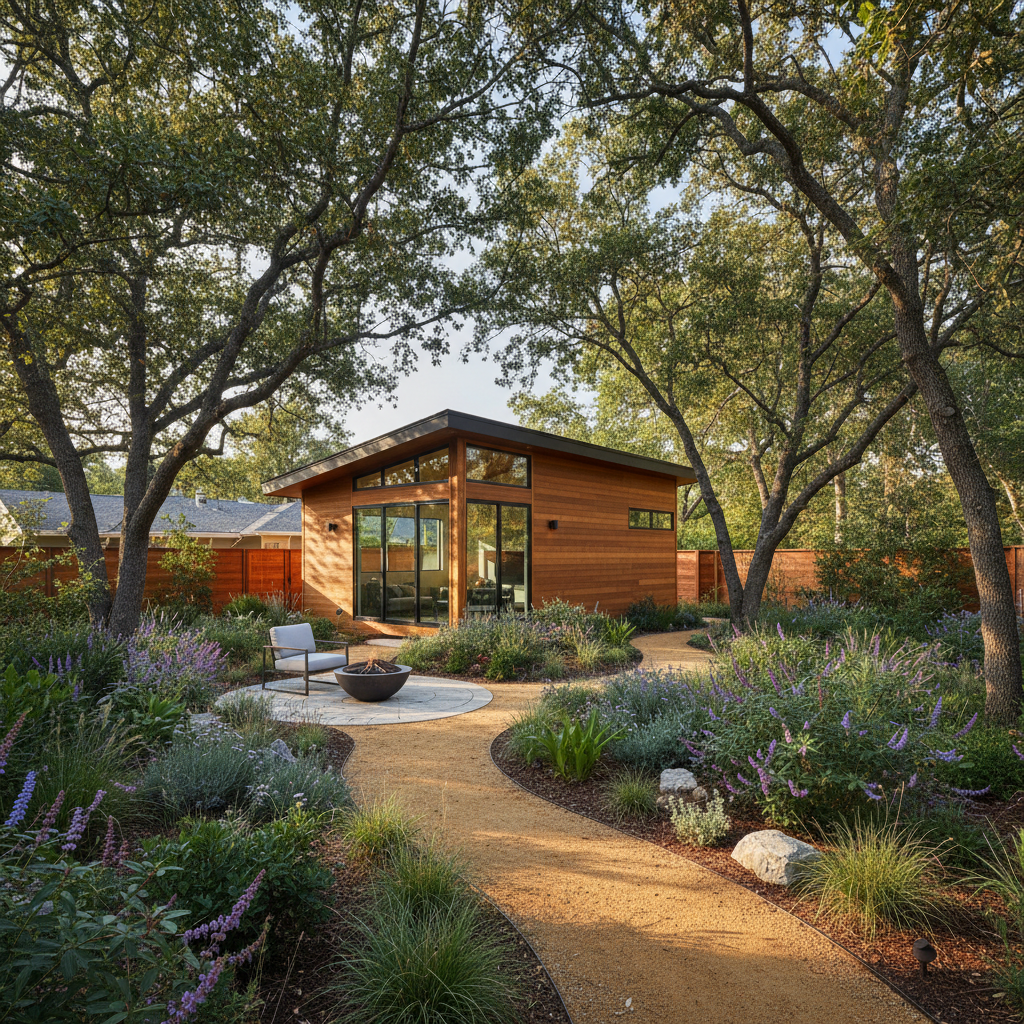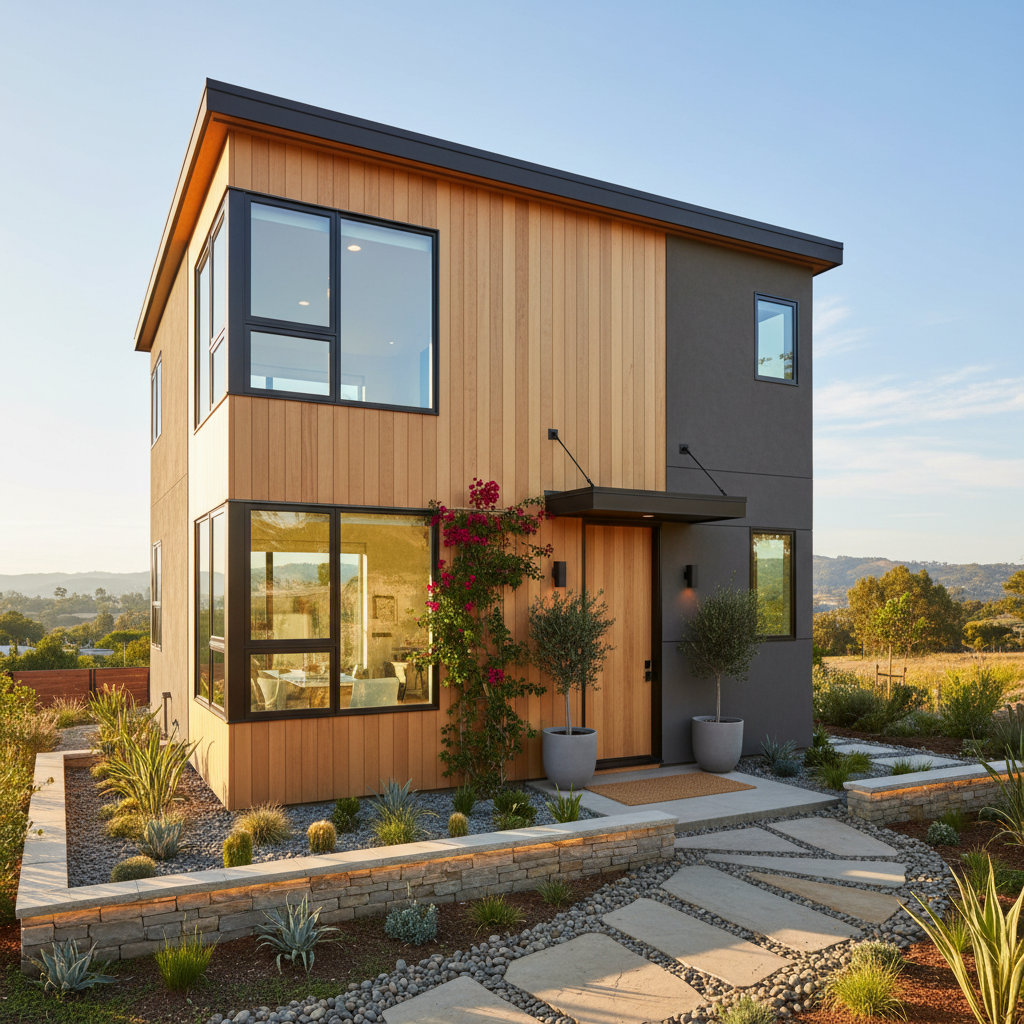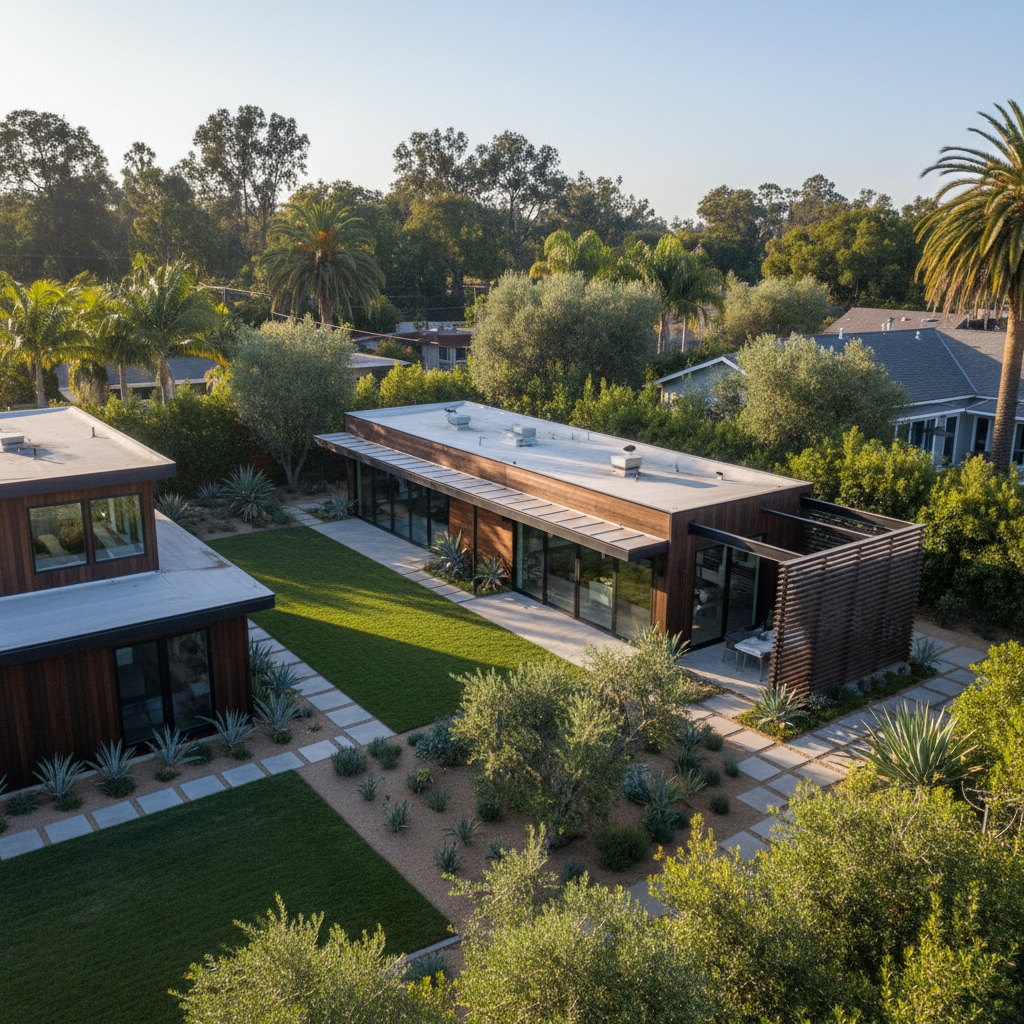
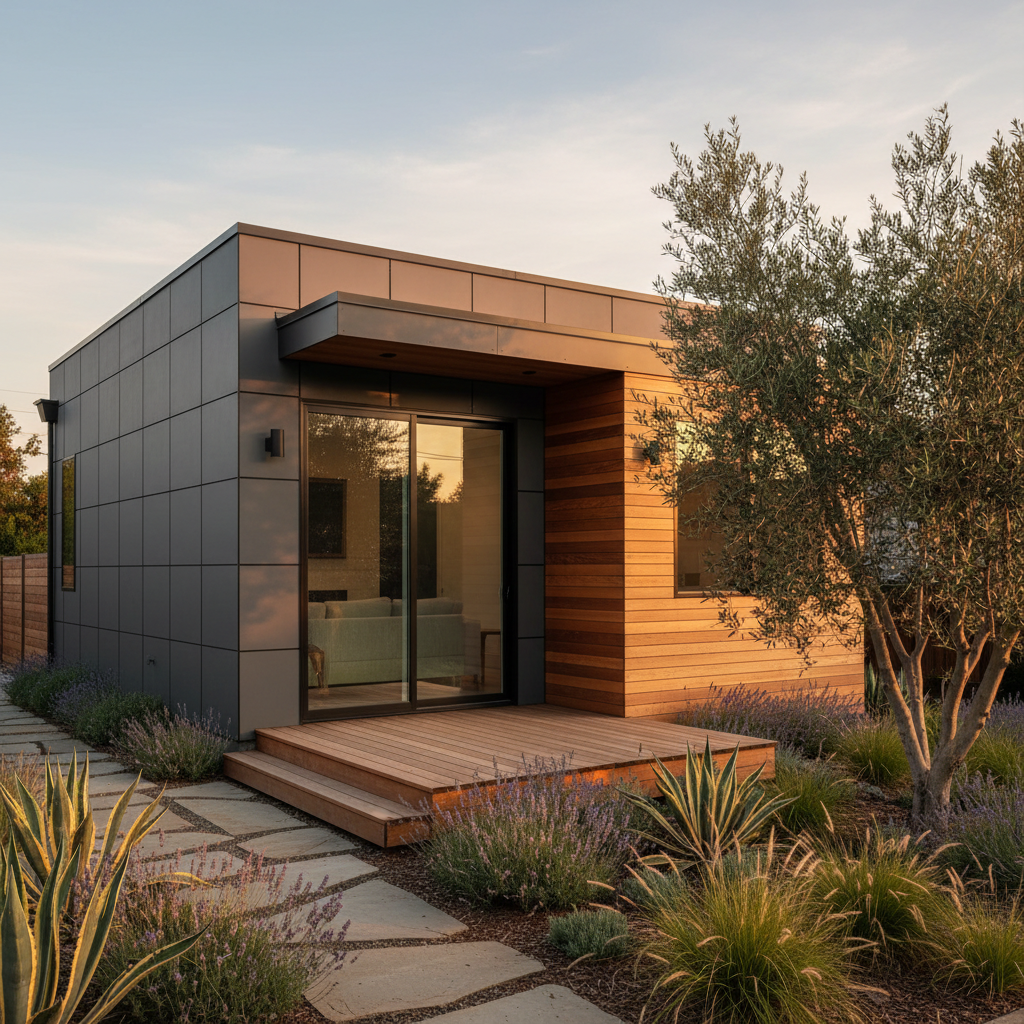
Building an Accessory Dwelling Unit (ADU) in California offers incredible opportunities to expand your living space, generate rental income, or provide housing for family members. While the interior design often gets the most attention, the exterior siding is equally, if not more, critical. It's not just about curb appeal; your ADU's siding protects your investment from California's diverse climate, fire risks, and seismic activity, all while adhering to local regulations and contributing to energy efficiency. Choosing the best siding for an ADU in California requires careful consideration of many factors.
At GatherADU, we understand the unique challenges and opportunities that come with building in the Golden State. This comprehensive guide will walk you through the top siding options, helping you make an informed decision that balances durability, aesthetics, cost, and compliance for your California ADU.
California's Unique Challenges for ADU Siding
California is a land of contrasts, and these contrasts directly impact siding choices for your ADU:
- Diverse Climates: From the damp, foggy coasts to the scorching inland valleys, snowy mountains, and arid deserts, your ADU's siding must withstand a wide range of temperatures, humidity levels, and sun exposure. Materials that perform well in one region might struggle in another.
- Wildland Urban Interface (WUI) Fire Zones: A significant portion of California is designated as WUI, areas where homes meet wildland vegetation. If your ADU is in a WUI zone, fire resistance isn't just a preference; it's a strict legal requirement. Siding materials must meet specific ignition-resistant standards.
- Seismic Activity: While siding generally isn't a primary structural component, its ability to remain intact and flexible during minor tremors can contribute to overall resilience.
- Energy Efficiency (Title 24): California's stringent Title 24 Building Energy Efficiency Standards require new construction, including ADUs, to meet high energy performance targets. Siding can play a role in a building's thermal envelope, influencing insulation requirements and overall energy consumption.
- Aesthetics and Local Character: California boasts a rich tapestry of architectural styles, from Spanish Colonial to Mid-Century Modern and contemporary. Your ADU's siding should ideally complement the existing main home and the neighborhood's aesthetic, or establish a distinct, approved style.
Key Factors When Choosing ADU Siding
Before diving into specific materials, consider these crucial factors:
Durability & Longevity
How well will the material stand up to sun, rain, wind, and pests over decades? Look for materials with long warranties and a proven track record.
Fire Resistance
For many California homeowners, this is paramount. Materials are rated for fire resistance, and some are specifically approved for WUI zones. This often means non-combustible or ignition-resistant properties.
Maintenance Requirements
Are you looking for a set-it-and-forget-it solution or are you prepared for regular painting, sealing, or cleaning? Lower maintenance often translates to higher upfront costs but significant long-term savings in time and money.
Cost (Initial vs. Lifetime)
Consider both the material cost and installation labor. However, also factor in lifetime costs, including maintenance, repairs, and energy efficiency implications.
Aesthetics & Design Versatility
Does the material offer the look you desire? Can it be painted, stained, or molded to achieve specific architectural styles? How well does it integrate with other exterior elements like roofing and windows?
Sustainability
For environmentally conscious homeowners, consider materials' embodied energy, recycled content, and recyclability at the end of their life cycle.
Installation Complexity
Some materials, like brick or stone veneer, require specialized skills and more labor, impacting project timelines and costs.

Top Siding Options for California ADUs
Here's a breakdown of common siding materials and how they fare in California:
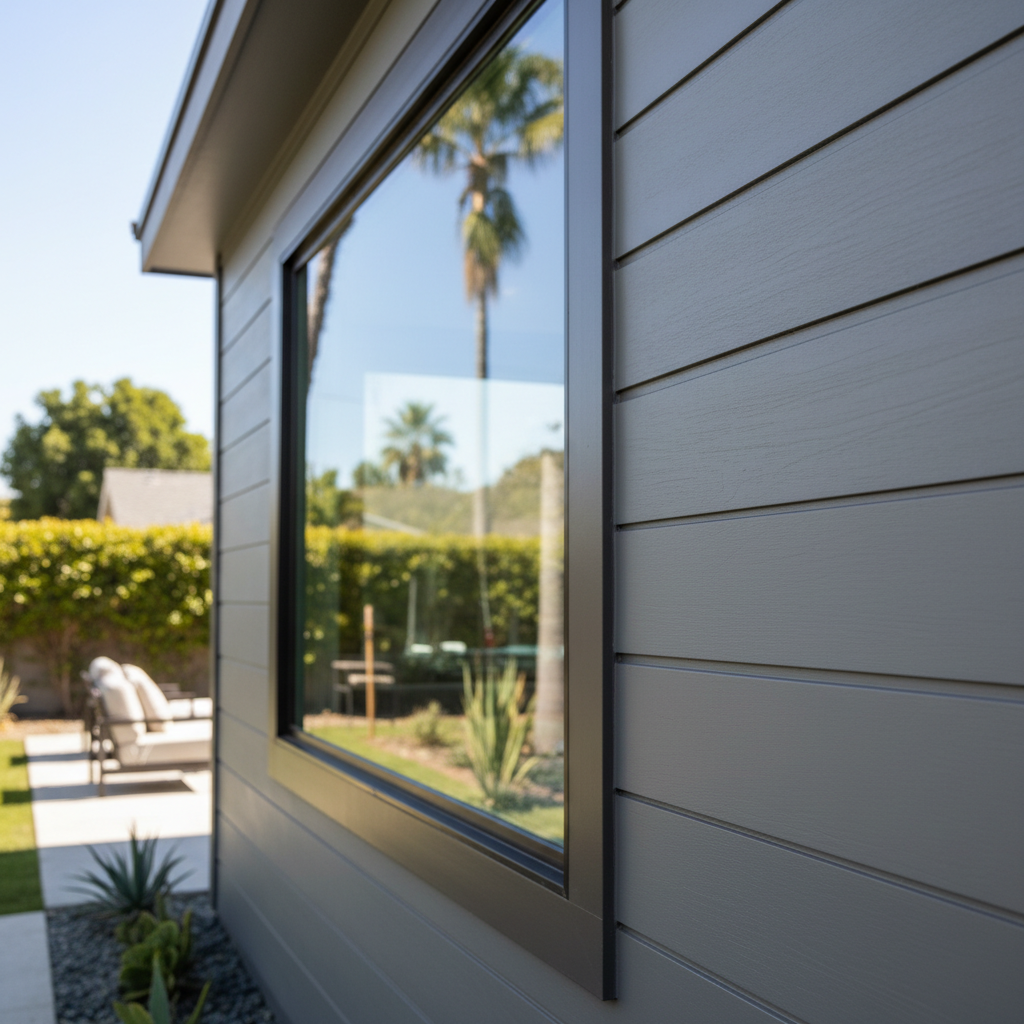
1. Fiber Cement Siding (e.g., James Hardie)
Overview: A blend of cement, sand, and cellulose fibers, engineered to be durable and long-lasting.
- Pros for CA:
- Excellent Fire Resistance: Non-combustible, making it a top choice for WUI zones.
- Highly Durable: Resists rot, pests, moisture, and extreme weather. It won't warp, crack, or delaminate.
- Low Maintenance: Holds paint exceptionally well, requiring repainting far less frequently than wood.
- Versatile Aesthetics: Available in planks (looks like wood lap siding), shingles, and panels, offering a wide range of colors and textures.
- Pest Resistant: Impervious to termites and other wood-boring insects.
- Cons for CA:
- Higher Upfront Cost: More expensive than vinyl, but often justified by longevity and low maintenance.
- Heavy & Labor-Intensive: Requires specialized tools and installation techniques.
- Best For: Nearly any California ADU, especially those in WUI zones or homeowners seeking maximum durability and minimal upkeep.
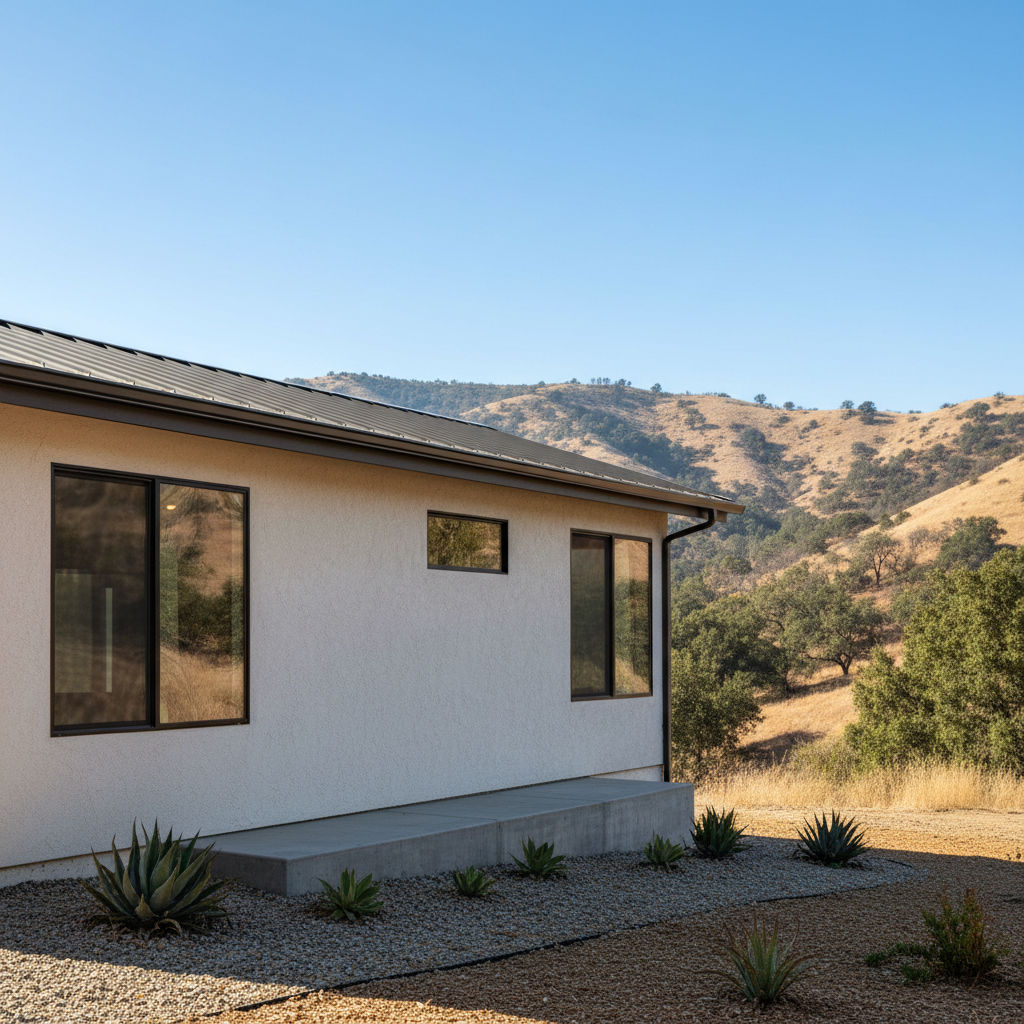
2. Stucco
Overview: A classic California choice, stucco is a durable, cement-based plaster applied in layers over a lath base.
- Pros for CA:
- Excellent Fire Resistance: Naturally fire-resistant, providing a good barrier against flames.
- Durable & Long-Lasting: Withstands various weather conditions, including heat and sun.
- Good Insulation: Adds to the thermal mass of the wall, contributing to energy efficiency.
- Seamless Aesthetic: Creates a smooth, continuous look, common in Spanish and Mediterranean revival styles.
- Pest Resistant: Does not attract insects.
- Cons for CA:
- Prone to Cracking: Especially in areas with seismic activity or significant temperature fluctuations if not properly installed or reinforced.
- Maintenance: Can require patching and repainting over time. Hard to repair seamlessly.
- Installation Complexity: Requires skilled applicators and multi-stage drying.
- Best For: ADUs aiming for a traditional California aesthetic, particularly in warm, dry climates, and those requiring fire resistance.
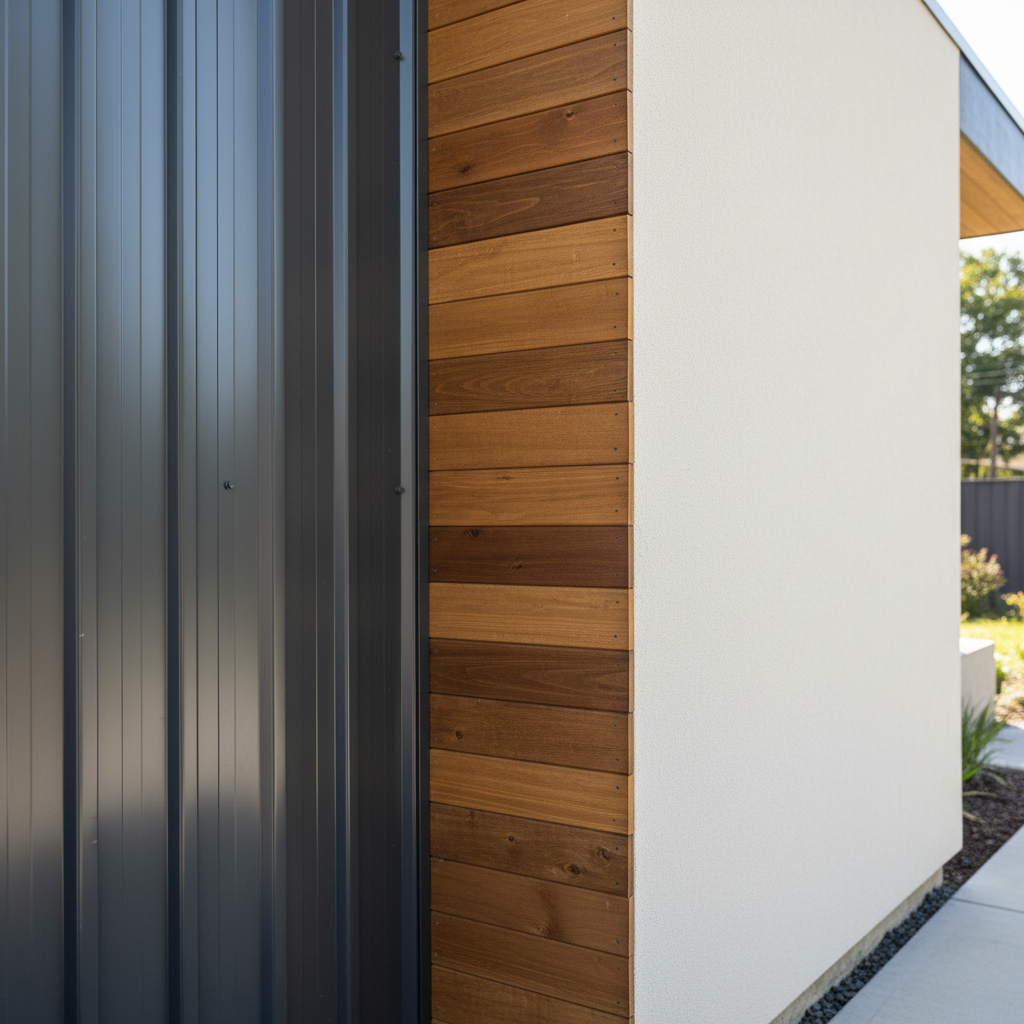
3. Metal Siding (Corrugated, Standing Seam, Flat Panel)
Overview: Made from steel, aluminum, or zinc, metal siding offers a modern, industrial, or farmhouse aesthetic.
- Pros for CA:
- Superior Fire Resistance: Non-combustible, an excellent choice for WUI areas.
- Extremely Durable: Resists rot, pests, mold, and extreme weather. Long lifespan.
- Low Maintenance: Requires little more than occasional washing.
- Recyclable & Sustainable: Often made from recycled content and is fully recyclable.
- Modern Aesthetic: Offers sleek lines and a contemporary look.
- Cons for CA:
- Cost: Can be more expensive than other options, especially standing seam.
- Denting: Can be susceptible to dents from impacts.
- Noise: Some types can expand and contract, potentially causing noise.
- Thermal Conductivity: Needs proper insulation to prevent heat transfer.
- Best For: Modern or industrial-style ADUs, especially in fire-prone areas or for homeowners seeking ultimate durability and low maintenance.

4. Wood Siding (Cedar, Redwood, Treated Pine)
Overview: Natural wood offers unparalleled warmth and beauty, but comes with significant considerations.
- Pros for CA:
- Natural Beauty: Unique grain patterns and a warm, inviting aesthetic.
- Sustainable: If sourced from responsibly managed forests.
- Good Insulation: Natural thermal properties.
- Cons for CA:
- Fire Risk: Highly combustible unless specially treated. Not suitable for WUI zones without extensive and often costly fire-retardant treatments and specific building codes.
- High Maintenance: Requires regular staining, painting, or sealing to prevent rot, warping, and fading due to UV exposure.
- Pest Susceptible: Vulnerable to termites and other wood-boring insects.
- Cost: High-quality woods like redwood can be expensive.
- Best For: ADUs in non-WUI zones where a natural aesthetic is paramount and the homeowner is committed to ongoing maintenance. Often used as an accent rather than the primary siding.
5. Engineered Wood Siding
Overview: Made from wood fibers, resins, and waxes, pressed into planks or panels, often pre-primed or pre-finished.
- Pros for CA:
- Looks Like Wood: Offers the aesthetic of wood without many of its drawbacks.
- More Durable Than Natural Wood: Resists warping, cracking, and splitting better than solid wood.
- Pest Resistant: Often treated to resist termites and fungal decay.
- Lower Maintenance: Holds paint well, less frequent repainting than natural wood.
- Cons for CA:
- Fire Resistance: Generally better than natural wood, but still combustible and may not meet WUI requirements without specific treatments or fire-rated assemblies.
- Moisture Issues: Can swell or delaminate if moisture penetrates the surface, especially at cut edges if not properly sealed.
- Best For: Homeowners wanting a wood aesthetic with improved durability and lower maintenance, in non-WUI zones or where specific fire ratings can be achieved.
6. Vinyl Siding
Overview: A PVC plastic product, known for its affordability and low maintenance.
- Pros for CA:
- Cost-Effective: One of the most affordable siding options.
- Low Maintenance: Doesn't require painting and is easy to clean.
- Lightweight & Easy to Install: Reduces labor costs.
- Cons for CA:
- Poor Fire Resistance: Melts and can contribute to fire spread; generally not suitable for WUI zones.
- Less Durable: Can crack in extreme cold, warp in extreme heat, and fade from intense sun exposure over time.
- Aesthetics: Can look less premium than other materials, and color options may be limited.
- Environmental Impact: Made from fossil fuels, not easily recyclable.
- Best For: Budget-conscious projects in non-WUI zones where fire risk is minimal and a premium aesthetic is not the primary goal. Less common for new ADU construction in California due to perceived quality and fire concerns.
7. Brick & Stone Veneer
Overview: Thin slices of brick or stone applied over a substrate, providing the look of traditional masonry without the full structural weight.
- Pros for CA:
- Excellent Fire Resistance: Non-combustible, ideal for WUI zones.
- Extremely Durable: Resists pests, rot, and weathering exceptionally well.
- Virtually No Maintenance: Requires little more than occasional cleaning.
- Premium Aesthetic: Offers a timeless, high-end look.
- Cons for CA:
- High Cost: Most expensive option in terms of material and installation.
- Heavy & Complex Installation: Requires skilled masons and a robust substrate.
- Limited Design Versatility: Can be difficult to integrate with very modern designs.
- Best For: High-end ADUs where budget is less of a concern, and a classic, durable, and fire-resistant aesthetic is desired.

Navigating Regulations & Design with GatherADU
Choosing the right siding is a complex decision, especially with California's specific regulations. For example, if your property is in a Wildland Urban Interface (WUI) zone, you'll need to ensure your chosen material meets stringent fire-resistant standards. Local zoning ordinances and Homeowners Association (HOA) rules might also dictate acceptable materials or colors.
At GatherADU, we specialize in navigating these complexities. Our team of experts understands California's building codes, WUI requirements, and design trends. We can help you select a siding material that not only looks great and fits your budget but also provides maximum protection and ensures full compliance. We handle all aspects of design, permitting, and construction, making the process seamless for you. To discuss your ADU project and explore the best siding options for your unique situation, don't hesitate to schedule a free ADU consultation with our experienced team.
Maintenance Tips for Siding Longevity
Regardless of the material you choose, regular maintenance will extend its life:
- Regular Cleaning: Wash your siding annually to remove dirt, mildew, and grime.
- Inspect for Damage: Periodically check for cracks, loose panels, or signs of pest intrusion.
- Address Moisture: Ensure gutters are clean and downspouts direct water away from the foundation. Trim back plants that trap moisture against the siding.
- Repaint/Reseal as Needed: Follow manufacturer guidelines for wood and fiber cement products.
Conclusion
The exterior siding of your California ADU is more than just a facade; it's a critical component that contributes to its durability, safety, energy efficiency, and overall value. While options like fiber cement, stucco, and metal siding often emerge as top contenders due to their fire resistance and longevity in California's challenging environment, the best siding for your ADU in California ultimately depends on your specific location, budget, aesthetic preferences, and maintenance commitment. Making an informed choice now will save you headaches and expenses down the road.
Don't let the complexities of material selection or local regulations deter you. GatherADU is here to guide you through every step of your ADU journey, from initial design to final construction. Our expertise ensures your ADU is built to last, compliant with all California standards, and beautifully integrated into your property. Ready to turn your ADU vision into a reality? Book your free ADU project consultation with GatherADU today and let's build something exceptional together!