

Unlocking Greater Potential: The California ADU Density Bonus
California is renowned for its beautiful landscapes, vibrant culture, and unfortunately, its challenging housing market. To combat the persistent housing shortage and affordability crisis, the state legislature has introduced powerful tools designed to encourage more housing development. Among the most significant of these are Accessory Dwelling Units (ADUs) and the broader concept of the California ADU density bonus.
While ADUs themselves are a form of density increase, allowing additional units on existing residential lots, the formal Density Bonus Law (Government Code Section 65915) offers even greater incentives. Understanding how these two legislative frameworks intersect can be a game-changer for homeowners, developers, and investors looking to maximize their property's potential and contribute to California's housing solution. This comprehensive guide will demystify the density bonus, explain its relationship with ADUs, and illuminate the opportunities it presents.
What Exactly is a Density Bonus?
At its core, a density bonus is a state-mandated incentive that allows developers and property owners to build more housing units than a local zoning ordinance would typically permit on a given parcel of land. The primary goal of California's Density Bonus Law (Government Code Section 65915) is to encourage the production of affordable housing. In exchange for including a certain percentage of affordable units within a development, the state requires local jurisdictions to grant a corresponding increase in density, along with other potential concessions or incentives.
Key Principles of the Density Bonus Law:
- Increased Density: The most straightforward benefit is the ability to build more units. Depending on the percentage and level of affordability (e.g., very low, low, or moderate income) of the included affordable units, a project can receive a density bonus ranging from 20% to 35% above the maximum otherwise allowed by zoning.
- Concessions or Incentives: Beyond increased density, qualifying projects are entitled to a specified number of "concessions" or "incentives." These can include reduced setback requirements, lower parking ratios, increased height limits, reduced minimum lot sizes, or other regulatory relief that reduces project costs or allows for a more efficient design.
- Waivers of Development Standards: In some cases, if a local development standard would physically preclude the construction of the density-bonused project, the developer can request a waiver of that standard.
- Streamlined Approval: While not explicitly a "bonus" in the same way as increased density, the law also streamlines the approval process for density bonus projects, ensuring local governments act efficiently.
The California Housing Crisis and Legislative Solutions
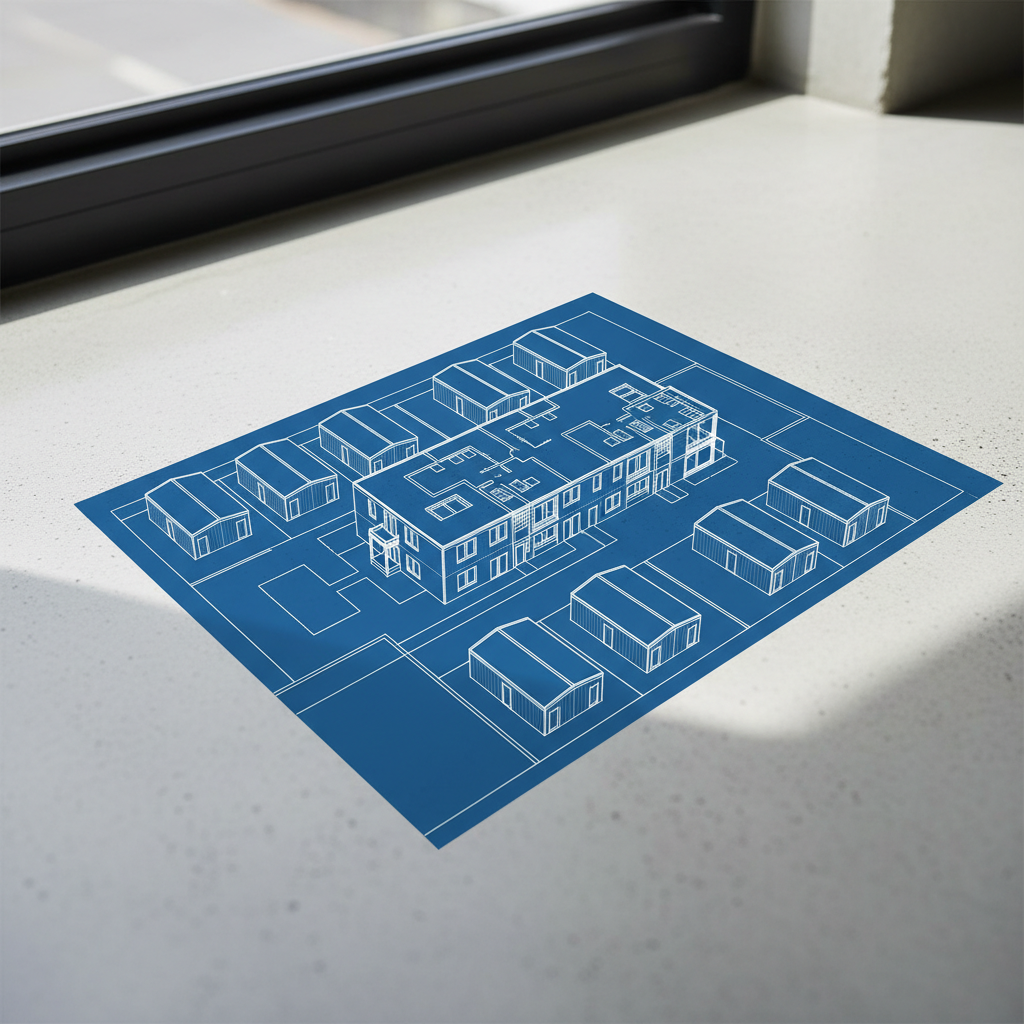
California faces an acute housing shortage, leading to soaring home prices and rents that burden millions of residents. In response, the state legislature has passed a series of groundbreaking laws aimed at stimulating housing production. ADU laws (Government Code Section 65852.2) were a significant step, effectively overriding restrictive local zoning to allow homeowners to build additional units on their properties. These laws dramatically simplified the process for building one or two ADUs on most residential lots, acting as a powerful, decentralized "density bonus" for single-family homeowners.
However, the formal Density Bonus Law (Gov. Code 65915) addresses larger-scale housing production, particularly encouraging developers to include affordable units in their projects. When these two legislative efforts — ADU laws and Density Bonus laws — are considered together, they create powerful opportunities for increasing housing supply across the state.
The Synergy: California ADU Density Bonus Opportunities
This is where the magic happens. While ADU laws already grant homeowners the right to build additional units irrespective of local density limits (a form of "bonus density" itself), the formal Density Bonus Law (Gov. Code 65915) can further amplify housing potential, especially for multi-family properties or larger developments.
Here’s how the California ADU density bonus relationship typically works:
- ADUs as "By-Right" Density: For most single-family lots, state ADU laws allow for one Junior ADU (JADU) and one detached ADU (or conversion ADU) — a total of two additional units — regardless of underlying zoning density. This is the primary way single-family homeowners experience increased density through state mandates. These ADUs are often not counted towards the underlying density calculation of the lot.
- Density Bonus for Primary Projects: If a primary housing development (e.g., a new apartment building or a substantial redevelopment) qualifies for a density bonus by including affordable units, the local jurisdiction *must* allow a greater number of primary units than its zoning code ordinarily would.
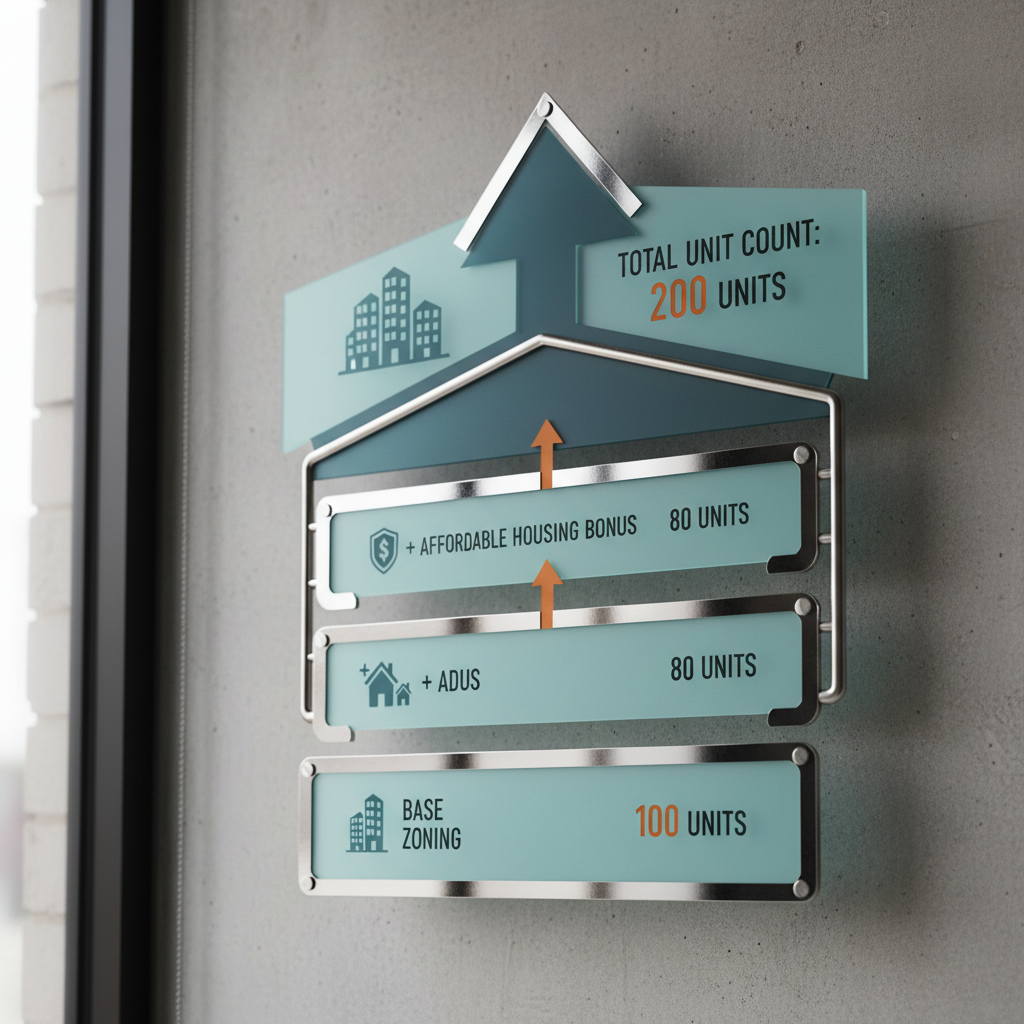
- Stacking the Benefits: Crucially, the ADUs allowed under Government Code Section 65852.2 can generally be added *on top* of the increased density granted by the Density Bonus Law. This means a developer could receive a 35% density bonus for their primary building units (e.g., allowing 135 units where 100 were permitted), and then *still* be able to add the state-mandated ADUs (e.g., two detached ADUs per parcel for multi-family properties, or conversions of non-livable space) on top of that increased unit count. This significantly boosts the total number of housing units a project can deliver.
- Affordable ADUs: In some specific cases, if an ADU itself is deed-restricted for affordability, it might directly qualify for certain density bonus incentives. This is less common for typical single-family ADU projects but can be a strategy in larger, mixed-income developments.
The combined effect is that properties can achieve a much higher overall unit count, translating to greater rental income potential, increased property value, and a more efficient use of land.

Key Components of California's Density Bonus Law (Gov. Code Section 65915) in Detail
For those considering a larger project, understanding the specifics of the Density Bonus Law is vital:
-
Eligibility Criteria: A project qualifies for a density bonus if it includes any of the following:
- At least 10% of units for lower-income households.
- At least 5% of units for very low-income households.
- At least 50% of units for qualifying senior citizens or persons with disabilities.
- At least 10% of units for moderate-income households in a for-sale project.
- Bonus Percentage: The density increase varies based on the percentage and income level of the affordable units included, capping at 35%.
-
Concessions and Incentives: In addition to the density bonus, a project is entitled to a certain number of concessions or incentives (typically 1-3, depending on the bonus percentage). These are regulatory breaks that make the project more feasible. Examples include:
- A reduction in site development standards or a modification of zoning code requirements (e.g., reduced setbacks, reduced minimum lot size or dimensions, reduced open space requirements).
- A reduction in parking standards (e.g., allowing fewer parking spaces per unit than typically required).
- Architectural design requirements that exceed minimum building standards.
- Direct financial incentives (though less common for ADUs specifically).
- Waivers of Development Standards: If a local development standard would physically prevent the utilization of the density bonus and concessions, the developer can request a waiver of that standard.

How Density Bonuses Amplify ADU Potential
By understanding and strategically utilizing the California ADU density bonus, property owners and developers can achieve significant advantages:
- Maximize Property Value: More units on a lot generally mean higher rental income potential and increased overall property value.
- Boost Rental Income: With additional primary units and ADUs, property owners can generate substantially more passive income.
- Increase Housing Supply: Contribute meaningfully to addressing California's housing crisis while benefiting financially.
- Reduce Development Costs: Concessions like reduced parking or setbacks can lower infrastructure costs and simplify design.
- Overcome Local Restrictions: The state's density bonus law overrides restrictive local zoning, ensuring projects that meet affordability criteria can move forward.
Navigating these regulations can be complex, but the rewards are substantial. If you're considering a project that could benefit from these powerful state laws, don't hesitate to get your free project estimate from GatherADU. Our experts can help you understand your options.
Navigating the Complexities: State Mandate, Local Implementation
While California's Density Bonus Law and ADU laws are powerful state mandates, their implementation occurs at the local level. Every city and county in California must comply with these state laws, but the specifics of their local ordinances, application processes, and interpretations can vary. This is where expert guidance becomes invaluable.
- Local Interpretation: Cities and counties adopt their own ordinances to implement state law. While they cannot contradict state law, there can be nuances in how they define certain terms, calculate density, or process applications.
- Permitting Process: The permitting journey for a density-bonused project (especially one involving multiple units and ADUs) can be more involved than a simple single-family ADU. It often requires detailed architectural plans, affordability covenants, and careful negotiation with planning departments.
- Affordability Covenants: Projects receiving a density bonus for affordable units will typically require deed restrictions to ensure those units remain affordable for a specified period (often 30 to 55 years).

Common Misconceptions and Important Considerations
Despite its benefits, the California ADU density bonus is often misunderstood:
- It's Not a Free-for-All: While it allows for increased density, projects are still subject to building codes, safety regulations, and reasonable design standards.
- Affordability Requirements are Real: For the formal Density Bonus Law (Gov. Code 65915), the inclusion of affordable housing is a core requirement, not an option. These units must be rented or sold at rates affordable to specific income levels.
- It Requires Strategic Planning: Leveraging density bonuses effectively requires careful planning, architectural design that maximizes space within limits, and a deep understanding of both state and local regulations.
- Not Every ADU Project Needs It: For many single-family homeowners simply building one or two ADUs, the primary benefit comes from the state's ADU laws themselves, which already grant significant density relief. The formal density bonus is most impactful for larger projects or those aiming for additional incentives beyond what standard ADU laws provide.
Partnering with GatherADU: Your Density Bonus & ADU Experts
At GatherADU, we are experts in navigating the intricate landscape of California's housing laws, including both ADU regulations and density bonus provisions. We understand that while the potential benefits are immense, the process can seem daunting.
Our team provides comprehensive services from initial feasibility studies and design to permitting and construction. We can help you:
- Assess Your Property's Potential: Determine if your property qualifies for a density bonus and how it can be combined with ADU opportunities.
- Navigate Regulations: Understand the specific state and local requirements, ensuring compliance and maximizing your entitlements.
- Optimize Design: Create efficient, beautiful designs that leverage every square foot and meet all regulatory standards.
- Streamline Permitting: Guide you through the complex application and approval processes, saving you time and frustration.
- Expert Construction: Build your ADU or multi-unit project with quality craftsmanship and within budget.
Don't leave potential on the table. Discover how the California ADU density bonus can transform your property and contribute to a more vibrant housing future. Schedule a free ADU consultation with GatherADU today to explore your options.
Conclusion
The combination of California's ADU laws and the Density Bonus Law (Government Code Section 65915) represents a powerful legislative push to increase housing supply and affordability. For homeowners and developers alike, understanding and strategically applying the principles of the California ADU density bonus can unlock unprecedented opportunities to build more units, maximize property value, and generate significant income. While the regulatory landscape can be complex, expert guidance from a trusted partner like GatherADU can make the journey smooth and rewarding. Take the first step towards realizing your property's full potential and contributing to California's housing solution.
Ready to explore how a density bonus or ADU can transform your property? Book a free consultation with GatherADU and let our experts guide you through every step of the process.