Building an Accessory Dwelling Unit (ADU) in California is an exciting endeavor, offering homeowners incredible flexibility and value. However, navigating the permitting process can sometimes feel like walking through a labyrinth of regulations. Among the most critical, yet often misunderstood, aspects of this journey is understanding Natural Hazard Disclosure Zones (NHDZs) and how they can affect your Natural Hazard Disclosure Zone ADU permits.
For many California properties, an NHD report is a standard part of the real estate transaction. But what does it mean for new construction like an ADU? This comprehensive guide will demystify NHDZs, explain their significance for your ADU project, and outline the steps you'll need to take to ensure your backyard home is built safely, compliantly, and resiliently.
What Exactly Is a Natural Hazard Disclosure Zone (NHDZ)?
A Natural Hazard Disclosure Zone refers to an area identified by the state or local government as being subject to specific natural hazards. In California, these zones are primarily defined by the Natural Hazard Disclosure Act (Civil Code §1103), which mandates that sellers of real property disclose if their property lies within one or more of six specified natural hazard zones.
The primary purpose of identifying these zones is to inform property owners and potential buyers about environmental risks that could impact the property's safety or value. For ADU construction, this information becomes crucial, as it directly influences design, engineering, and permitting requirements, ensuring the new structure can withstand potential natural events.
Why NHDZs are Crucial for Your California ADU Project
Ignoring NHDZs isn't an option when building an ADU. These zones directly impact:
- Safety and Resilience: The most important factor. Building an ADU in a hazard zone without proper mitigation puts future occupants and your investment at risk.
- Permitting Requirements: Local building departments will scrutinize plans for properties in NHDZs, often requiring additional studies and specific design elements.
- Construction Costs: Specialized engineering, reinforced foundations, fire-resistant materials, or elevated structures can add to your project's overall cost.
- Project Timelines: Additional studies and reviews can extend the permitting process significantly.
- Property Value and Insurance: Proper mitigation can enhance your property's long-term value and insurability, while a lack thereof could create issues.
Key Natural Hazards Identified in California NHDs
California's diverse landscape means properties can be exposed to a variety of natural hazards. The Natural Hazard Disclosure Act specifically covers six primary hazards:
1. Seismic Hazards: Earthquake Fault Zones & Seismic Hazard Zones
-
Alquist-Priolo Earthquake Fault Zones: These are regulatory zones around active faults where the potential for surface rupture is highest. If your property is within an Alquist-Priolo zone, specific setbacks from the fault line are mandated for new construction, and a geological fault study is typically required.
-
Seismic Hazard Zones (Liquefaction & Landslides): These zones are designated by the California Geological Survey (CGS) for areas susceptible to:
- Liquefaction: Occurs when saturated sandy or silty soil loses strength and stiffness in response to an earthquake, behaving like a liquid.
- Earthquake-Induced Landslides: Slopes that may fail during an earthquake.
Impact on ADU Permits: For properties in these zones, a geotechnical investigation is almost always required. This study will determine the soil conditions and recommend specific foundation designs (e.g., deep piles, mat foundations) and structural engineering solutions to ensure the ADU can safely withstand seismic activity and ground movement.
2. Wildland Fire Hazards: Very High Fire Hazard Severity Zones (VHFHSZ)
-
California, with its expansive wildlands, is prone to wildfires. The California Department of Forestry and Fire Protection (CAL FIRE) designates Very High Fire Hazard Severity Zones (VHFHSZ) based on factors like fuel, slope, and weather.
-
Impact on ADU Permits: If your property is in a VHFHSZ, your ADU will need to comply with stringent Wildland-Urban Interface (WUI) building codes. This includes using fire-resistant materials for roofing, siding, windows, vents, and eaves. Defensible space requirements around the structure will also be critical, influencing landscaping and accessory structures.
3. Flood Hazards: 100-Year Flood Zones & Dam Inundation Zones
-
100-Year Flood Zones (FEMA Flood Zones): These are areas identified by the Federal Emergency Management Agency (FEMA) as having a 1% or greater chance of flooding in any given year. Building in these zones requires adherence to specific flood-resistant construction standards.
-
Dam Inundation Zones: Areas that could be flooded in the event of a dam failure. While rare, local emergency plans often dictate specific considerations for new construction in these zones.
-
Impact on ADU Permits: For properties in flood zones, your ADU may need to be elevated above the Base Flood Elevation (BFE) using a raised foundation or piers. Flood-resistant materials and construction techniques are also often required, and flood insurance will likely be mandatory.
4. Other Potential Hazards (Less Common in NHD but Important)
- Tsunami Inundation Zones: Coastal areas susceptible to tsunamis. While less common for typical ADU sites, properties near the coast must consider these.
- Special Flood Hazard Areas (SFHA): Beyond the 100-year zones, other flood-prone areas might be identified by local jurisdictions.
- Expansive Soils or Erosion Zones: While not always part of the standard NHD, local geological conditions can reveal properties with highly expansive soils or areas prone to erosion, requiring special foundation designs.
How to Determine if Your Property is in an NHDZ
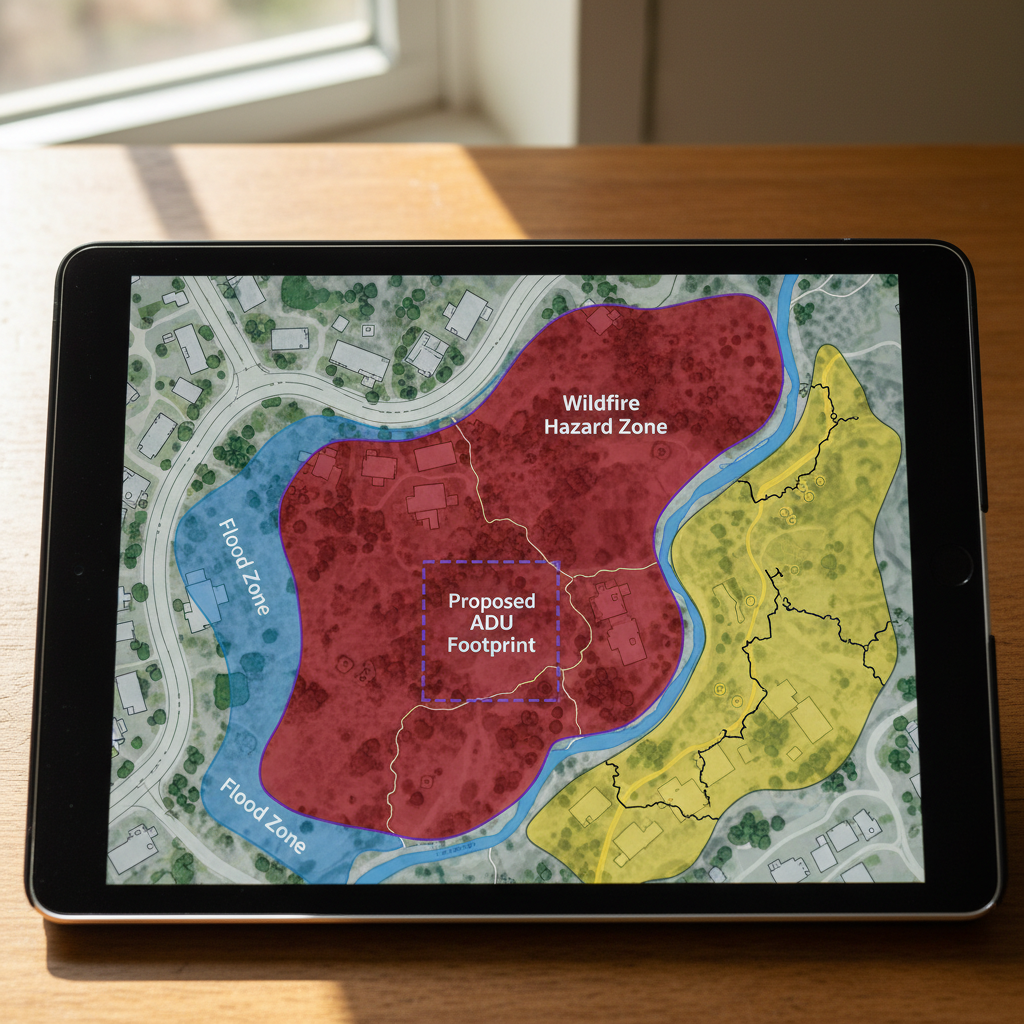
Before you even begin designing your ADU, it's vital to know if your property falls within any Natural Hazard Disclosure Zones. Here are the primary ways to find out:
-
Your Property's NHD Report: If you purchased your property in California, you should have received a Natural Hazard Disclosure report during the escrow process. This report explicitly lists all state-mandated hazard zones affecting your property.
-
Local City/County Planning Department or GIS Maps: Most local jurisdictions (cities and counties) provide online Geographic Information System (GIS) portals where you can input your address and view various zoning and hazard overlays. This is an invaluable resource for preliminary research.
-
Consult with Experts: An experienced ADU design-build firm like GatherADU can help you quickly assess your property's hazard profile. We have the tools and knowledge to interpret maps and reports, giving you a clear picture of what to expect.
Don't let the complexity of NHDZs deter your ADU dreams. Contact GatherADU for expert guidance – we can help assess your property's specific conditions and navigate the initial steps.
Navigating NHDZ Requirements for Your ADU Permit
Once you've identified that your property is in an NHDZ, the next step is to understand how to comply with the associated requirements. This is where expert planning and design become indispensable.
1. Early Assessment and Feasibility Study
The absolute first step is a thorough feasibility study. GatherADU includes this in our process to identify potential hazard zone impacts early on. This allows us to budget for necessary studies and mitigation measures from the outset, preventing costly surprises later.
2. Geotechnical and Specialized Engineering Reports
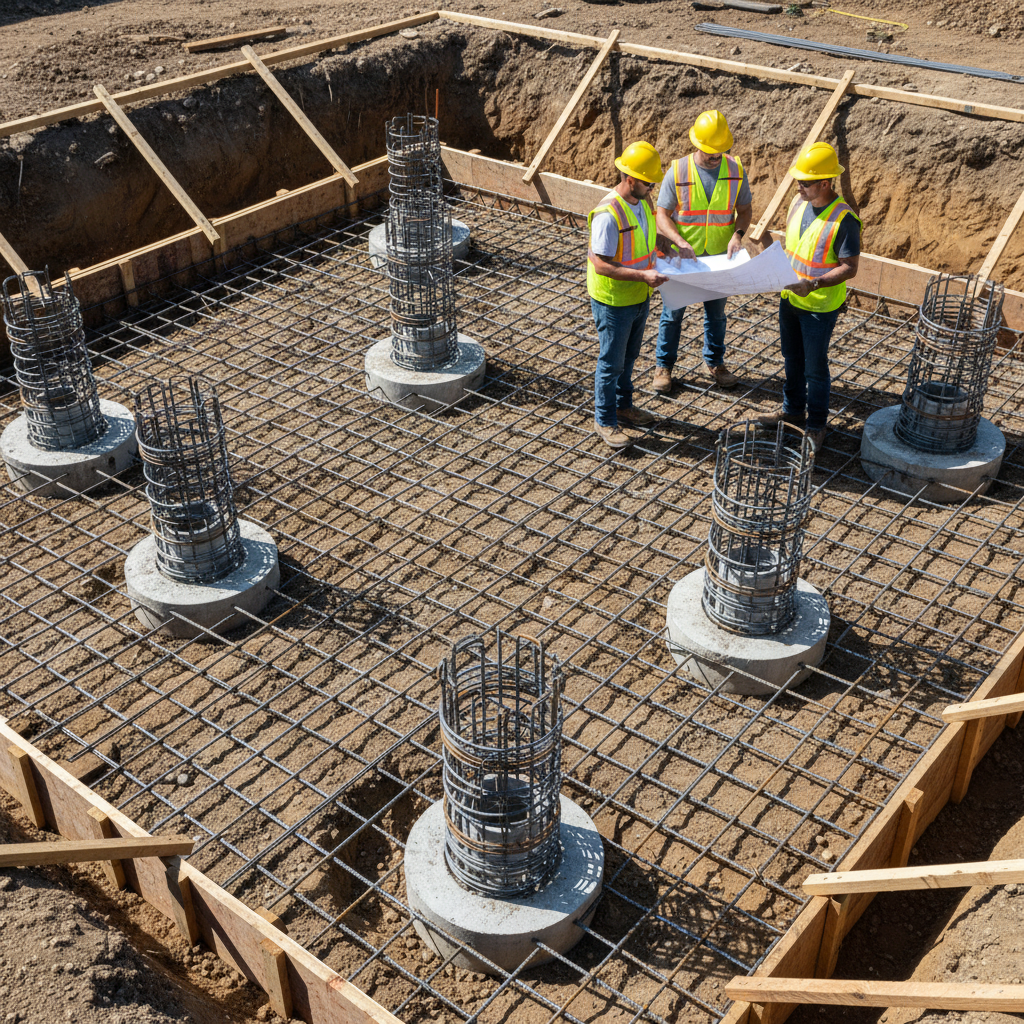
For properties in seismic, landslide, or liquefaction zones, a geotechnical report is almost always required. This report, prepared by a licensed geotechnical engineer, will analyze soil conditions and recommend specific foundation designs (e.g., deep piles, drilled caissons, grade beams) to ensure the ADU's stability. Structural engineers will then design the building's frame to meet these enhanced requirements.
3. Specialized Foundation and Structural Design
Depending on the hazard, your ADU's foundation might look very different from a standard build:
- Seismic: Enhanced rebar, shear walls, robust anchorage to the foundation.
- Liquefaction/Landslide: Deep foundations extending to stable soil, soil improvement techniques.
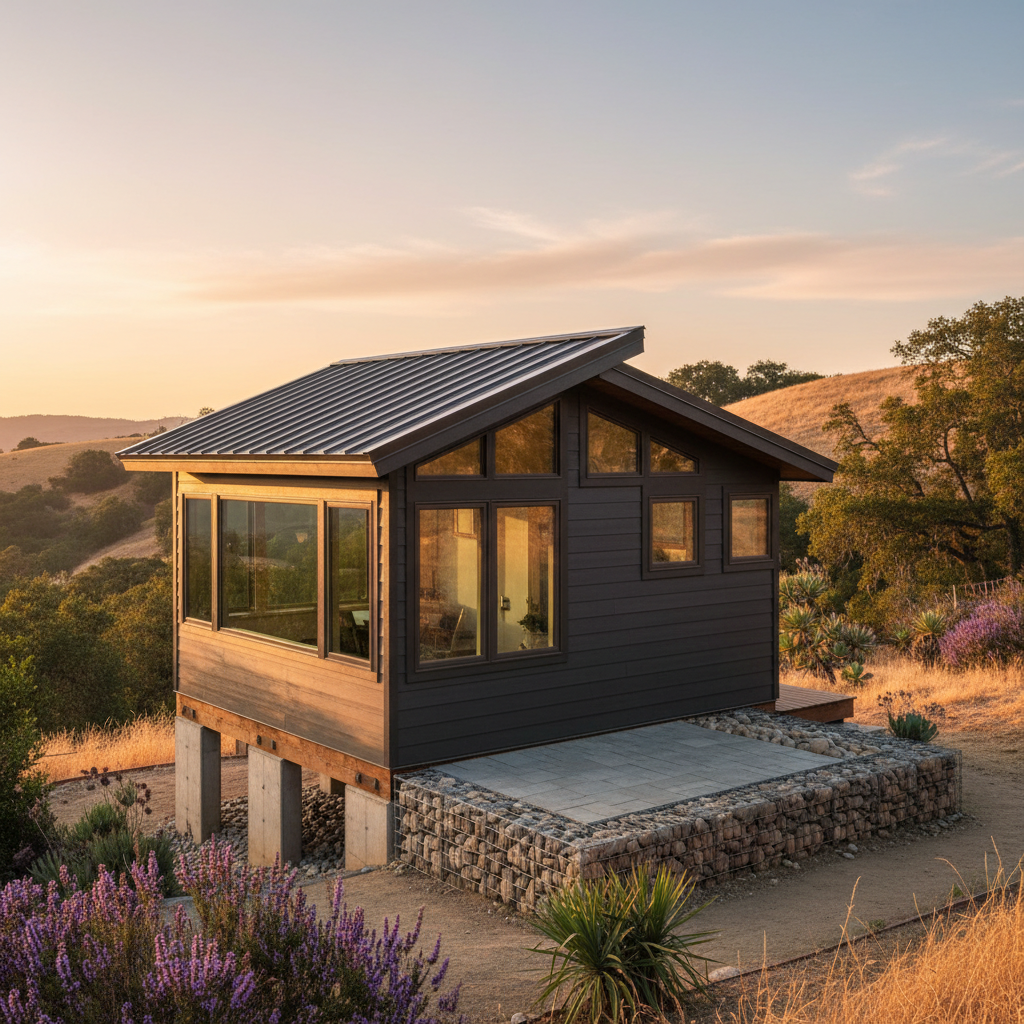
- Flood: Elevated foundations (on stilts, piers, or a raised crawlspace) to lift the lowest floor above the Base Flood Elevation (BFE).
4. Fire-Resistant Construction for WUI Zones
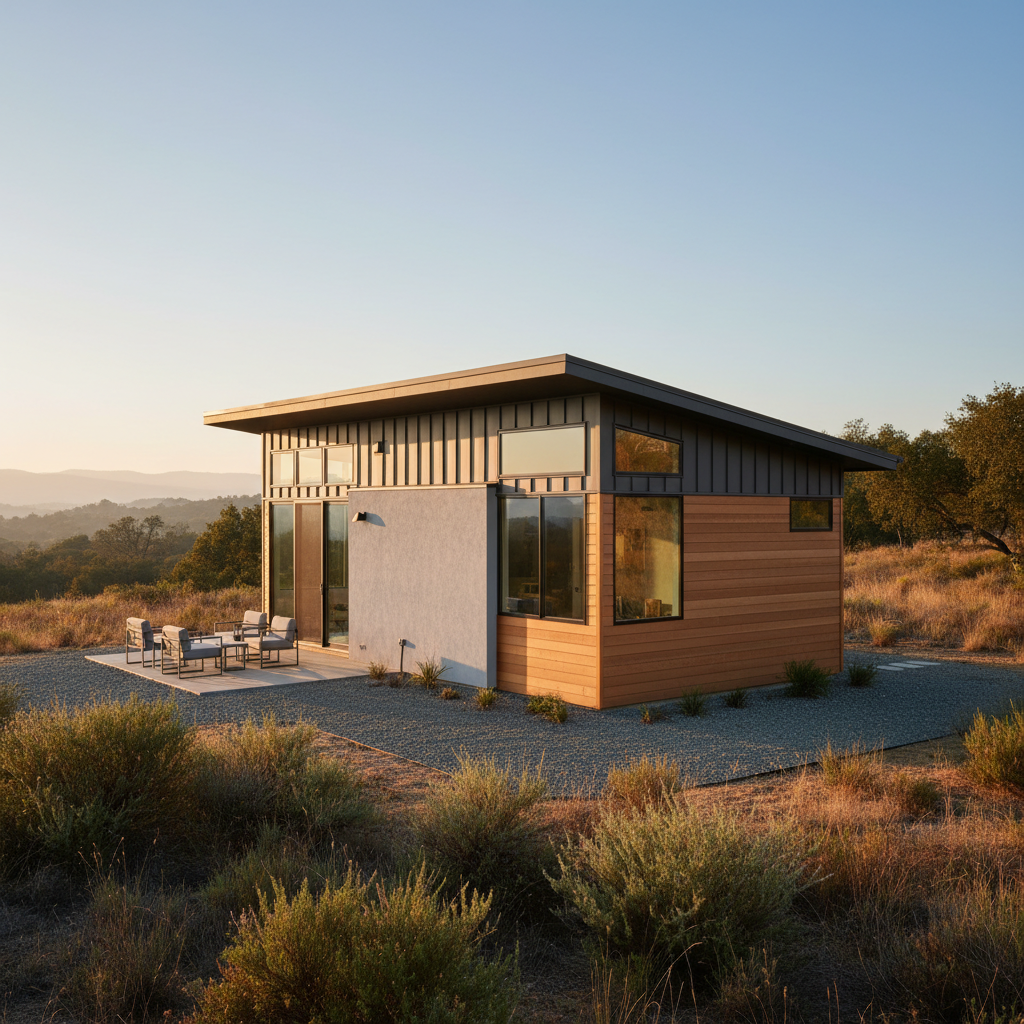
If your property is in a Very High Fire Hazard Severity Zone, your ADU design must incorporate WUI-compliant materials and construction methods. This includes:
- Roofing: Class A fire-rated materials.
- Exterior Walls: Non-combustible siding (stucco, fiber cement) or ignition-resistant materials.
- Windows: Tempered glass or multi-paned windows designed to resist radiant heat.
- Vents: Ember-resistant attic and foundation vents.
- Decks & Eaves: Constructed with fire-resistant materials or designed to prevent ember intrusion.
5. Expert Collaboration and Permitting Navigation
Successfully building an ADU in an NHDZ requires a team of experts. GatherADU excels at coordinating these specialists—geotechnical engineers, structural engineers, fire consultants—to ensure all reports are completed accurately and integrated into the architectural plans. Our deep understanding of California's ADU laws and local permitting processes helps streamline approvals, even for complex projects.
Understanding and addressing Natural Hazard Disclosure Zones is a critical step in building a safe, compliant, and resilient ADU in California. While it adds layers of complexity, it's an investment in your property's future and your peace of mind. Schedule a free ADU consultation with GatherADU to discuss your property's specific challenges and learn how our design-build expertise can bring your ADU vision to life, safely and efficiently.
Conclusion
Navigating Natural Hazard Disclosure Zones for your ADU permit might seem daunting, but it's an essential part of responsible development in California. These zones are not necessarily deal-breakers for your ADU project; rather, they serve as crucial indicators that require careful planning, specialized engineering, and adherence to specific building codes. By understanding the potential hazards and proactively addressing them with expert guidance, you can ensure your ADU is not only beautiful and functional but also robustly safe and resilient for decades to come.
At GatherADU, we specialize in making the complex simple. Our team is well-versed in California's unique environmental landscape and the regulatory frameworks that govern ADU construction within hazard zones. We're here to guide you through every step, from initial property assessment to final construction, ensuring your backyard home meets all safety standards and permit requirements. Don't let potential hazards deter your ADU dreams—let us help you build smarter and safer.
Ready to explore the possibilities for your property? Book your free ADU consultation with GatherADU today and take the first step towards a resilient and compliant backyard home.