Building an Accessory Dwelling Unit (ADU) in California has become significantly easier thanks to progressive state legislation. However, if you're planning an ADU project in Los Angeles County, assuming a one-size-fits-all approach to permitting would be a critical mistake. The reality is that how the ADU permit process differs between cities in Los Angeles County can be a complex labyrinth of varying local ordinances, design standards, and fee structures. While state laws establish a baseline for ADU development, individual cities and unincorporated areas within LA County retain significant discretion in several key areas, directly impacting your project's timeline, cost, and design.
Understanding these differences is paramount for any homeowner looking to add a backyard home. This article will demystify the varied ADU permitting landscape across Los Angeles County, highlighting commonalities enforced by the state and crucial areas where local jurisdictions still exert their influence. We'll explore why these differences exist and provide insights into navigating them successfully.
The Foundation: California's Statewide ADU Laws
Before diving into city-specific variations, it's essential to understand the overarching state laws that govern ADUs in California. Legislation like AB 68, AB 881, and SB 9 (among others) were enacted to address California's housing crisis by streamlining ADU construction and limiting local governments' ability to impose overly restrictive regulations. Key state-mandated provisions include:
- Ministerial Approval: Most ADU applications are subject to ministerial (non-discretionary) approval, meaning if your project meets objective standards, it must be approved.
- Reduced Setbacks: State law limits setbacks to a maximum of 4 feet for side and rear yards, and often no setback for conversions of existing structures.
- Increased Size Limits: State law dictates minimum and maximum sizes, generally allowing up to 1,200 square feet for detached ADUs, with local governments often allowing larger (up to 850 sq ft for a 1-bedroom, 1,000 sq ft for 2+ bedrooms regardless of main home size).
- No Owner-Occupancy Requirement: Owners are no longer required to live on the property where the ADU is built.
- Parking Exemptions: Many ADUs are exempt from parking requirements, especially those within a half-mile of public transit, within a historic district, or part of an existing structure.
- Prohibition on Impact Fees: Impact fees are generally prohibited for ADUs under 750 square feet.
These statewide rules provide a strong framework, preventing cities from outright banning ADUs or imposing overly burdensome restrictions that stifle development. However, they also leave specific areas open for local interpretation and regulation.
Where Local Jurisdictions Still Have Influence
Despite state preemption, cities and unincorporated areas within Los Angeles County can and do implement their own specific requirements in several critical areas. These are the nuances that can significantly alter your ADU project:
1. Design Standards and Architectural Review
While state law prevents cities from imposing overly restrictive design standards, they can still require ADUs to be aesthetically compatible with the primary dwelling and the surrounding neighborhood. This often translates to requirements regarding:
- Materials and Finishes: Matching siding, roofing, or window styles.
- Architectural Style: Ensuring the ADU doesn't clash with the primary home's design (e.g., modern ADU on a traditional home).
- Window Placement: To address privacy concerns for neighboring properties.
- Height and Massing: Specific height limits beyond state minimums, especially for two-story ADUs.
Cities with strong design review boards or historic preservation overlays (like Pasadena or Santa Monica) tend to have more rigorous requirements in this area.
2. Utility Connections and Fees
State law generally allows ADUs to share utility connections with the primary dwelling, but local agencies can require separate connections for certain ADUs. More importantly, cities can still charge connection fees for new or separate utility services, especially for ADUs over 750 square feet. These fees can vary dramatically, impacting your overall budget.
3. Impact Fees (for ADUs over 750 sq ft)
As mentioned, impact fees are generally waived for ADUs under 750 square feet. However, for larger ADUs, cities can impose development impact fees, which contribute to public infrastructure like schools, parks, and transportation. The methodology and amount of these fees can differ significantly from city to city, potentially adding tens of thousands of dollars to your project cost in some jurisdictions.
4. Fire and Life Safety Requirements
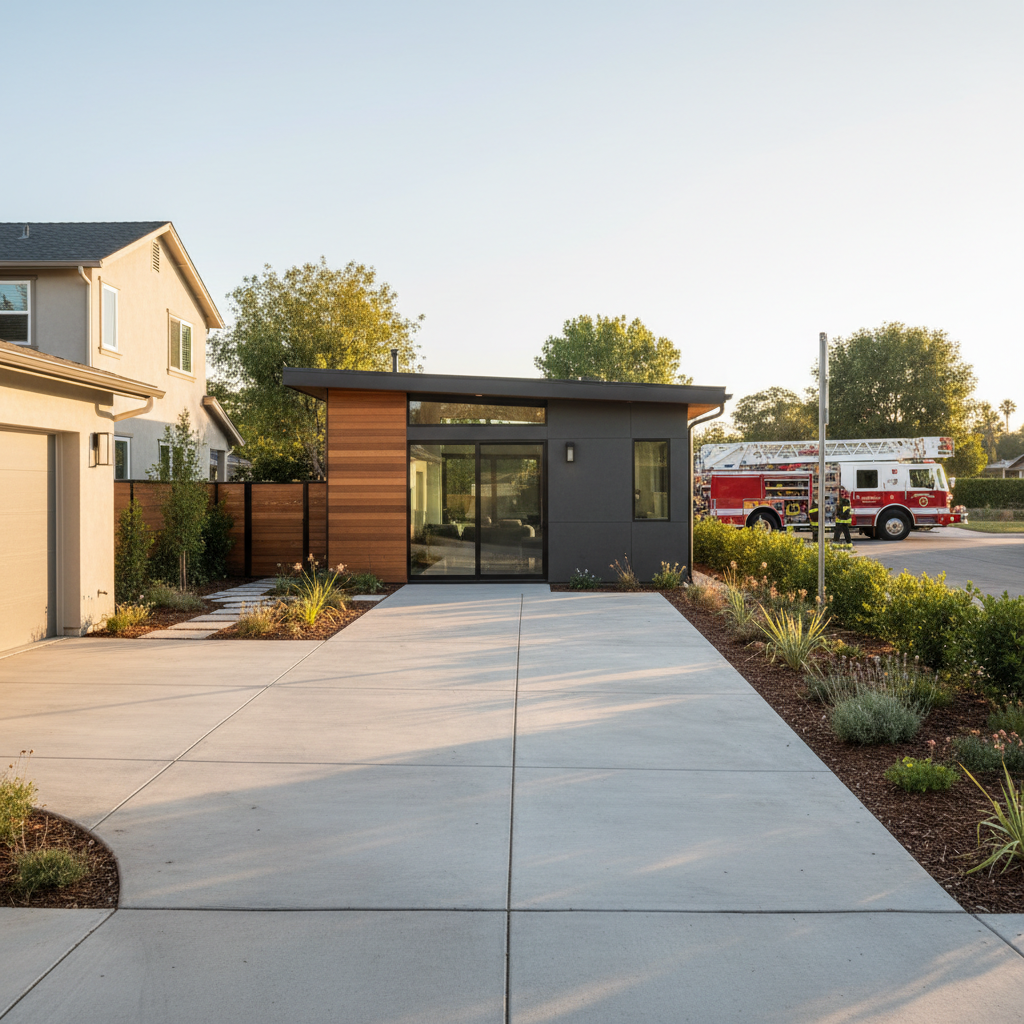
While state building codes set the baseline, local fire departments often have specific requirements related to fire sprinklers, access for emergency vehicles, and defensible space, particularly in high fire hazard zones. If the primary dwelling has sprinklers, state law mandates the ADU also have them. However, local fire codes may have additional stipulations.
5. Historic Preservation Overlays and Special Zoning Districts
If your property is located within a historic district or a specific overlay zone (e.g., coastal zone, hillside ordinance areas), you can expect additional layers of review and potentially stricter design and material requirements. These areas often have their own commissions or review boards with specific guidelines that supersede standard ADU regulations.
6. Permitting Timelines and Review Processes
Even with state-mandated ministerial approval, the actual time it takes to get an ADU permit can vary widely. This is often due to:
- Staffing Levels: Larger cities with dedicated ADU departments may process applications faster than smaller cities with limited staff.
- Digital vs. Paper Submissions: Some cities have efficient online portals; others still rely heavily on paper submissions and in-person appointments.
- Pre-Application Meetings: Some cities encourage or require pre-application meetings, which can be helpful but also add to the initial timeline.
- Review Cycles: The number of review cycles and the typical turnaround time for each can differ significantly.


Spotlight: Examples of City-Specific Nuances in Los Angeles County
To illustrate these differences, let's look at a few examples:
City of Los Angeles (City of LA)
As the largest city in the county, the City of Los Angeles processes a massive volume of ADU permits. They have largely streamlined their process with robust online resources and dedicated ADU staff. However, specific areas within the City of LA have their own overlay zones (e.g., specific plan areas, historic preservation overlay zones) that introduce additional design considerations. Their ADU ordinance is generally permissive, aligning closely with state law, but navigating the sheer volume of applications can still mean longer wait times for review cycles.
Santa Monica
Known for its strong emphasis on design and environmental concerns, Santa Monica often has more stringent architectural review processes. Properties in the Coastal Zone, for instance, face additional reviews by the California Coastal Commission, adding another layer of complexity and potential delays. While they embrace ADUs, they often seek a higher standard of design integration.
Pasadena
Pasadena boasts numerous historic districts and a strong architectural heritage. Consequently, ADUs built within these areas are subject to rigorous design review to ensure compatibility with the existing historic fabric. This can involve specific requirements for materials, window styles, and overall architectural expression that go beyond standard building codes.
Long Beach
Long Beach has actively embraced ADUs as a housing solution and has worked to streamline its permitting process. Their local ordinances are generally in line with state law, aiming for clear and predictable requirements. However, specific neighborhoods or properties near the coast may still encounter unique considerations or additional reviews.
Unincorporated Los Angeles County
For properties outside incorporated cities, the Los Angeles County Department of Regional Planning handles ADU permits. While adhering to state law, the County has its own set of ordinances and processes, which can differ from those of individual cities. Understanding the County's specific zoning codes and permit procedures is crucial for residents in these areas.
If you're ready to explore the specific ADU potential and permitting nuances for your property, don't hesitate to schedule a free ADU consultation with GatherADU. Our experts can help you navigate these complex local regulations.


Navigating the Labyrinth: Why Local Expertise Matters
Given the intricate patchwork of regulations, attempting to navigate the ADU permit process in Los Angeles County without local expertise can lead to costly delays, redesigns, and frustration. Here's why professional guidance is invaluable:
- Up-to-Date Knowledge: ADU laws and local ordinances are constantly evolving. An experienced ADU specialist stays current with all changes.
- Pre-Application Strategy: Knowing which questions to ask and what information to prepare for a pre-application meeting can save months.
- Design Optimization: Experts can design your ADU to meet both your needs and the specific local design standards, avoiding common pitfalls.
- Expedited Process: A complete, accurate, and compliant permit application has a much higher chance of being approved quickly.
- Cost Savings: Avoiding redesigns, delays, and unexpected fees translates directly into savings.
- Advocacy: Having a professional who understands the system can advocate on your behalf with city planning departments.
The GatherADU Advantage
At GatherADU, we specialize in designing and building Accessory Dwelling Units across Los Angeles County. Our team possesses deep knowledge of the varying local ordinances, permit processes, and design review requirements unique to each city and unincorporated area. We don't just build ADUs; we provide a full-service experience, guiding you from initial concept and feasibility studies through design, permitting, and construction.
Navigating the varied ADU permit landscape in Los Angeles County doesn't have to be a solo journey. Our team at GatherADU specializes in understanding and applying these diverse regulations, ensuring your project meets all local requirements efficiently. Get a free project estimate tailored to your property and city.
Conclusion
While state legislation has significantly eased the path to building an ADU in California, the journey through the ADU permit process in Los Angeles County remains a nuanced endeavor, shaped by the specific ordinances and priorities of individual cities. Understanding these differences – from design standards and impact fees to review timelines – is not just helpful; it's essential for a successful project. Partnering with an experienced ADU builder like GatherADU, with deep local expertise, can transform a potentially overwhelming process into a smooth and efficient path to your new backyard home.
Ready to turn your ADU dream into a reality without getting lost in permitting paperwork? Book your free ADU consultation today and let GatherADU guide you through every step, from concept to completion, with confidence.