When planning your Accessory Dwelling Unit (ADU) in California, you'll encounter a myriad of technical terms and construction details. Among the most critical, yet often least understood by homeowners, is ADU header sizing. These unsung heroes of framing are vital for your ADU's structural integrity, safety, and longevity. But what exactly are headers, why does their size matter so much, and why do they absolutely need to be engineered?
At GatherADU, we believe an informed homeowner is an empowered one. Understanding the 'why' behind complex construction practices like header engineering not only demystifies the process but also highlights the value of professional design and construction. Let's delve into the world of ADU headers and uncover their essential role.
What is an ADU Header?
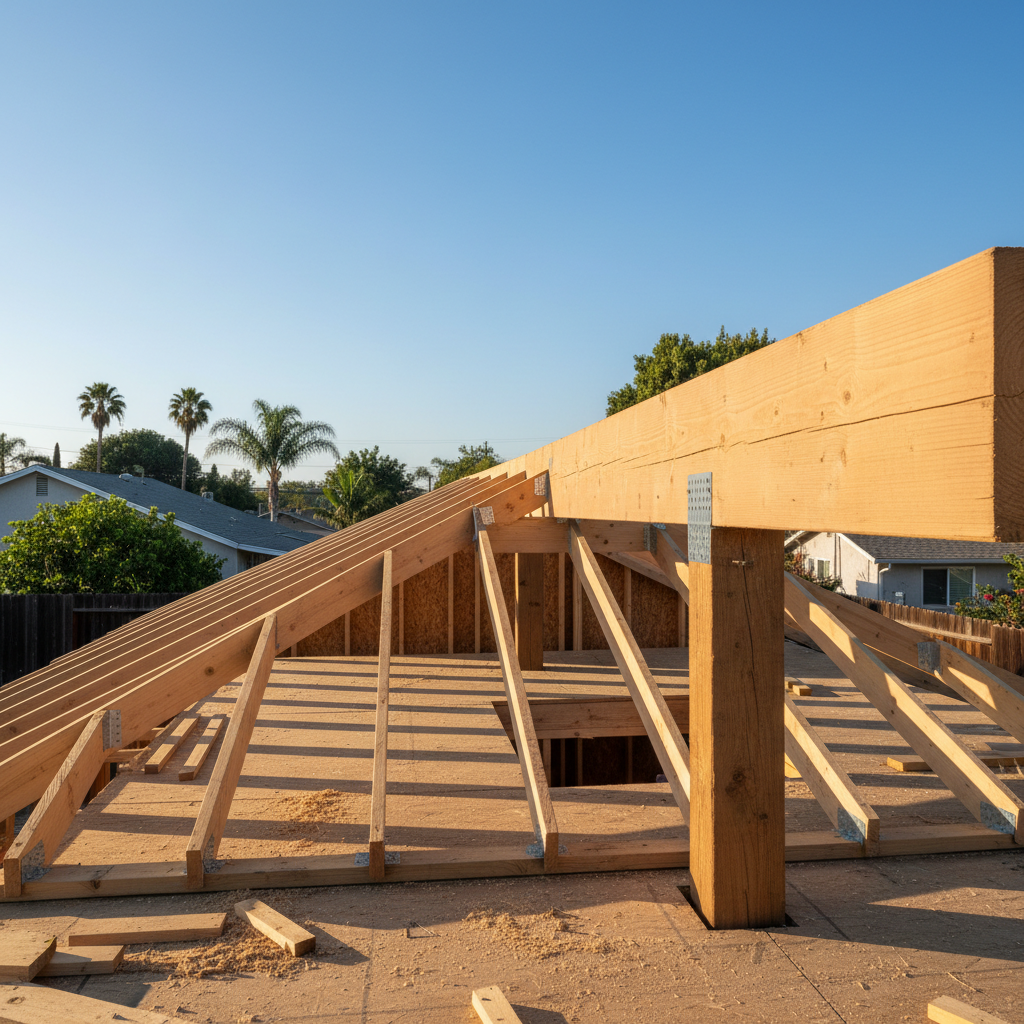
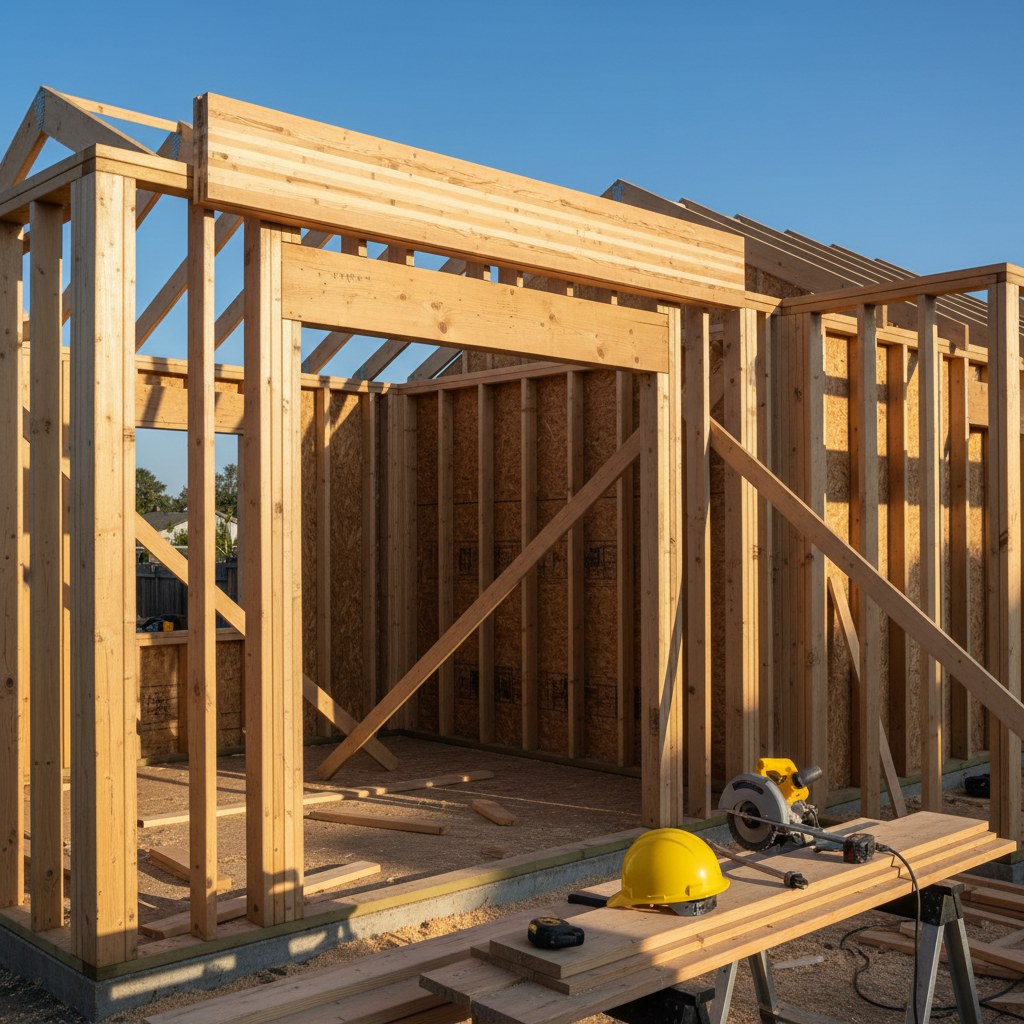
In simple terms, a header is a structural beam installed horizontally above an opening in a wall, such as a window, door, or larger pass-through. Its primary function is to redistribute the vertical loads from the structure above (like the roof, upper floors, or even the existing main house it might be attached to) around the opening and down to the solid wall framing on either side. Without a properly sized header, the weight above an opening would cause the frame to sag, crack, or even collapse.
Think of it as a small bridge within your wall. Just as a bridge supports traffic over a gap, a header supports the weight of your ADU's structure over an opening, directing that weight safely to the supporting studs.
Why Are Headers Crucial for ADUs?
The importance of headers is amplified in ADU construction, especially in California, for several key reasons:
-
Structural Integrity: Every opening in a wall creates a break in the continuous load path. Headers bridge this gap, ensuring that the structural loads are safely transferred to the supporting studs (jack studs) and then down to the foundation. This prevents sagging, cracking, and structural failure.
-
Load Bearing: ADUs, like any structure, are subject to various forces. These include:
- Dead Loads: The permanent weight of the ADU itself (roofing, framing, drywall, finishes).
- Live Loads: Temporary weights like occupants, furniture, and snow (though less common in much of California, it's a factor in some regions).
- Wind Loads: Lateral forces exerted by wind, particularly critical in coastal or open areas.
- Seismic Loads: Given California's active seismic zone, headers play a critical role in how a structure responds to earthquake forces, ensuring openings remain stable during lateral movement.
-
Code Compliance: The California Building Code (CBC) mandates specific requirements for structural elements, including headers. Proper sizing and installation are not just good practice; they're legal necessities for obtaining permits and passing inspections.
-
Design Flexibility: Homeowners often desire larger windows, wider doors, or open-concept layouts in their ADUs. Properly engineered headers make these design choices structurally possible without compromising safety.
The Science of ADU Header Sizing
Header sizing isn't a guess-and-check process; it's a precise calculation based on engineering principles. Several factors influence the required dimensions and material of a header:
-
Span: This is the clear horizontal distance of the opening (e.g., width of a window or door). The wider the span, the larger and stronger the header needs to be to prevent deflection (sagging).
-
Total Load Above: This includes all dead, live, snow, and wind loads that the header will be supporting. A header supporting a single-story roof will be different from one supporting a second floor or a heavy roof assembly.
-
Material Strength: Different materials have varying load-bearing capacities. Common header materials include:
- Solid Sawn Lumber: Typically Douglas Fir, suitable for smaller spans and lighter loads.
- Laminated Veneer Lumber (LVL): Engineered wood product, stronger and more dimensionally stable than solid lumber, common for moderate to larger spans.
- Glued Laminated Timber (Glulam): Extremely strong, used for very large spans or heavy loads.
- Steel Beams (W-beams, HSS): Offers the highest strength-to-weight ratio, ideal for exceptionally wide spans or when minimizing header depth is critical.
-
Bearing Length: This refers to the distance the header rests on the supporting jack studs. Adequate bearing length is essential to properly transfer the load from the header into the vertical framing.
A structural engineer considers all these variables, often using complex formulas and software, to determine the exact size, type, and fastening methods for each header in your ADU. This ensures that the header can safely carry the anticipated loads without excessive deflection or failure.
Why Headers Get Engineered: The Non-Negotiable Step
While prescriptive tables in building codes provide guidance for standard header sizes in typical residential construction, ADUs often present unique challenges that necessitate professional engineering. Here’s why engineering is almost always required for ADU headers in California:
1. Beyond Prescriptive Tables
Prescriptive tables in building codes are generalized and often conservative. They might cover basic door and window openings in standard wall constructions. However, ADUs frequently feature:
- Larger or multiple openings close together.
- Unusual roof lines or heavy roof materials.
- Specific architectural designs that create concentrated loads.
- Integration with an existing primary residence, which can introduce complex load paths.
When your design deviates from these prescriptive limits, or when dealing with significant loads, a licensed structural engineer must perform specific calculations.
2. California's Seismic Activity
California is a seismic region, and building codes here are among the most stringent in the world regarding earthquake resistance. Headers are integral to a structure's lateral load resistance. An engineer ensures that headers not only support vertical loads but also integrate into the overall seismic design, helping the ADU withstand lateral forces without collapsing or suffering excessive damage.
3. Optimizing for Safety and Cost
An engineer's calculations ensure that headers are appropriately sized – not undersized (which leads to failure) and not oversized (which wastes materials and increases costs). They find the 'just right' solution that guarantees safety and code compliance while optimizing material use and construction efficiency.
4. Liability and Permitting
Local building departments require stamped engineering plans for any structural elements that fall outside prescriptive code. This stamp signifies that a licensed professional has taken responsibility for the design, ensuring it meets all safety and code requirements. Without engineered plans, your ADU project will not receive permits or pass final inspection.
Navigating these technical requirements can be daunting for homeowners. That's where GatherADU's expertise shines. Our integrated design-build approach ensures that structural engineering is seamlessly incorporated into your ADU plans from day one. If you're ready to explore your ADU possibilities and ensure every structural detail is handled by experts, don't hesitate to book a free ADU consultation with our team.

The Impact of Incorrect ADU Header Sizing
The consequences of improperly sized or installed headers can be severe and costly:
-
Structural Failure: The most critical risk is the potential for the structure above an opening to sag, crack, or even collapse. This poses a significant safety hazard to occupants.
-
Cosmetic Damage: Even minor deflection can lead to unsightly cracks in drywall, sticking doors and windows, and misaligned finishes.
-
Water Intrusion: Structural movement around openings can compromise the seal around windows and doors, leading to leaks and potential water damage.
-
Permit Delays & Costly Repairs: Building inspectors will flag improperly sized headers, leading to stop-work orders, redesigns, costly demolition, and reconstruction. This significantly delays your project and increases expenses.
-
Reduced Property Value: A structurally compromised ADU will have reduced market value and could lead to significant issues down the line.
Ensuring every structural element, especially headers, is precisely engineered and correctly installed is paramount for the safety and long-term value of your ADU. At GatherADU, we pride ourselves on meticulous attention to detail and adherence to the highest engineering standards, ensuring your backyard home is built to last.
Our team of experienced designers and builders works hand-in-hand with licensed structural engineers to guarantee that every aspect of your ADU, from foundation to roof, meets and exceeds California's rigorous building codes. This integrated approach not only streamlines the permitting process but also provides you with peace of mind. To learn more about our comprehensive ADU design and build services, feel free to get your free project estimate today.
Conclusion
ADU header sizing might seem like a small detail in the grand scheme of building an Accessory Dwelling Unit, but its importance cannot be overstated. Headers are fundamental to the structural integrity, safety, and longevity of your backyard home, especially when navigating California's stringent building codes and seismic considerations. Relying on professional structural engineering for every header is not merely a recommendation; it's a necessity for a safe, compliant, and durable ADU.
By understanding the critical role of engineered headers, you're better equipped to appreciate the expertise that goes into building a high-quality ADU. At GatherADU, we handle these complexities so you don't have to, ensuring your ADU project is meticulously planned and expertly executed from concept to completion. Ready to build an ADU that stands the test of time? Book a free ADU consultation with GatherADU today and let's bring your vision to life safely and efficiently.