California's housing crisis is a well-documented challenge, prompting state lawmakers to continually seek innovative solutions. Among the critical pieces of legislation aimed at streamlining housing development and increasing density is Senate Bill 478 (SB 478). Enacted to curb local government's ability to impose excessive and subjective design standards, SB 478 has profoundly impacted various aspects of housing construction, especially the often-contentious area of front setback rules. For homeowners considering building an Accessory Dwelling Unit (ADU), understanding SB 478 California setback rules is crucial to unlocking their property's full potential.
This comprehensive guide will delve into what SB 478 entails, how it specifically changed front setback requirements, and what these changes mean for your ADU project.
What Is SB 478 and Why Was It Necessary?
Signed into law in 2021 and effective January 1, 2022, SB 478 is part of a broader legislative effort to tackle California's severe housing shortage. Before SB 478, local jurisdictions often had significant discretion in applying design standards and imposing setback requirements, sometimes to the point where they effectively prevented otherwise compliant housing projects from moving forward. These subjective standards could lead to lengthy approval processes, increased costs, and even project denials, especially for infill development like ADUs and multi-family housing.
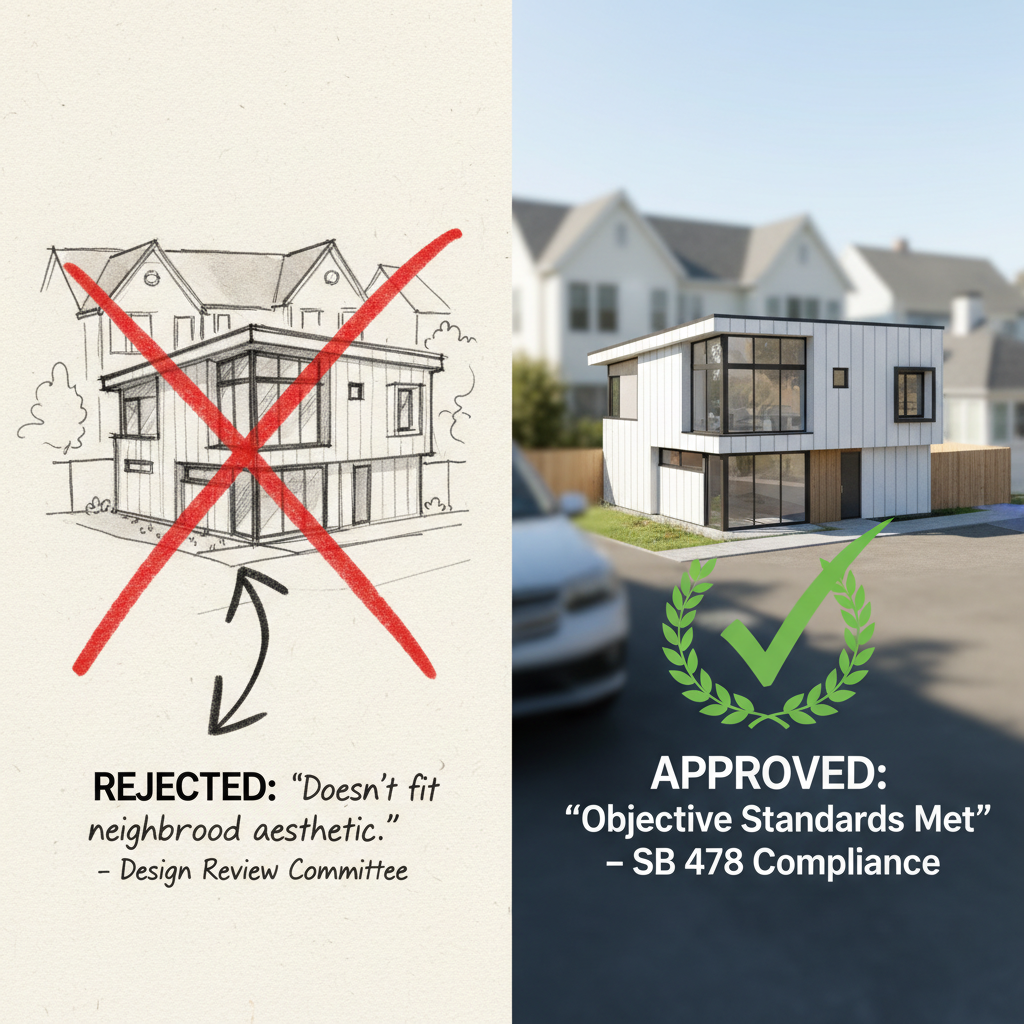
The core problem SB 478 sought to address was the abuse of subjective design review. While local control is important, when it leads to arbitrary denials or necessitates design changes that make a project economically unfeasible, it becomes a barrier to housing. SB 478 aims to ensure that if a housing project, including an ADU, complies with objective zoning and design standards, it cannot be denied or scaled back due to subjective aesthetic preferences or 'neighborhood character' arguments that aren't tied to quantifiable metrics.
The Shift Towards Objective Standards
At its heart, SB 478 reinforces the principle of 'objective standards.' An objective standard is one that involves no personal or subjective judgment by a public official and is uniformly verifiable. Examples include:
- Minimum or maximum parcel sizes
- Floor area ratio (FAR)
- Building height limitations
- Setback requirements (when clearly defined)
- Lot coverage
- Permitted uses and density
Conversely, subjective standards might include phrases like 'compatible with neighborhood character,' 'visually harmonious,' or 'aesthetically pleasing,' which are open to interpretation and can be used to delay or deny projects without clear justification.
How SB 478 Changed Front Setback Rules for Housing in California
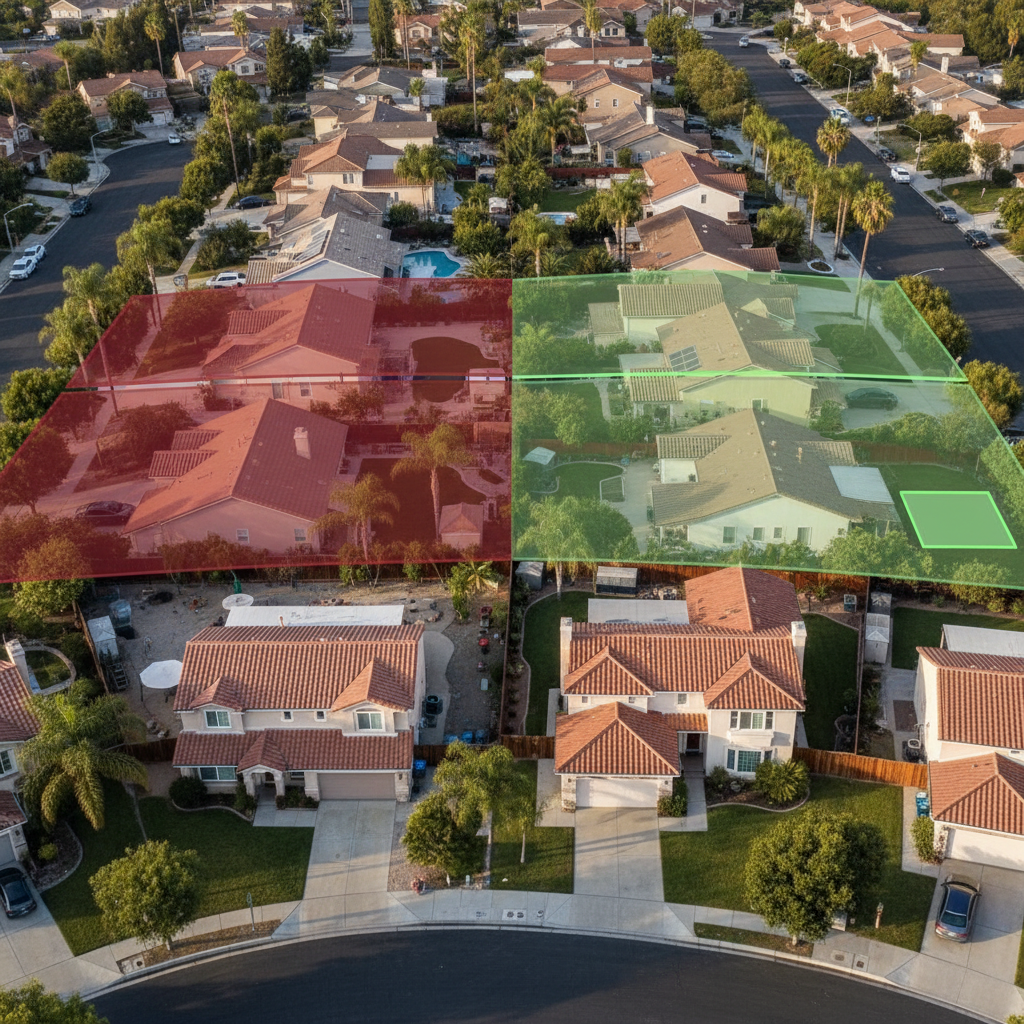
While state laws like AB 68 and SB 1069 already provided favorable setback rules for ADUs (generally allowing 4-foot side and rear setbacks), front setbacks remained a potential hurdle. Many older neighborhoods or specific zoning overlays imposed significant front setbacks, sometimes 20 feet or more, making it difficult or impossible to place an ADU on smaller lots or in certain configurations without encroaching upon valuable yard space or violating local rules.
SB 478 directly addresses this by prohibiting local agencies from applying objective development standards, including setback requirements, that physically preclude the development of up to two units (residential units or ADUs) on any parcel zoned for single-family residential use, if the project meets certain criteria. More specifically, for projects that align with the state's density bonus law or other specific housing initiatives, local agencies cannot impose:
- Minimum lot size requirements that would physically preclude the development of the number of units allowed.
- Setback requirements that would physically preclude the development of the number of units allowed.
- Parking requirements that exceed specific state maximums.
The crucial impact on front setbacks is that local jurisdictions can no longer enforce front setback rules that effectively make it impossible to build an ADU (or other allowed housing units) on a lot, provided the project otherwise meets objective zoning standards. This means if your ADU design complies with state laws regarding height (up to 16 feet generally), size, and other objective criteria, a local agency cannot impose an arbitrary front setback that effectively kills the project.
This doesn't mean front setbacks are eliminated entirely. It means they must be reasonable and objective. For example, a city cannot demand a 30-foot front setback if doing so leaves no buildable area for an ADU on a typical lot, when state law says an ADU should be permitted. This legislative move empowers homeowners and developers by providing a clearer path to approval, reducing the risk of project delays or denials based on subjective interpretations of local code.
Impact on ADU Development: Greater Flexibility and Predictability
For homeowners looking to add an ADU, SB 478 provides several key benefits:
- Increased Buildability: Properties previously deemed unsuitable for an ADU due to restrictive front setbacks may now be viable. This opens up opportunities for more homeowners to add valuable housing to their property.
- Reduced Bureaucracy: With a stronger emphasis on objective standards, the ADU approval process becomes more predictable. Less room for subjective interpretation means fewer delays and less uncertainty for homeowners.
- Design Flexibility: While still adhering to objective standards, homeowners and designers have more flexibility in placing an ADU on the lot, especially concerning its proximity to the front property line, as long as it meets safety and accessibility codes.
- Faster Approvals: When projects clearly meet objective criteria, local agencies are legally required to approve them more quickly, preventing drawn-out review processes.
It's important to note that SB 478 works in concert with other vital housing legislation, such as AB 68 (which standardized ADU regulations statewide) and SB 9 (which allows for lot splits and up to four units on single-family lots). Together, these laws create a powerful framework for increasing housing density and making ADU construction a more accessible and streamlined process for Californians.

Navigating the New Landscape: What Homeowners Should Know
While SB 478 provides significant advantages, navigating local regulations still requires expertise. Here’s what you should keep in mind:
- Local Objective Standards Still Apply: SB 478 doesn't eliminate all local control. Cities and counties can still enforce objective setback rules (e.g., a specific minimum distance from the front property line) as long as these rules do not physically preclude the development of allowed housing units.
- Understand Your Specific Zoning: Every property has unique zoning designations. It's crucial to understand your specific lot's zoning and what objective standards apply before planning your ADU.
- Professional Guidance is Key: Interpreting state and local regulations can be complex. An experienced ADU design and build firm like GatherADU understands these nuances and can help you leverage laws like SB 478 to your advantage, ensuring your project complies with all requirements while maximizing your property's potential.
For a detailed assessment of how SB 478 and other state laws impact your specific property and ADU project, don't hesitate to schedule a free ADU consultation with GatherADU. Our experts are well-versed in the latest regulations and can guide you through every step of the process.
Beyond Front Setbacks: Broader Implications of SB 478
The impact of SB 478 extends beyond just front setback rules for ADUs. It signals a broader shift in California's approach to housing development, emphasizing density and efficiency over subjective aesthetic control. By limiting the ability of local jurisdictions to impose arbitrary design standards, the state is paving the way for more diverse housing types and more affordable options.
This legislative push aims to:
- Increase Housing Supply: By removing barriers, more housing units can be built, helping to alleviate the state's housing crisis.
- Promote Infill Development: Encouraging development within existing communities reduces urban sprawl and utilizes infrastructure more efficiently.
- Enhance Housing Affordability: Streamlined processes and increased supply can, over time, contribute to more affordable housing options.
For homeowners, this means that the regulatory environment is increasingly favorable for adding ADUs, which are a vital component of California's housing strategy. Whether you're looking to generate rental income, provide housing for family members, or simply add space, the changes brought by SB 478 make the dream of building an ADU more attainable than ever.
Conclusion
California's SB 478 represents a significant step forward in simplifying the housing development process, particularly by redefining the application of front setback rules. By championing objective standards and limiting subjective local discretion, this law has made it easier and more predictable for homeowners to build ADUs and other housing units on their properties. Understanding SB 478 California setback rules is essential for anyone considering an ADU project, as it directly impacts where and how you can build.
At GatherADU, we specialize in navigating California's complex ADU regulations, including the nuances of SB 478. Our team is dedicated to helping you design and build an ADU that maximizes your property's potential while ensuring full compliance with state and local laws. Don't let regulatory complexities deter you from your ADU dream. Let us help you unlock the value of your backyard.